

Degassing System Whole Set Equipment
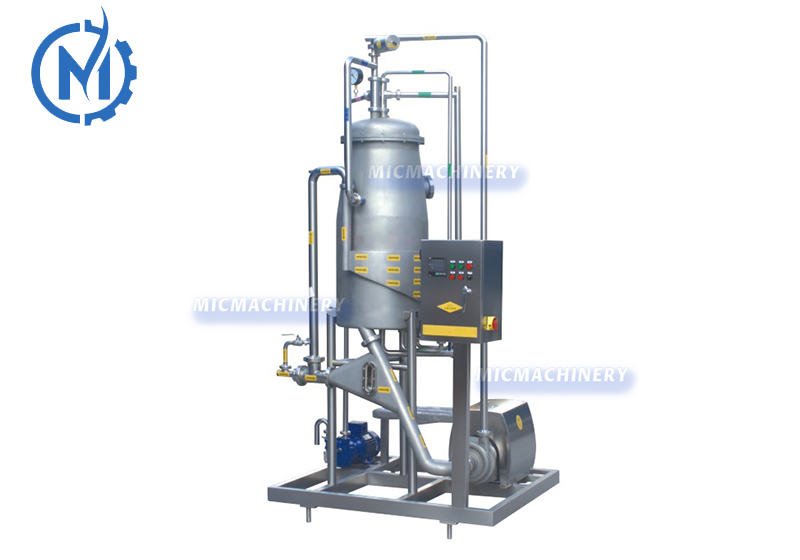
Vacuum Degassing System – Efficient Industrial Degassing
A vacuum degassing system is an essential piece of equipment for industries such as chemical processing, adhesives, silicone, resins, coatings, and food production. Its primary function is to remove trapped air, volatile gases, and moisture from liquids or semi-liquids, ensuring product quality, stability, and consistency. By eliminating air bubbles, the degassing system improves the appearance, density, and performance of materials, making degassing equipment a critical component in modern manufacturing.
Applications
This vacuum degassing equipment is designed for materials entering the system at 80–90°C and exiting around 60°C, with a dehydration rate adjustable between 3–5%. It is suitable for customized capacities, handling material volumes up to 20,000 kg/hour. Common applications include silicone sealants, PU adhesives, epoxy resins, coatings, and other viscous chemical products. Using an automatic degassing system ensures consistent quality, reduces defects such as air pockets or foaming, and improves overall production efficiency.
Structure of the System
The system is composed of a vacuum degassing tank, feed pump, rotary butterfly valve, vacuum pump, electrical control box, and differential pressure liquid-level control components. Optional components include a bottom platform and matching plate for better material flow control.
Inside the tank, the degassing equipment features a high-position condenser, two cleaning spray devices, a bottom cooling jacket, and side cooling jackets. These components ensure optimal thermal regulation and material control, allowing the system to handle viscous liquids efficiently while preventing overheating or localized degradation.
Working Principle
Materials pretreated by a pasteurizer and heated to 66–68°C are fed into the system via the matching plate. The liquid then passes through either a pneumatic flow control valve with differential pressure liquid-level control or a float-type liquid-level control valve. Entering the vacuum tank tangentially through a wide inlet, the material forms a thin film along the inner wall of the tank.
Under vacuum pressure, volatile gases, odors, and part of the steam evaporate from the film. Most of the steam is condensed by the high-position condenser and returned to the material, while non-condensable gases, odors, and a small portion of evaporated steam are extracted from the tank by the vacuum pump. The material gradually slows along the tank wall due to gravity and resistance until it reaches the discharge outlet. The liquid level is controlled below the outlet, with float-type control maintaining the level at the float center, and differential pressure control keeping it at the tank bottom. Only one control method is used, with flow direction dynamically adjusted via a two-way, three-port ball valve.
After degassing, the material is drawn by the feed pump to the next processing stage, such as homogenization. A bypass with a pneumatic butterfly valve allows CIP cleaning: opening the valve sprays cleaning fluid through the top and middle spray devices, efficiently cleaning the tank interior.
Technical Principle
The vacuum degassing system works by lowering pressure inside a sealed tank to reduce the boiling point of trapped gases. Gas bubbles expand and rise to the surface, where they are removed. Some models use mechanical stirring or heating to accelerate degassing, while advanced vacuum degassing equipment units offer programmable touchscreens, pressure sensors, and automated cycle control for precise operation. The automatic degassing system design ensures minimal human intervention, consistent quality, and high efficiency.
Performance Features
Modern degassing system units offer the following performance advantages:
• High vacuum levels for effective gas removal
• Uniform degassing with minimal material loss
• Adjustable speed and vacuum parameters for varying viscosities
• Corrosion-resistant materials for chemical compatibility
• Energy-efficient operation with automated cycles
These features make the degassing equipment suitable for both small-scale laboratory use and large-scale industrial production.
Pricing Overview
Prices for vacuum degassing equipment vary depending on capacity, automation level, and additional features. Manual models are more affordable and suitable for small batches, while fully automated automatic degassing system units with large chambers, advanced vacuum pumps, and programmable controls command higher prices. Investing in high-quality equipment ensures long-term reliability, improved product consistency, and reduced labor costs, making it a cost-effective choice for manufacturers.
A vacuum degassing system is indispensable for industries requiring flawless liquid products. From improving clarity and stability to ensuring uniform performance, this equipment is central to modern production processes. With robust construction, advanced controls, and reliable performance, degassing equipment remains a vital tool for chemical, silicone, resin, and food manufacturers worldwide. Choosing the right degassing system not only enhances product quality but also improves operational efficiency and reduces production risks.
|
Production capacity |
2000 - 20000kg/h |
|
High level condenser area |
3㎡ |
|
Material feeding temperature |
68 - 66℃ |
|
Material discharging temperature |
60 - 62℃ |
|
Vacuum pressure |
-0.078 - 0.08MPa |
|
Cooling water |
Qmax = 1000 - 15000kg/h |
|
Installed capacity |
10.35 - 35kw |


