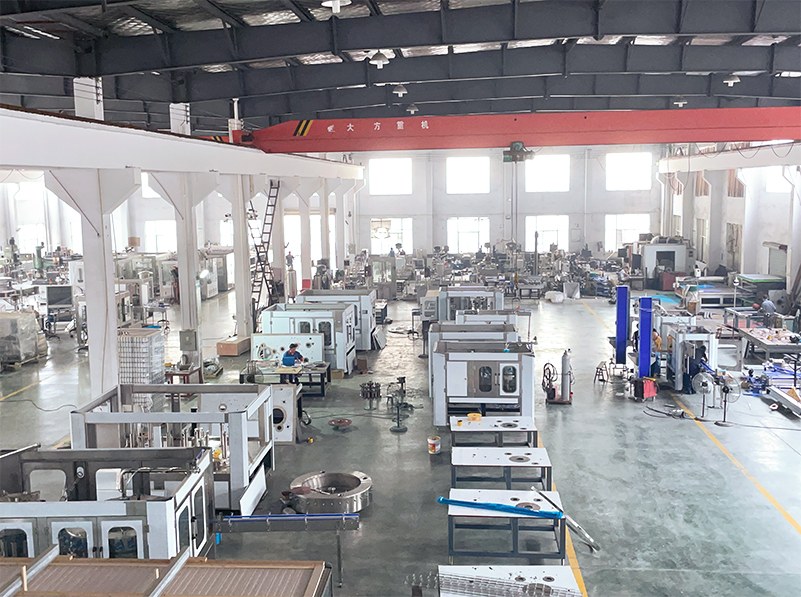
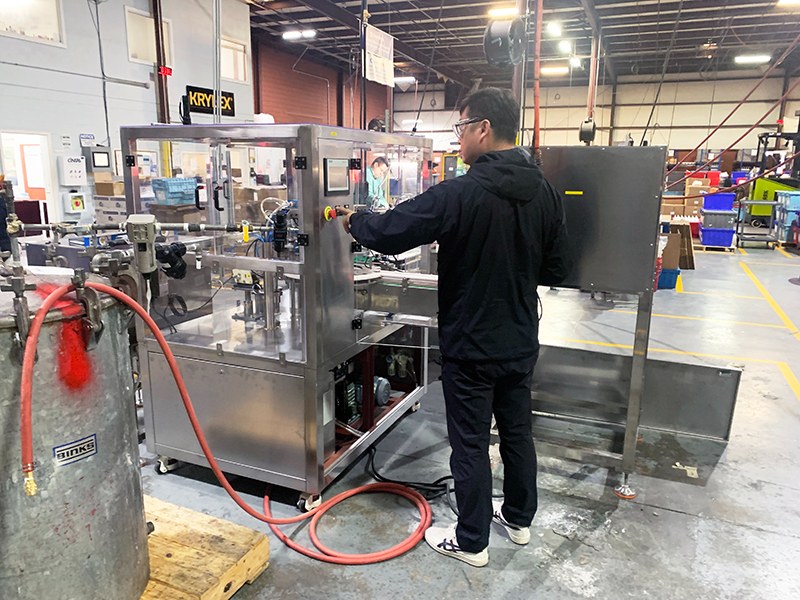
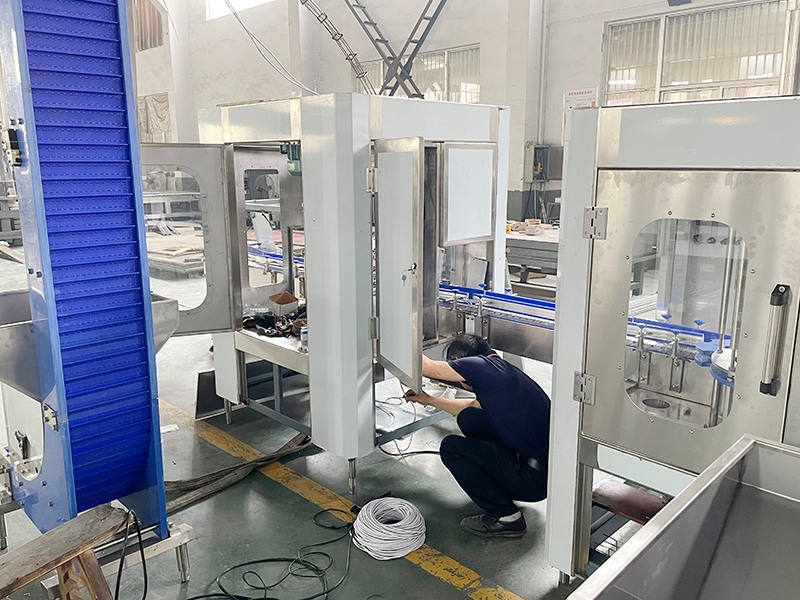
A new beverage factory needs a coordinated production system. The equipment scope starts with product preparation and container supply, continues through filling and closing, and ends when acceptable packs can be inspected, stored, and released. Utilities, cleaning, quality control, maintenance access, and material handling belong in the same plan even when they sit outside the machinery supplier's quotation.
Build the list by following every material and product interface: water and ingredients in, containers and closures in, saleable packs out, waste out, and people moving between each area. Mark each item as core, conditional, future, or buyer-supplied before comparing prices.
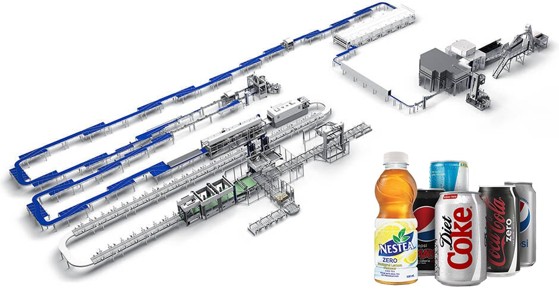
Figure 1. A beverage line connects processing, filling, conveying, labeling, packing, and material handling. Source: MIC Beverage Machine.
Quick equipment map
|
System block
|
Core or conditional
|
Typical scope
|
Decision that controls it
|
|
Water and product preparation
|
Core, configuration varies
|
Water treatment, tanks, ingredient handling, mixing, filtration, heat treatment, carbonation, or hygienic storage
|
Beverage recipe, raw-water analysis, process temperature, carbonation, and shelf-life strategy
|
|
Container supply
|
Core
|
Empty bottle loading, depalletizing, unscrambling, can depalletizing, or PET blow molding
|
PET, glass, can, purchased container, or on-site bottle production
|
|
Filling and closing
|
Core
|
Rinsing or container treatment, filler, capper, crowner, or can seamer
|
Product behavior, fill temperature, pressure, container, and closure
|
|
Post-fill process
|
Conditional
|
Inversion, pasteurization, cooling, external drying, or warming
|
Product preservation route and package response
|
|
Inspection and identification
|
Core requirements, automation varies
|
Fill-level, closure, seam, leak, label, code, and rejection checks
|
Quality plan, customer requirements, and line speed
|
|
Secondary packing
|
Core
|
Labeling, coding, shrink bundling, tray or carton packing
|
Retail unit, transport risk, pallet pattern, and market presentation
|
|
Pallet and warehouse handling
|
Core function, automation varies
|
Palletizing, stretch wrapping, forklifts, conveyors, hold area, and storage
|
Dispatch volume, labor, warehouse policy, and pallet standard
|
|
Cleaning and utilities
|
Core
|
CIP or validated cleaning arrangement, power, water, air, cooling, heating, drainage, and gases
|
Process design, equipment list, site conditions, and sanitation plan
|
|
Quality and maintenance support
|
Core function
|
Laboratory instruments, sampling, tools, spares, lubrication control, and documentation
|
Product hazards, legal requirements, maintenance strategy, and local capability
|
Use this scope map to select the functions required by the approved product and package. A still-water plant does not need a carbonator. A can line uses a seamer in place of a bottle capper. A hot-filled drink may require cooling and a heat-resistant package, while a cold-filled product requires a different validated hygiene strategy.
Define the beverage process first
The recipe and preservation method decide which upstream equipment is necessary. Define the product state at the filler: composition, viscosity, particles, dissolved gas, oxygen sensitivity, fill temperature, and required hygiene condition. The examples below cover packaged water, juice and tea, other still drinks, and carbonated soft drinks. Beer, dairy, and aseptic products need their own process and control review.
Bottled water
The water treatment train follows the source analysis, finished-water specification, product category, and local rules. Possible stages include raw-water storage, pumping, media filtration, activated carbon, softening, membrane treatment, ultraviolet treatment, ozone-related equipment, hygienic storage, and distribution. Select each stage for a defined hazard, quality target, or control function.
The MIC website lists water treatment, bottle blowing, a combined rinsing-filling-capping machine, drying, labeling, coding, packing, and pallet handling within its current water filling line scope. Use that sequence to identify interfaces, then confirm the actual project configuration from laboratory data.
Juice, tea, and still formulated beverages
These products can require ingredient receiving, sugar or powder dissolving, blending tanks, filtration, homogenization or deaeration where the formulation calls for them, thermal processing, buffer tanks, and CIP circuits. The equipment must match the recipe, acidity, solids, particles, heat history, and validated shelf-life process. A water line cannot be converted into a juice line simply by changing the filler setting.
Carbonated soft drinks and sparkling water
The typical process adds treated water, syrup or ingredient preparation, proportioning, chilling, carbonation, pressure-rated storage, and counter-pressure filling. Product temperature, carbonation target, pressure capability, foam behavior, container strength, and closure timing must be specified together. Carbon dioxide storage and distribution also introduce site, ventilation, handling, and local safety requirements.
Define how empty containers enter the line
Container supply changes both equipment and factory logistics.
|
Container route
|
Incoming equipment
|
Main checks
|
|
Purchased PET bottles
|
Protected bottle storage, loading table or unscrambler, and air or mechanical conveying
|
Bottle cleanliness, deformation, storage volume, neck support, and supply reliability
|
|
PET bottles blown on site
|
Preform handling, heater, blow molder, molds, high-pressure air, cooling, bottle inspection, and air conveying
|
Preform and bottle design, mold ownership, bottle tests, air quality, cooling, and matched output
|
|
New glass bottles
|
Depalletizing or manual unloading, inspection, rinsing, and glass-compatible conveying
|
Bottle variation, breakage control, base handling, closure, and cleaning requirement
|
|
Returnable glass bottles
|
Crate handling, bottle washer, inspection, reject handling, and clean-bottle transfer
|
Previous use, contamination risk, washer validation, caustic control, glass inspection, and crate loop
|
|
Beverage cans
|
Depalletizer, layer-pad handling, can conveying, rinsing or inversion, and filler-seamer feed
|
Can and end specification, damage control, cleanliness, seam setup, and accumulation
|
On-site PET blowing can reduce finished-empty-bottle storage, but it adds molds, compressed air, cooling, preform control, bottle-quality testing, and specialist maintenance. Buying bottles simplifies production equipment but increases dependence on inbound logistics and protected storage. Compare both routes using delivered bottle cost, warehouse volume, utilities, labor, technical support, and expected production frequency.
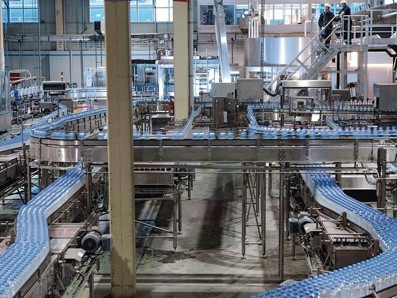
Figure 2. PET handling and transfer parts must match the approved bottle, closure, and line speed. Source: MIC Beverage Machine.
Match the filler and closer to the product and package
The filler is selected from the beverage and fill condition; the closer is selected from the container and closure. These decisions must be made as one interface.
|
Product and package
|
Filling and closing route
|
Confirm before selection
|
|
Still water in PET
|
Suitable still-water filling with plastic-cap application; a combined rinser-filler-capper is common
|
Bottle drawing, neck finish, cap sample, fill target, sanitation, and complete-line output
|
|
Carbonated drink in PET or glass
|
Counter-pressure filling followed by immediate pressure-compatible closing
|
Product temperature, carbonation, pressure rating, foam control, and closure integrity
|
|
Hot-filled still beverage in PET or glass
|
Hot-fill-compatible filler, package, closure, transfer, and controlled cooling
|
Validated fill and hold conditions, bottle heat resistance, closure behavior, and cooling profile
|
|
Beverage in cans
|
Can filling followed by seaming
|
Can body, end, seam specification, product condition, seam inspection, and reject logic
|
|
Returnable glass
|
Washing and inspection before suitable filling and closing
|
Bottle population, residual contamination, breakage, washer result, and closure route
|
The line speed on a quotation must state the product, container, volume, and test condition. A nominal filler speed is not the same as acceptable packed output. Request the rate at the end of the line, the allowed reject conditions, and the performance basis for every planned format.
Plan post-fill treatment before labeling
The bottle or can may require additional processing after closing. A validated hot-fill process can include inversion for closure contact, followed by controlled cooling. Other products require tunnel pasteurization. Cold containers may need warming to manage condensation, while some label and code systems need an externally dry bottle.
Place the labeler only after confirming the package surface condition. Label adhesive, sleeve application, code readability, bottle stability, and cooling or drying time affect conveyor length and accumulation.
Complete the saleable pack
Downstream equipment normally includes inspection, coding, labeling, collating, shrink wrapping or case packing, checkweighing where required, palletizing, and pallet stabilization. The exact combination follows the commercial pack.
Confirm:
- label material, roll direction, artwork area, and application tolerance;
- production date, lot code, expiry or best-before format, and code location;
- bottle or can count per bundle, tray, or carton;
- film or carton specification and opening method;
- pallet size, layer pattern, stacking limit, stretch-wrap requirement, and warehouse height;
- rejection, rework, quarantine, and line-clearance procedures.
A fast filler can be limited by a labeler that cannot handle condensation, a packer with a lower sustainable rate, or a pallet area that fills faster than the warehouse team can clear it. Include accumulation and stop logic in the line design rather than treating conveyors as simple transport.
Include utilities in the equipment schedule
Utility equipment is often split between the machinery supplier, specialist contractors, and the buyer. List it in the same project scope so that no connection is missed.
Typical utility systems include incoming electrical distribution, control power, raw and process water, cleaning water, compressed air, instrument air, high-pressure air for PET blowing, cooling water, chilled water, process heating, steam or hot water, carbon dioxide, ventilation, drainage, and effluent handling. The approved equipment list determines which services apply.
For each machine, request connected load and expected operating demand, pressure, flow, temperature, quality, connection size, peak condition, and allowable variation. Size compressors, chillers, boilers, water-treatment capacity, drains, and electrical distribution from the combined operating scenario rather than by adding nameplate figures without a diversity review.
The U.S. Department of Energy provides tools and guidance for assessing compressed-air systems, including air quality, storage, controls, leaks, and operating cost. Those resources are useful because compressor selection alone does not define the cost or stability of the full air system: Compressed Air Systems, U.S. Department of Energy.
Specify hygiene, cleaning, and quality-control equipment
Food-contact equipment must be cleanable and installed with access to clean adjacent spaces. U.S. requirements are one jurisdictional example: 21 CFR 117.40 addresses cleanable equipment, corrosion-resistant food-contact surfaces, installation access, maintained instruments, and treated compressed air or gases. The legal specification for a project must be confirmed with the authorities and standards that apply at the installation and sales markets.
The cleaning scope may use manual cleaning, dedicated circuits, or CIP, depending on the process and equipment design. Define circuits, removable parts, chemicals, concentration control, temperature, time, flow, return condition, drainage, verification, and operator responsibilities. A line item marked "CIP included" must identify every covered tank, pipe, valve, and filler path.
The quality area needs the instruments and workspace required by the product specification and local controls. Typical functions include source-water and product-water sampling, basic process checks, microbiological sampling arrangements, fill-volume or mass checks, closure or seam inspection, label and code verification, package integrity checks, retained samples, and product hold/release. The exact instruments, methods, calibration, laboratory approval, and test frequency belong in the quality plan.
Plan maintenance, spares, safety, and documentation
Maintenance support is production equipment in practical terms. A new factory should receive:
- operating, cleaning, maintenance, electrical, pneumatic, and parts documentation;
- a recommended startup and critical-spares list tied to lead time and failure impact;
- format-change parts, special tools, lubricants approved for their use, and storage locations;
- preventive-maintenance tasks and intervals;
- backup copies of control programs and agreed access rights;
- operator, maintenance, quality, and safety training;
- guarding, interlocks, emergency stops, access platforms, and local compliance records.
Guards and interlocks remain in service during acceptance testing. Assess the final guarding and access arrangement against the installed line, local law, and the employer's safe-working procedures.
Separate supplier scope from buyer scope
Put every equipment and service item into a responsibility matrix.
|
Item
|
Supplier
|
Buyer or local contractor
|
Evidence required
|
|
Process and line equipment
|
Define supplied model, quantity, function, and interfaces
|
Confirm product, package, site data, and exclusions
|
Equipment list and process description
|
|
Interconnecting conveyors, piping, and cables
|
State included lengths, materials, and termination points
|
Complete excluded site runs and supports
|
Layout, routing drawing, and boundary list
|
|
Utilities
|
State machine requirements and supplied skids
|
Provide generation, distribution, drainage, and connections unless included
|
Utility schedule and connection plan
|
|
Building and hygienic rooms
|
Provide machine loads and environmental needs
|
Civil work, floors, drains, walls, ventilation, permits, and services
|
Approved layout and construction drawings
|
|
Installation and commissioning
|
State supervisors, duration basis, tools, and tests
|
Provide labor, access, lifting, utilities, materials, and permits as agreed
|
Method, responsibility schedule, and acceptance plan
|
|
Training and handover
|
Supply agreed sessions and documents
|
Nominate competent staff and maintain records
|
Training plan and document index
|
This responsibility matrix gives "turnkey" and "complete line" a testable meaning. Every interface has an owner, an input, a deliverable, and an acceptance method.
Use this RFQ checklist
Send the same controlled brief to every shortlisted supplier:
- Beverage name, formula status, process description, carbonation, viscosity, particles, and fill temperature
- Container drawing and samples, closure or can-end data, labels, codes, and final pack
- Required saleable output, shift calendar, planned formats, cleaning time, and growth scenario
- Raw-water analysis and finished-water specification where water treatment is in scope
- Factory plan, ceiling heights, floor limits, door sizes, drains, columns, and utility connection points
- Equipment, utility, laboratory, warehouse, and service scope matrix
- Materials, cleaning method, instruments, control architecture, inspection, and rejection requirements
- FAT product and packaging, test duration, acceptance criteria, documentation, and unresolved punch-list process
- Shipping, import, installation, commissioning, training, spares, warranty, and local-work boundaries
Compare returned proposals line by line. A lower equipment total can hide missing treatment stages, compressors, molds, inspection, packing, interconnections, installation materials, or testing.
Finish the equipment brief
The right bottling plant equipment list is the shortest complete list that can make the specified beverage, run the approved package, meet the required saleable output, and support safe cleaning, inspection, maintenance, and dispatch. Remove equipment with no defined purpose; retain every required function, including work supplied locally or performed manually.
MIC Beverage Machine can review the product, package, output plan, factory drawing, utilities, and final pack to prepare a project-specific equipment and responsibility matrix.
FAQ
What is the minimum equipment needed for a beverage bottling plant?
At minimum, the factory needs a validated product-preparation route, container handling, suitable filling and closing, identification, inspection, final packing, cleaning, utilities, quality control, and material handling. The machines that perform those functions depend on the beverage and package.
Is a bottle blowing machine required?
Only when PET bottles will be produced on site. A factory buying finished bottles still needs protected storage and a controlled method for feeding bottles to the filler. Compare the two routes using bottle cost, logistics, storage, utilities, labor, molds, maintenance, and production frequency.
Does a complete line include the air compressor and chiller?
Only when the written scope says so. The proposal must identify the utility skids, distribution pipework, cables, drains, connection points, installation materials, and local work included or excluded.
What equipment changes between PET bottles, glass bottles, and cans?
Container feeding, transfer, rinsing or washing, filling, closing, inspection, and packing can all change. Cans require seaming; bottles require a compatible cap, crown, or other closure system. Returnable glass adds washing, inspection, crate handling, and breakage controls.
How should a buyer compare two bottling plant quotations?
Use the same project brief and compare the process basis, supported formats, complete-line output, equipment list, utilities, materials, cleaning, inspection, packing, documentation, installation, training, spares, and acceptance criteria. Mark every line as included, optional, excluded, or buyer-supplied.