A small beverage company does not need the fastest filler it can afford. It needs a machine that matches the drink, package, daily sales target, available labor, and cleaning plan. The best filling machine for a small beverage startup may be semi-automatic or compact automatic, but the decision should start with the process, not the automation label.
Quick answer: choose the process before the automation level
For pilot batches and variable demand, a semi-automatic filler often provides useful flexibility without committing the business to a complete line. A compact automatic rinser-filler-capper becomes more practical when orders are repeatable, the package is stable, and manual bottle handling limits output. Carbonated products need pressure-capable filling, while cans need a filler-seamer combination rather than a bottle filler and capper.
No single machine fits every startup. Lock these four decisions in order:
- Beverage behavior and required filling method
- Saleable output needed per production day
- Container, closure, and changeover plan
- Labor, utilities, cleaning, and expansion requirements
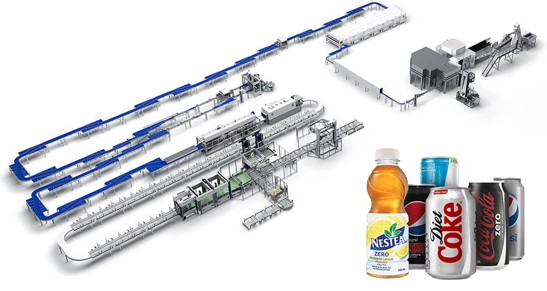
Figure 1. An integrated beverage line includes much more than the filler. Source: MIC Machinery beverage filling machine page.
1. Match the filling method to the beverage
The liquid determines how the machine must control flow, pressure, temperature, and product contact. Choosing an automation level before confirming the filling method can produce a fast machine that foams, drips, underfills, damages the package, or is difficult to clean.
|
Beverage behavior
|
Likely filling approach
|
What the startup must confirm
|
|
Still, low-viscosity drinks such as water or clear non-carbonated beverages
|
Atmospheric, gravity, or volumetric filling, depending on the product and target fill control
|
Product viscosity, fill temperature, bottle opening, required fill tolerance, and cleaning method
|
|
Carbonated soft drinks, sparkling water, beer, or other pressurized drinks
|
Counter-pressure or isobaric filling
|
Carbonation level, product temperature, container pressure suitability, foam control, and closure timing
|
|
Thick, pulpy, or particulate drinks
|
A filling valve and product feed designed for the product, which may include piston or other positive-displacement methods
|
Maximum particle size, viscosity range, shear sensitivity, valve passage, and cleaning access
|
|
Hot-filled juice, tea, or similar products
|
A hot-fill-compatible process and package
|
Validated fill temperature, holding requirements, bottle heat resistance, closure, cooling, and sanitation plan
|
For carbonated beverages, pressure management is a process requirement rather than an optional feature. An official Krones filling technology page distinguishes non-contact filling for still products from counter-pressure filling for carbonated products. MIC also maintains a dedicated carbonated drink filling machine category for this application.
If the recipe is still changing, ask for a product trial before signing off on the filler. A machine tested only with water does not prove that it will handle a foaming, pulpy, or temperature-sensitive beverage under production conditions.
2. Calculate the required capacity from saleable demand
Nameplate speed is not the same as finished, saleable output. Stops for bottle loading, cap replenishment, cleaning, changeover, label adjustment, quality checks, and downstream congestion reduce the number of acceptable containers produced during a shift.
Use this planning formula:
Required steady output (containers/hour) = Saleable containers required per day / (Scheduled filling hours x Planned line utilization)
Planned line utilization is a planning allowance for normal production losses. It is not a supplier guarantee. A startup should set it from its operating plan, product mix, staffing, and expected downtime, then validate it during acceptance testing.
Example: if a hypothetical business needs 6,000 saleable bottles per day, schedules six filling hours, and plans around 75% line utilization, the required steady output is about 1,333 bottles per hour. The selected line also needs enough time for startup, cleaning, and any second product or bottle format.
When comparing quotations, ask suppliers to state:
- The bottle size and product used for the quoted speed
- Whether the figure is filler speed or complete-line output
- The assumed operating temperature and carbonation conditions, if relevant
- Which bottle, cap, label, and pack changes require parts or manual adjustment
- The acceptance test duration and the definition of acceptable output
The slowest sustainable station sets the line result. A 2,000 BPH filler cannot deliver 2,000 finished bottles per hour if capping, labeling, coding, or packing repeatedly stops at a lower rate.
3. Lock the bottle or can before selecting the machine
Container material is only the first decision. The supplier also needs the actual sample or drawing, volume, height, diameter, neck finish, closure, label area, and planned format range. Even two bottles with the same nominal volume may require different guides, stars, screws, filling heights, or cap-handling parts.
|
Package
|
Startup advantages
|
Equipment consequences
|
Questions to settle early
|
|
PET bottle
|
Light to handle and suitable for many beverage formats
|
Bottle support and transfer must suit the neck and body; pressure and heat resistance depend on the bottle design
|
Will the drink be still, carbonated, or hot filled? Will bottles be purchased or blown on site?
|
|
Glass bottle
|
Rigid package with a premium shelf feel
|
More weight, breakage control, bottle inspection, and suitable rinsing and conveying require attention
|
Is the bottle new or returnable? Which cap or crown is used? How will broken glass be controlled?
|
|
Beverage can
|
Compact package with no bottle cap application step
|
Requires filling followed by seaming, plus seam setup and inspection for each can-end combination
|
Which can body and end supplier will be used? Who owns seam checks and records?
|
MIC's current catalog separates PET bottle filling machines, glass bottle filling machines, and can filling machines. Those separate categories reflect format-specific handling and closing equipment. A container change can affect much more than a guide rail.
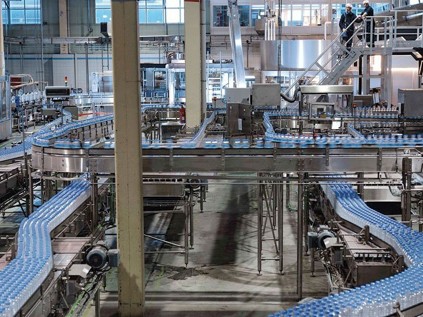
Figure 2. PET bottle transport and accumulation affect the performance of the complete line. Source: MIC Machinery PET bottle filling machine page.
Start with one primary package if possible. Launching several bottle sizes, cap types, and labels at once increases changeover work, spare-part inventory, operator training, and the number of combinations that must be tested.
4. Choose the right automation level
Automation should remove a defined constraint. Buying more of it does not automatically create a better startup line.
|
Automation level
|
Best fit
|
Labor and handling
|
Main buying risk
|
|
Manual or tabletop
|
Recipe development, samples, and very small market tests
|
Operators place, fill, and move each container
|
Output and consistency depend heavily on manual work; the setup may be outgrown quickly
|
|
Semi-automatic
|
Regular small batches with changing products or packages
|
Machine controls the fill, while operators load, unload, cap, or transfer containers
|
The filler may be fast enough while manual capping, labeling, or packing becomes the bottleneck
|
|
Compact automatic or monoblock
|
Stable demand, a defined package, and repeated production runs
|
Automatic transfer reduces direct handling; operators still replenish materials and respond to stops
|
Underused equipment, underestimated changeover, and missing utilities can raise the real cost per bottle
|
|
Complete automatic line
|
Predictable volume with an established process and downstream plan
|
Lower handling per container, but stronger technical and maintenance capability is required
|
A poorly balanced line can move the bottleneck instead of removing it
|
For many startups, semi-automatic equipment is a sensible first ownership step only when the forecasted output fits the available labor. If the team must constantly carry wet bottles between separate stations, a compact connected line may provide more value than a faster standalone filler.
A co-packer also deserves comparison when demand is uncertain, the beverage process is not validated, or the factory lacks utilities and food-safety systems. Ownership becomes easier to justify when production is frequent enough that control, scheduling, and unit economics outweigh the flexibility of contract packing.
5. Evaluate the complete line, not just the filler
A startup quote should show where empty containers enter and where saleable packs leave. Depending on the project, the scope may include container rinsing or treatment, filling, capping or seaming, coding, labeling, inspection, packing, conveying, and product preparation.
The line review should cover:
- Product tank or preparation system and how it feeds the filler
- Empty-container handling and contamination control
- Cap, crown, or can-end feeding
- Coding and label application for every planned format
- Accumulation between machines and stop logic
- Reject handling and quality checks
- Water, electricity, compressed air, drainage, steam, or carbon dioxide where applicable
- Access for operation, cleaning, maintenance, and safe material movement
Sanitation belongs in the equipment specification. The FDA's HACCP guidance recommends sanitary equipment design, documented preventive maintenance, and written cleaning and sanitation procedures. The actual cleaning sequence, chemicals, temperatures, contact times, and verification method must match the beverage, machine design, and local food-safety plan.
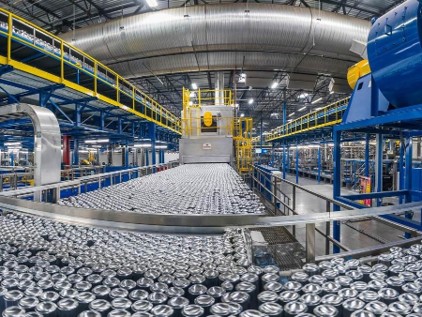
Figure 3. Can handling, filling, seaming, and accumulation must be planned as one system. Source: MIC Machinery can filling machine page.
6. Build a startup-ready request for quotation
A supplier sizes the system from the information you provide. Send a compact project brief with the following items:
- Beverage name, formulation status, viscosity or particulates, carbonation, and expected fill temperature
- Daily and monthly saleable volume, production days, shifts, and hours available for filling
- Primary container sample or drawing, dimensions, volume, and material
- Cap, crown, or can-end sample and supplier specification
- Number of products and package formats planned for the first year
- Required coding, labeling, inspection, and final pack format
- Available factory layout, door sizes, floor loading, drainage, and maintenance access
- Available utilities and local electrical standard
- Cleaning method, allergen changeover, and sanitation responsibilities
- Target installation date, operator skill level, spare-parts plan, and service expectations
Ask the supplier to return a line layout, scope boundary, utility schedule, change-part list, recommended spare parts, cleaning description, and acceptance-test plan. A short quotation with only a model name and maximum speed leaves too many project risks undefined.
7. Avoid the most common startup buying mistakes
Buying for a forecast without defining the production schedule
Annual sales alone do not size a filler. Convert demand into containers per production day, then account for batch preparation, cleaning, changeover, and available filling hours.
Choosing the filler before the package
Late changes to the bottle, cap, can end, or label can force new handling parts and repeat testing. Approve the package specification before the equipment design is frozen.
Comparing only maximum BPH
Two quotations with the same stated speed may assume different bottles, products, labor, and downstream scope. Compare the conditions behind the number and the guaranteed acceptance criteria.
Underestimating changeover and cleaning
A flexible machine can still lose most of a short production day to washing, adjustment, and verification. Ask for a demonstrated changeover and a cleaning review using the planned product and package.
Automating without maintenance capability
Sensors, conveyors, cap feeders, and controls reduce handling but create more points that require troubleshooting. Confirm training, documentation, remote support, spare parts, and the skills needed on site.
8. A practical decision guide for three startup stages
|
Startup stage
|
Typical operating situation
|
Options worth comparing
|
|
Product and market validation
|
Recipe or package may still change; production runs are small or irregular
|
Co-packing, manual filling for controlled trials, or a simple semi-automatic setup
|
|
Repeat local or direct sales
|
One main package, recurring orders, and a known weekly schedule
|
Semi-automatic filling with matched capping and labeling, or a compact automatic line if handling is the constraint
|
|
Established wholesale or retail demand
|
Stable package, regular production days, and clearer growth requirements
|
Automatic rinser-filler-capper or a balanced line with defined utilities, inspection, packing, and expansion space
|
The best filling machine for a small beverage startup is the simplest system that can meet validated demand, protect the product, run the chosen package, and leave a credible path for growth. That may be a semi-automatic filler, but it should be a conclusion from the operating plan rather than a default answer.
MIC's broader beverage filling machine range includes bottle and can categories at different automation levels. For a deeper review of general selection criteria, use the existing drink filling machine buyer guide as the pillar reference.
FAQ
How many bottles per hour does a beverage startup need?
Divide the required saleable containers per production day by scheduled filling hours and planned line utilization. Then check whether cleaning, changeover, batch preparation, capping, labeling, and packing fit into the same schedule. Ask suppliers to quote complete-line output under a defined product and bottle, not an unsupported maximum BPH.
Is a semi-automatic filler always best for a startup?
No. It works well for regular small batches when manual loading and downstream handling remain manageable. An automatic line may be justified by stable demand or a labor bottleneck. Co-packing may be lower risk while the product, package, or sales forecast is still changing.
Can one filling machine run PET bottles, glass bottles, and cans?
Some platforms can handle more than one package with substantial change parts or dedicated modules, but cans still require seaming and bottles require a suitable closure system. Ask for a written format matrix, changeover method, parts list, and trial for every package combination before assuming one machine will cover all three.
Can a gravity filler handle carbonated drinks?
A standard atmospheric gravity filler is generally not the right choice for a carbonated beverage because pressure and foam must be controlled. Specify a counter-pressure or isobaric process that matches the product temperature, carbonation level, container, and closure.
What should I send a filling machine supplier before requesting a quote?
Send the beverage description, expected fill temperature, carbonation or viscosity information, container and closure samples or drawings, target saleable output, production schedule, number of formats, factory layout, utilities, cleaning requirements, and downstream packaging plan. Better inputs produce a more useful line proposal and acceptance test.
Final thoughts
Choose the beverage process and package first, calculate realistic saleable output, then select the simplest automation level that removes the actual constraint. MIC can review the beverage, container, daily target, factory layout, and downstream scope to prepare a project-specific filling configuration.