China 24000BPH Complete Water Bottling Line Project Case | Mic Machinery
China 24000BPH Complete Water Bottling Line Project Case
Project Basic Info
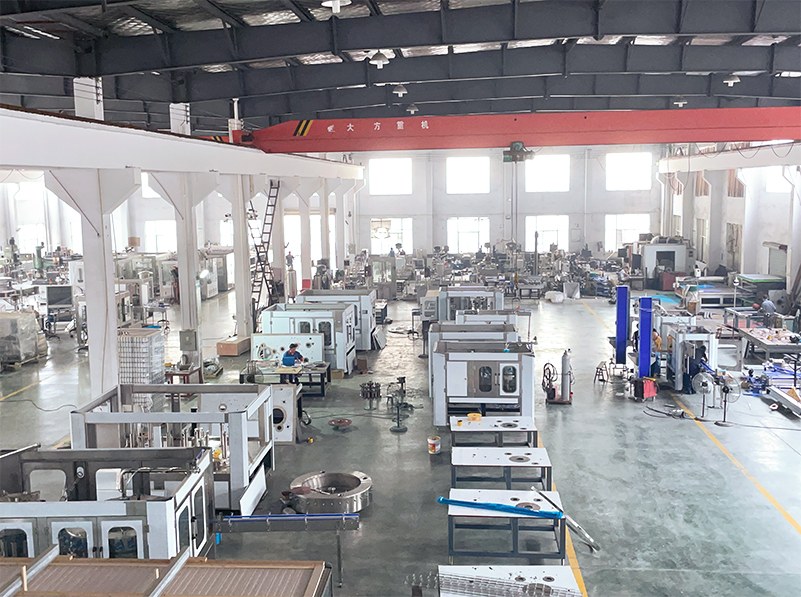
This China water bottling project was developed for a new beverage factory requiring two high-capacity fully automatic water bottling lines, with each line designed for a production capacity of 24,000 bottles per hour (24000BPH). The project focuses on bottled water production using plastic bottles and integrates upstream water treatment, bottle manufacturing, filling, secondary packaging, and palletizing into a coordinated production system.
The complete project configuration includes a water treatment system, PET bottle blowing machine, water filling machine, Labeling machine, wrapping machine, and palletizer. By integrating these major production stages, the customer can establish a continuous workflow from treated water and empty bottle production to filled-bottle packaging and finished-pallet handling.
For a new factory, this type of integrated configuration helps simplify equipment coordination and factory planning. Instead of purchasing individual machines without considering their compatibility, the production line is designed around the target output, bottle specifications, material flow, utilities, and downstream packaging requirements.
The two-line configuration also provides a higher overall production capacity while allowing production resources to be distributed between independent lines. This can be useful for factories serving multiple markets, expanding bottled-water sales, or planning long-term production growth.
Customer Demand & Pain Points
The customer was planning a new bottled-water factory and required a high-efficiency automated production system capable of supporting large-scale daily output. Rather than purchasing a standalone filling machine, the customer needed a complete project solution covering water treatment, bottle production, filling, packaging, and palletizing.
Several common factory-investment requirements were identified during project planning.
First, the customer needed high production capacity. With two 24000BPH lines, the factory could establish a substantial production base while maintaining separate production units for operational flexibility.
Second, the customer wanted to reduce manual intervention. Manual bottle handling, packaging, and pallet movement can increase labor requirements and create bottlenecks as production volume increases. Automatic conveying, filling, film wrapping, and palletizing were therefore important parts of the solution.
Third, the new factory required coordinated equipment rather than isolated machines. Production speed needs to remain balanced between bottle blowing, filling, packaging, and palletizing. A high-speed filler alone cannot achieve the expected output if upstream or downstream equipment becomes a bottleneck.
Finally, the customer wanted a production line that could support future factory development and capacity expansion. Factory layout, equipment spacing, utility planning, maintenance access, and material flow therefore needed to be considered during the initial project design.
These requirements are also relevant to existing bottled-water manufacturers considering factory expansion, production-line upgrades, or automation replacement.
Our Custom Solution
Based on the customer's capacity target, bottled-water application, plastic bottle format, and new-factory requirements, Mic Machinery developed a complete production-line configuration around two 24000BPH water bottling lines.
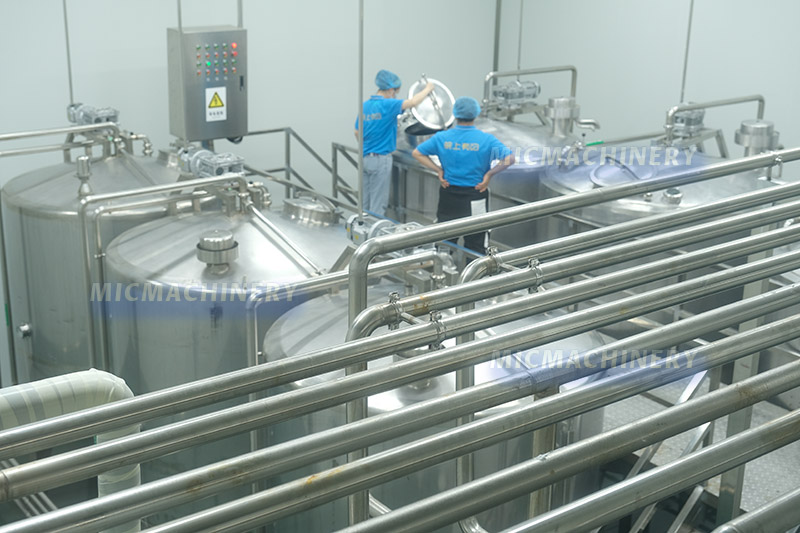
The water treatment section provides the upstream processing foundation for bottled-water production. Treatment equipment is selected according to the customer's source-water characteristics and required finished-water quality.
The treatment process can be engineered according to the project requirements, with the objective of providing a stable water supply to the downstream filling system.
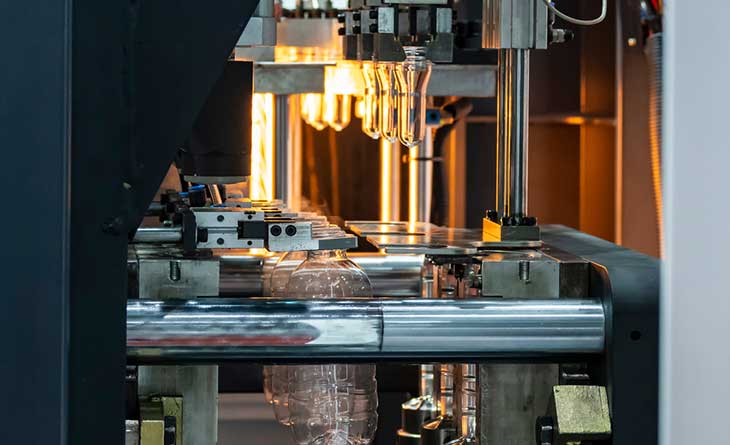
The PET bottle blowing machine produces empty plastic bottles before they enter the filling section. Integrating bottle blowing with the downstream filling line can reduce dependence on externally supplied empty bottles and improve control over bottle supply.
Bottle specifications, preform dimensions, bottle volume, and required output should be confirmed before final machine selection.
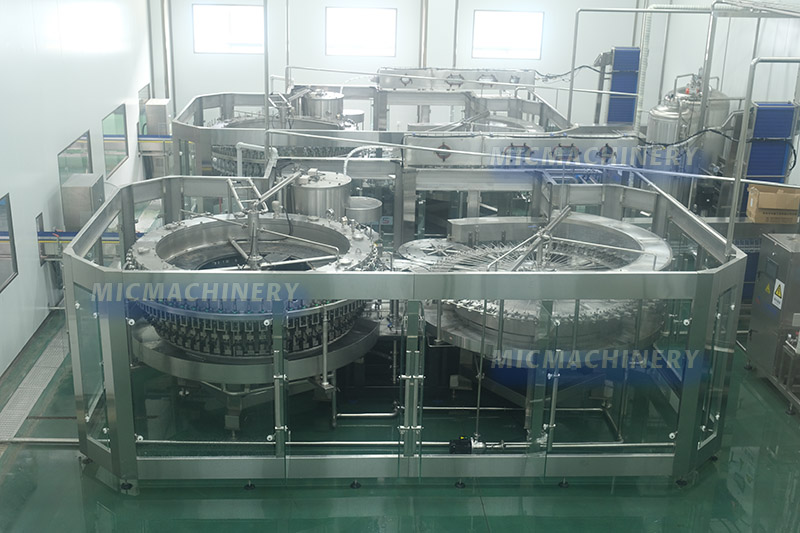
The water filling machine is the core equipment in the production line. For a high-capacity project, filling speed, filling accuracy, bottle handling, hygienic design, automation level, and compatibility with the selected PET bottle are key selection factors.
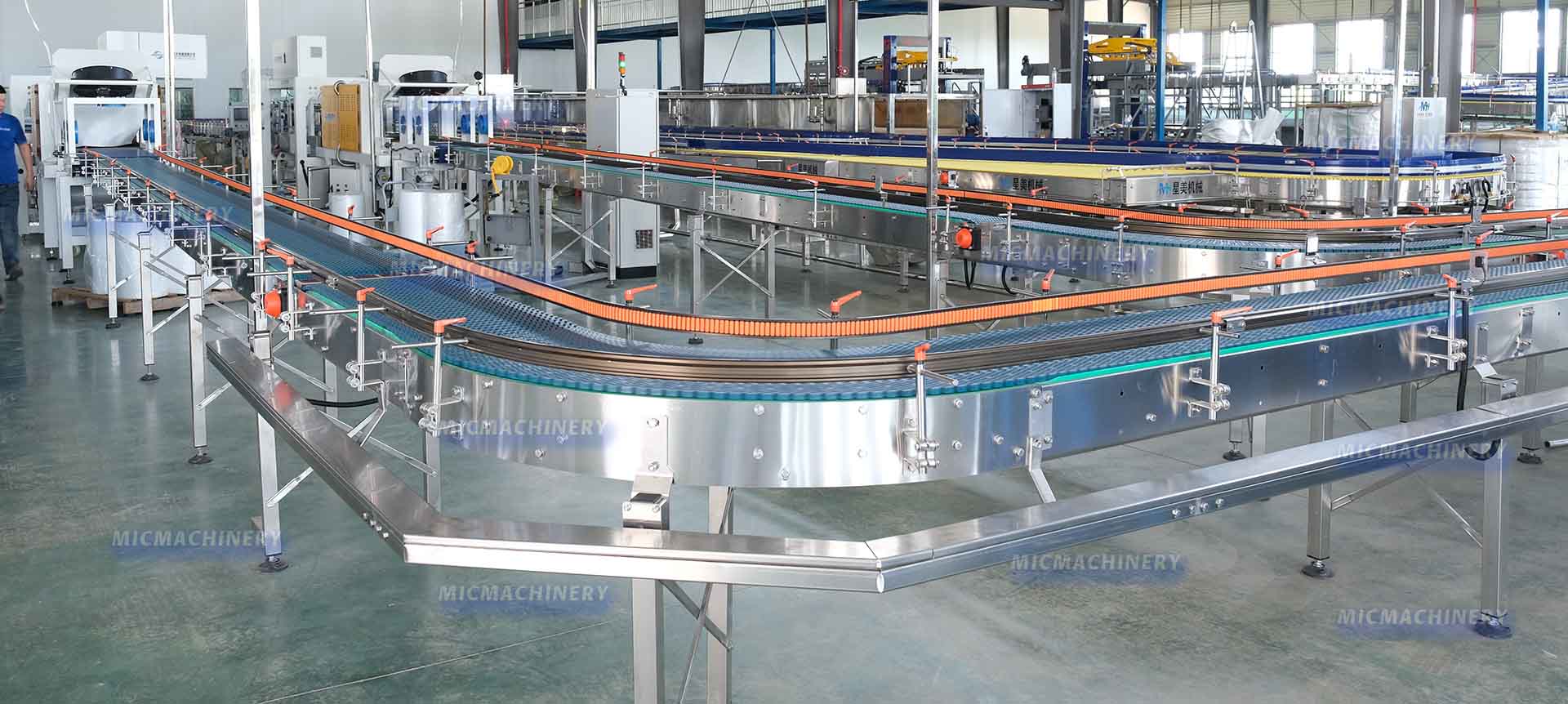
The filling machine is integrated with upstream and downstream conveyors so that bottles can move continuously through the production process.
For customers comparing different water bottling line project cases, the important point is not simply the nominal filling speed. The complete line should be evaluated according to its actual production capacity, equipment balance, bottle format, and packaging requirements.
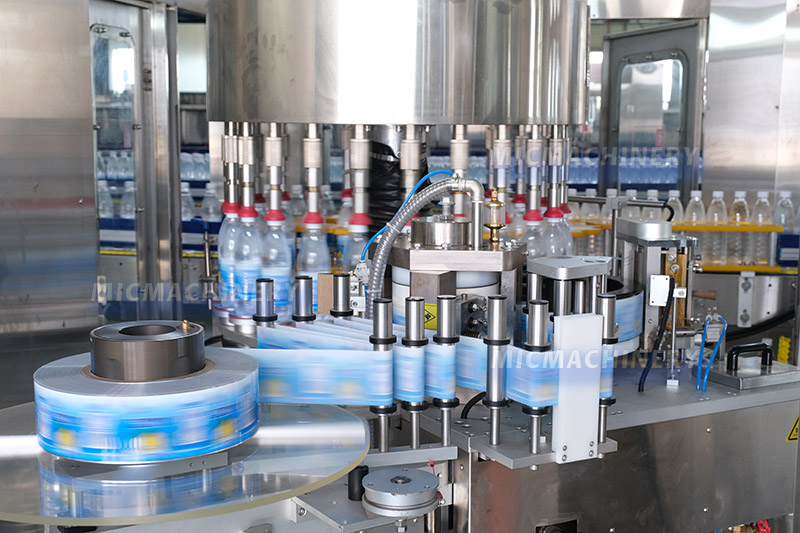
After filling and capping, bottles enter the labeling machine, where product labels are applied automatically. Integrating labeling directly into the production line reduces manual handling and helps maintain consistent label positioning at high production speeds.
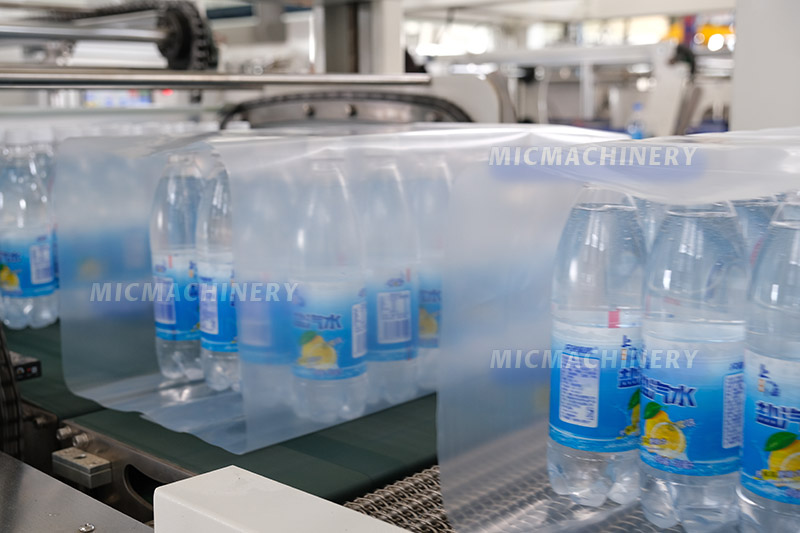
After filling, bottles are transferred to the film wrapping section for secondary packaging. Automatic film wrapping reduces manual packing work and provides a consistent package format for transportation and warehouse handling.
The wrapping configuration can be adjusted according to bottle arrangement, pack quantity, film specifications, and customer distribution requirements.
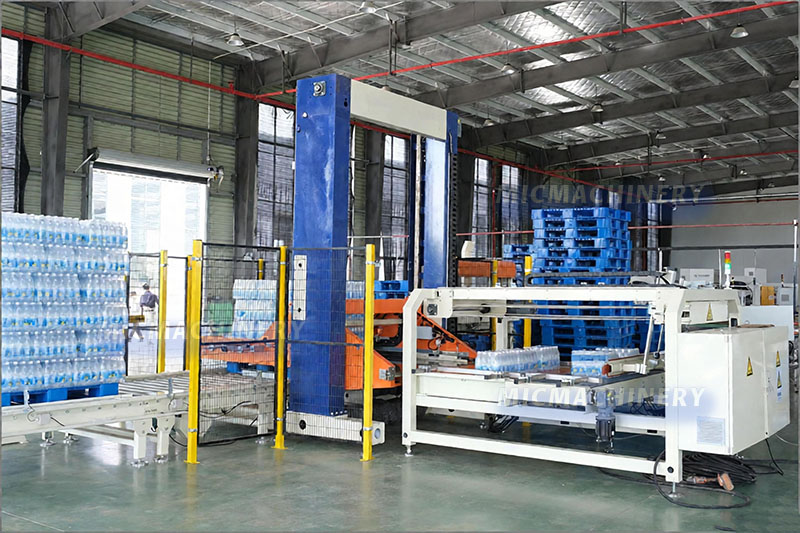
The palletizer automatically organizes packaged bottled water into predefined pallet patterns. This reduces manual palletizing operations and helps improve warehouse handling efficiency.
For a high-output factory, automated palletizing is particularly valuable because manual pallet handling can become a major labor-intensive process after the filling and packaging stages.
Integrated Production Logic
The complete production sequence can be organized as:
Water Treatment → PET Preform/Bottle Production → Bottle Conveying → Water Filling → Capping →Labeling machine→ Film Wrapping → Palletizing → Finished Product Storage
The final conveyor configuration, machine arrangement, buffer sections, and pallet flow are determined according to the factory building and production requirements.
On-site Installation & Production Effect
For a large-scale China 24000BPH complete water bottling line project, installation and commissioning are important stages in achieving stable production.
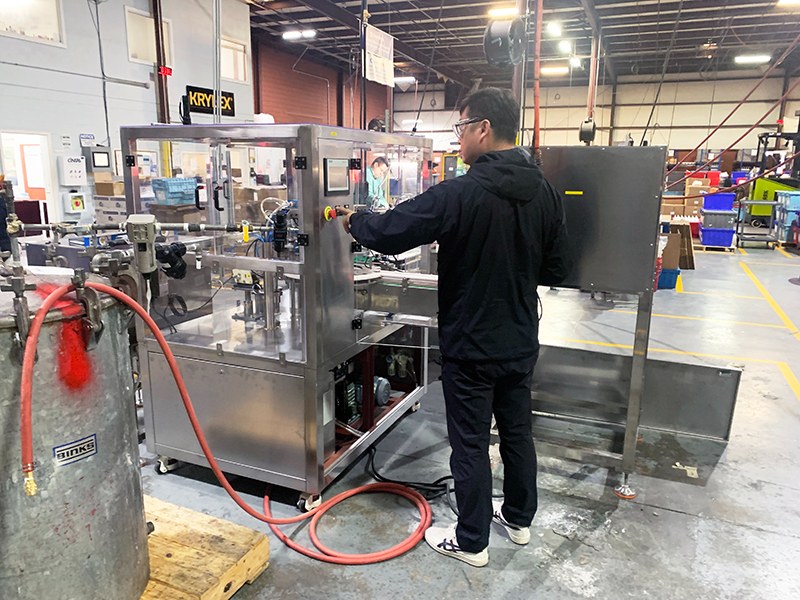
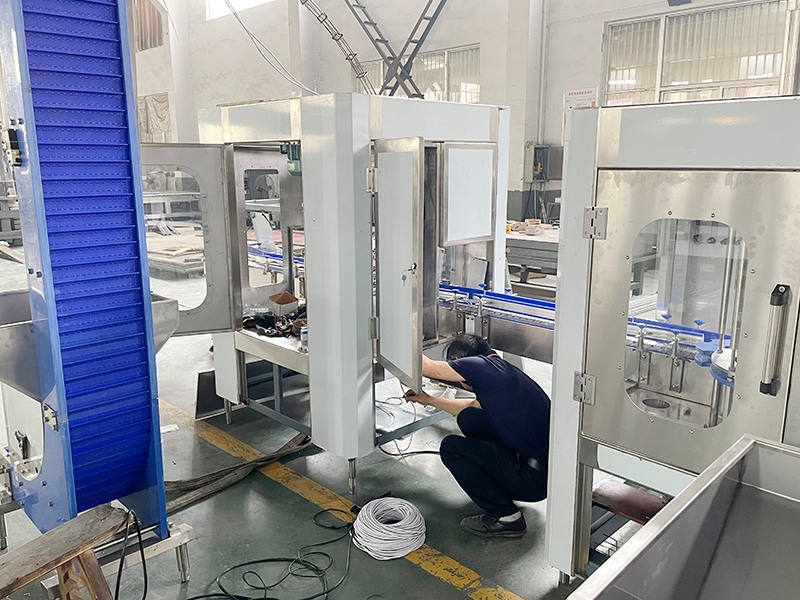
Before commissioning, engineers need to verify equipment positioning, conveyor alignment, electrical connections, pneumatic supply, water connections, safety systems, and communication between individual machines.
During commissioning, the production line is progressively tested from individual equipment to complete-line operation. Bottle conveying, filling performance, film wrapping, palletizing, and production synchronization are checked under actual operating conditions.
The engineering team can also provide operator training covering equipment operation, routine inspection, cleaning procedures, basic troubleshooting, and preventive maintenance.
Customer Feedback
After the equipment installation and commissioning stage, the customer evaluated the production line based on automation, production coordination, operating stability, and ease of daily management.
A suitable customer testimonial can focus on the project's practical value:
“The complete line configuration made the new factory project easier to organize. The equipment works together as one production system, and the automatic filling, wrapping, and palletizing processes significantly reduce manual operations. The engineering team also provided support during installation and commissioning.”
Why This Project Matters for New Water Bottling Factories
A large-scale water bottling project requires more than selecting a high-speed filler. The entire production chain must be considered from the beginning.
For new factory investors, the main advantage of turnkey planning is that upstream and downstream equipment can be evaluated together. This helps avoid common problems such as insufficient conveyor capacity, mismatched machine speeds, inadequate maintenance space, inefficient material flow, or insufficient packaging capacity.
For existing water manufacturers, the same approach can support factory expansion and production-line upgrades. Instead of replacing only one machine, the production system can be evaluated as a whole to identify the actual production bottleneck.
The 24000BPH × 2 configuration also demonstrates how production capacity can be distributed across multiple lines. This approach can provide operational flexibility when factories need to manage different production schedules, maintenance periods, product specifications, or future capacity requirements.
Similar Project Cases
This China project can be connected with other bottled-water and beverage production projects to create a stronger case-study content cluster.
A centralized Cases page can further classify projects by country, beverage type, production capacity, bottle format, and equipment configuration. This structure helps visitors compare projects while giving search engines clearer relationships between individual case pages and the company's broader beverage-equipment portfolio.
Conclusion
The China 24000BPH Complete Water Bottling Line Project Case demonstrates a complete approach to large-scale bottled-water factory planning. The project consists of two 24000BPH production lines and integrates water treatment, PET bottle blowing, water filling, film wrapping, and palletizing equipment.
For new factory investors, the key consideration is not simply machine speed but how the complete production system works together. Capacity balancing, factory layout, utilities, automation, material flow, installation, commissioning, and after-sales support should all be considered before equipment selection.