1000–2000BPH Glass Bottle Filling Line Solution | Mic Machinery
Project Overview
A 1000–2000BPH glass bottle filling line is designed for beverage producers that need a practical balance between production capacity, automation level, factory investment, and future expansion. This capacity range is suitable for new beverage factories, regional beverage brands, distilleries, established producers expanding an existing plant, and manufacturers replacing manual or semi-automatic bottling equipment.
Mic Machinery develops complete glass bottle bottling solutions around the actual product, bottle format, closure type, production target, factory layout, and packaging requirements. Instead of selecting a filling machine separately and connecting unrelated equipment later, the complete line can be planned as one coordinated production system.
Typical applications include bottled water, juice, non-carbonated drinks, wine, alcoholic beverages, and other suitable liquid products. The exact filling technology depends on beverage characteristics, bottle dimensions, closure design, hygiene requirements, and whether the product requires thermal treatment.
For a new factory, the solution can be developed as a turnkey beverage bottling plant, including bottle handling, washing, filling, closing, drying, labeling, secondary packaging, palletizing, and wrapping. For an existing factory, the same approach can be used as a factory expansion bottling line or automation upgrade while preserving suitable existing equipment.
The 1000–2000BPH range is particularly useful when a producer wants more automation and production consistency than a small semi-automatic system while avoiding the capital investment and factory footprint of a high-speed industrial bottling plant.
Typical Project Applications
-
New beverage factory construction
-
Small and medium beverage production plants
-
Factory expansion and capacity upgrades
-
Replacement of manual bottling operations
-
Automation of existing glass bottle production
-
Regional beverage and juice brands
-
Small-scale water and non-carbonated beverage projects
-
Wine and selected alcoholic beverage bottling projects
-
Export-oriented beverage factories in Africa, Southeast Asia, and the Middle East
The final configuration should always be determined from the beverage, bottle, closure, target output, working hours, packaging format, and local production requirements rather than capacity alone.
Full Line Configuration
A complete glass bottle production line is normally arranged according to the movement of the container from empty bottle handling to finished pallet. Some equipment is essential for a particular project, while other machines are selected according to the beverage and packaging method.
 |
Bottle Washing, Filling & Corking Machine
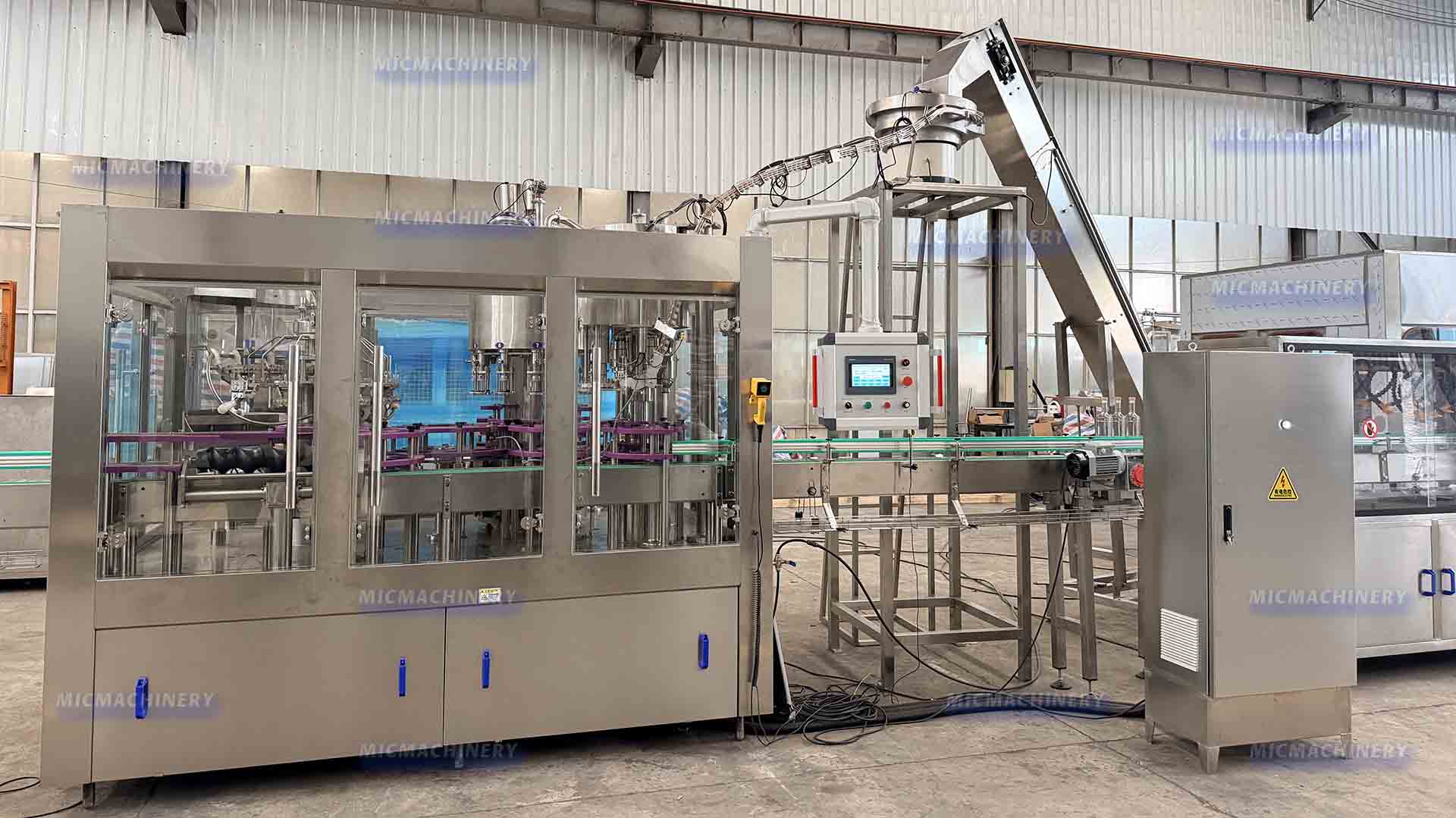
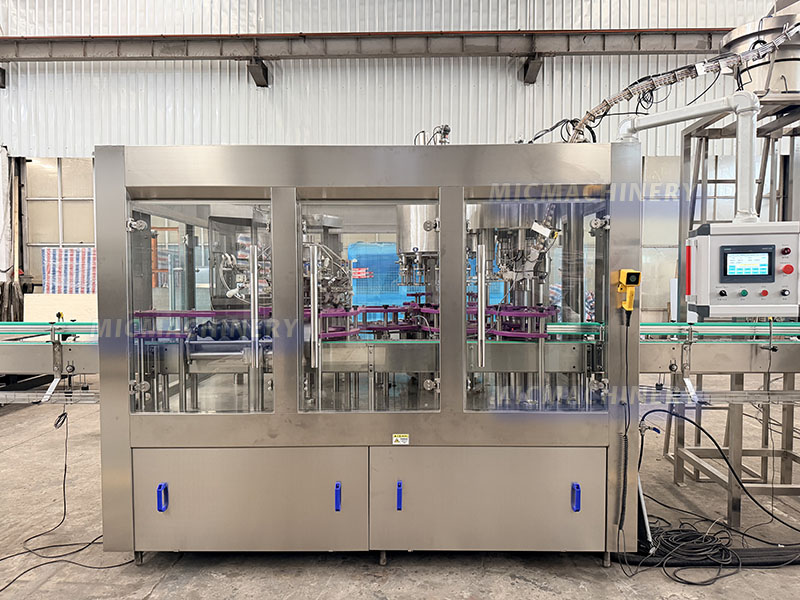
The Bottle Washing, Filling & Corking Machine is the core processing equipment for suitable glass bottle applications. The integrated system can combine bottle washing, liquid filling, and closure handling in one coordinated machine, reducing unnecessary transfers between individual machines.
For non-carbonated beverage applications, Mic Machinery lists the MIC 14-12-5 model in the 1000–2000BPH range. The company's glass bottle filling machine range also includes different configurations for carbonated and non-carbonated beverages, allowing the filling method to be matched with the product and required capacity.
For projects using cork closures, such as certain alcoholic beverages, the filling and corking configuration needs to be designed around the actual cork dimensions, bottle neck, product characteristics, and downstream capsule or labeling requirements.
|
 |
Glass Bottle Depalletizer
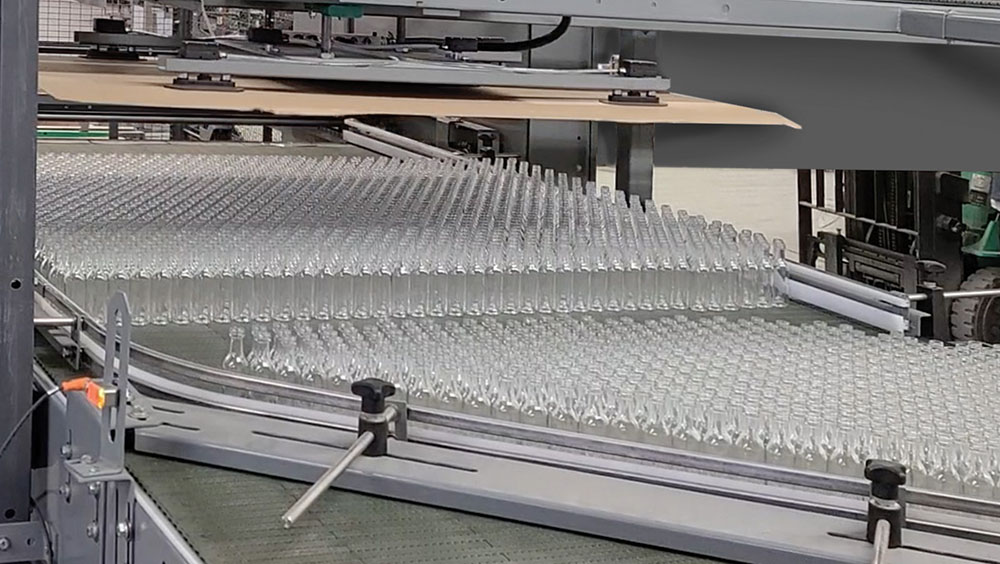
The Glass Bottle Depalletizer automatically transfers empty bottles from incoming pallets to the production conveyor. This reduces manual bottle handling and helps create a continuous supply of containers to the washing and filling section.
For a 1000–2000BPH line, the depalletizing system can be selected according to pallet dimensions, bottle arrangement, bottle weight, available floor space, and the desired automation level.
The machine is particularly useful for factories that expect stable daily production and want to reduce labor requirements at the beginning of the line.
|
 |
Pasteurization Machine
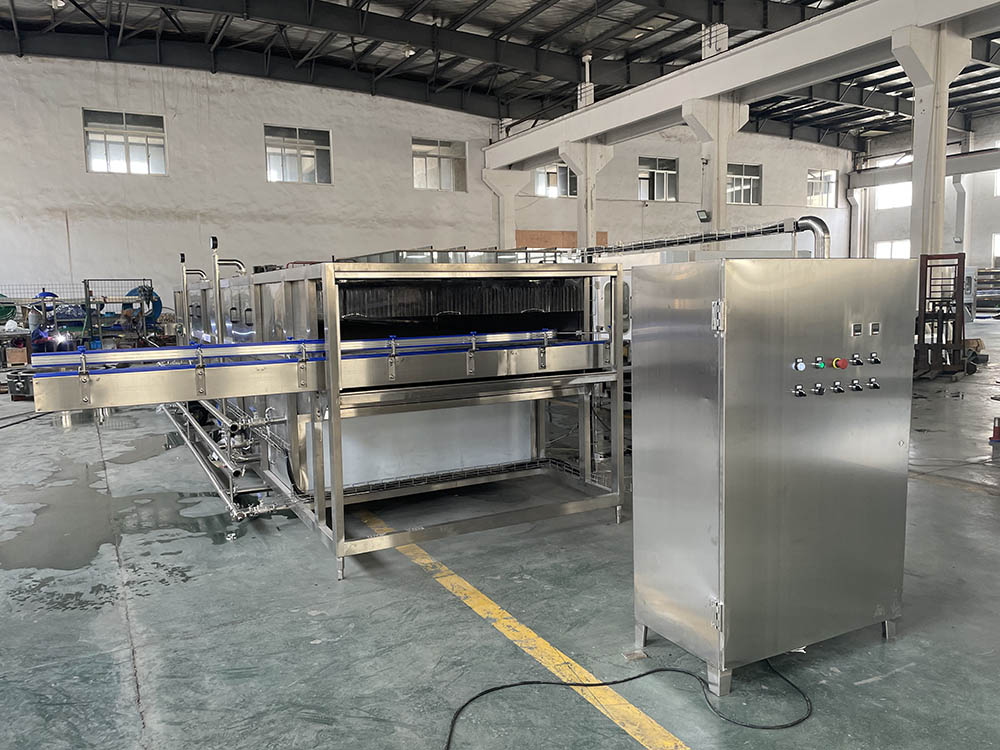
The Pasteurization Machine is selected when the beverage and process require controlled heat treatment. It can be integrated downstream of filling and closing for suitable products, with the exact temperature profile and treatment time determined by the product formulation, bottle type, process requirements, and target microbiological performance.
Pasteurization should not automatically be included in every glass bottle project. For products that do not require thermal treatment, omitting unnecessary equipment can reduce investment, energy consumption, and line complexity.
|
 |
Warm Irrigation Machine
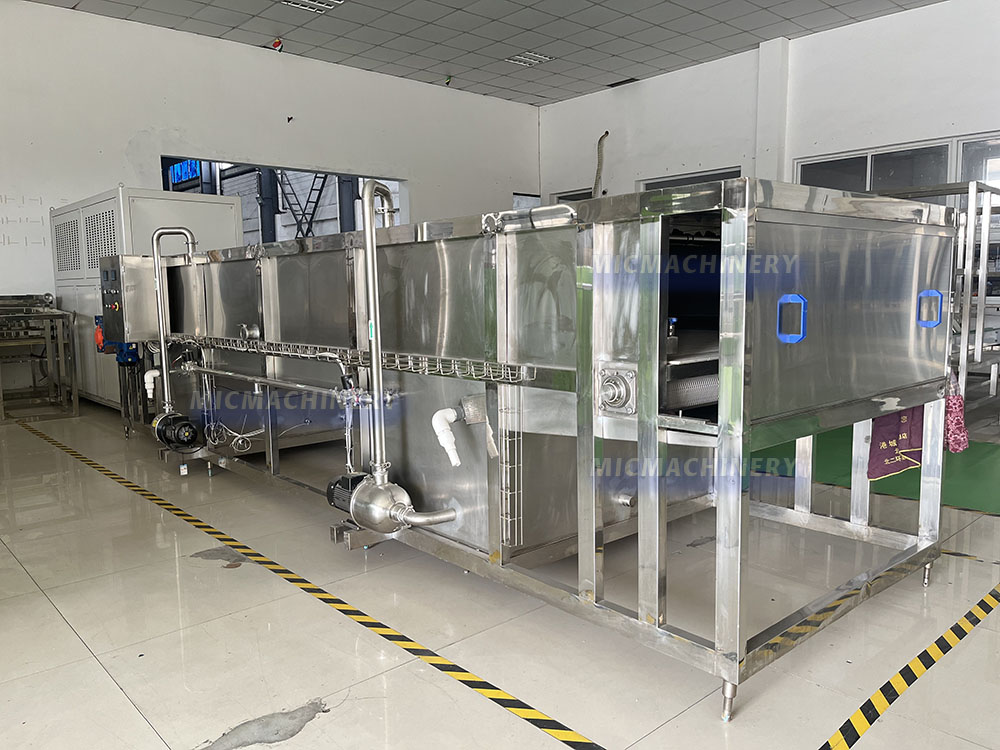
A Warm Irrigation Machine can be incorporated into beverage lines where controlled warm-water treatment is required after filling and closing. It can support temperature transition or downstream process requirements for selected products.
The machine should be specified according to the product, container material, production speed, and thermal process. For glass bottles, controlled temperature changes are especially important because rapid temperature differences can increase thermal stress on the container.
|
 |
Air Knife Dryer
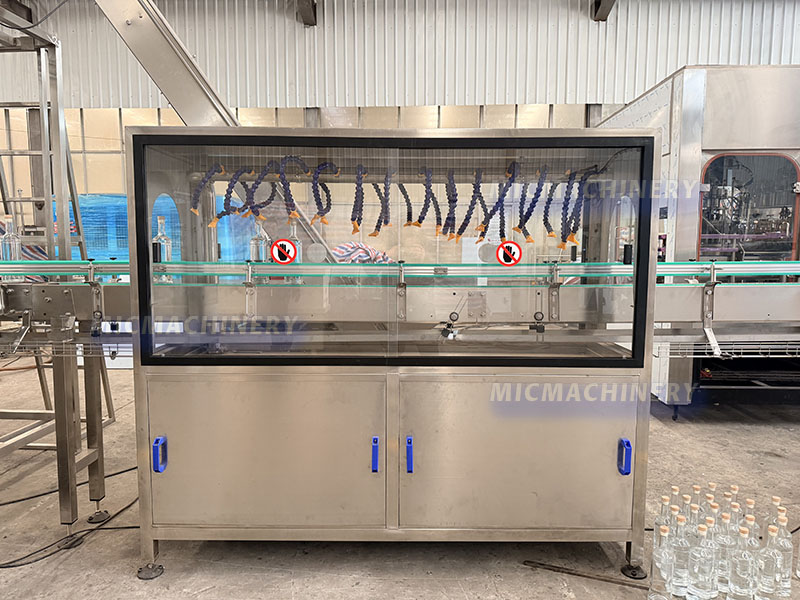
The Air Knife Dryer removes residual water from the exterior of bottles before labeling, coding, or secondary packaging.
Effective bottle drying is important because moisture on the bottle surface can interfere with label adhesion and reduce packaging appearance. The air knife system directs controlled airflow across the container surface to remove water while the bottles continue moving along the conveyor.
For a 1000–2000BPH line, drying capacity should be matched to conveyor speed, bottle diameter, bottle shape, and the labeling technology used downstream.
|
 |
Labeling Machine
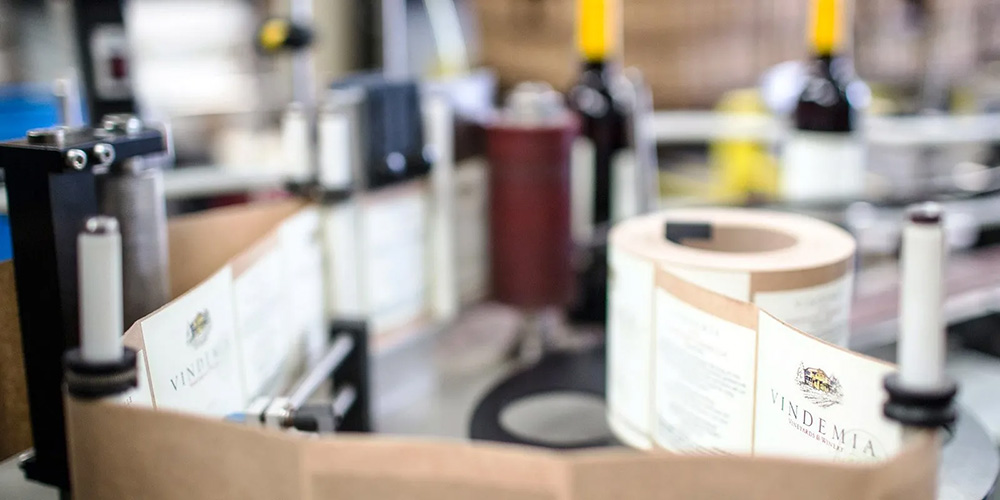
The Labeling Machine applies the required product label after filling and bottle drying. The appropriate configuration depends on bottle shape, label material, label position, production speed, and presentation requirements.
Round glass bottles may require different positioning and handling from square or irregular bottles. For premium beverage products, label alignment can also become an important part of the finished-product quality standard.
|
 |
Shrink Sleeve Labeling Machine
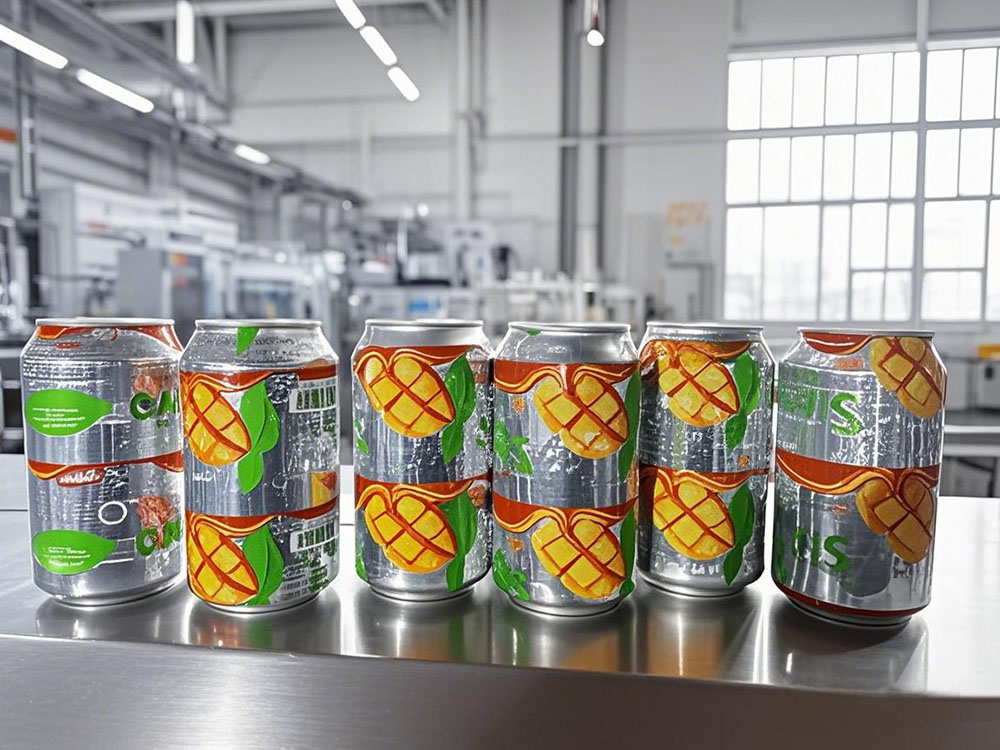
A Shrink Sleeve Labeling Machine can be used when the product requires full-body or decorative sleeve packaging. The sleeve is positioned around the bottle and subsequently shrunk to conform to the container shape.
This solution is suitable when a beverage brand requires high visual coverage, special bottle graphics, or tamper-evident packaging. It can be installed as an alternative to, or in some projects together with, other labeling technologies depending on the final packaging design.
|
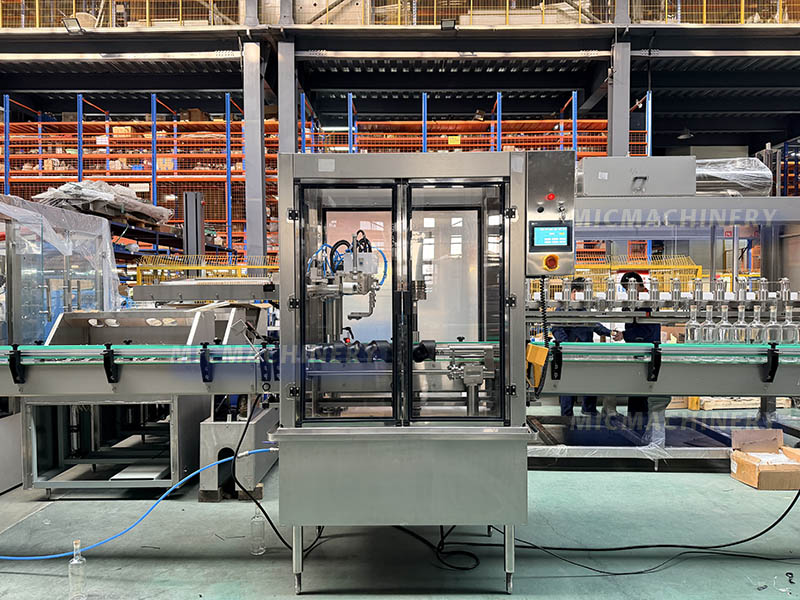 |
Glass Bottle Capsule Heat Shrinking
For products using a capsule, especially selected wine and alcoholic beverage applications, Glass Bottle Capsule Heat Shrinking equipment can provide controlled heating to form the capsule around the bottle neck.
The capsule shrinking process should be synchronized with bottle speed and capsule material. Stable bottle positioning helps achieve a consistent appearance across finished products.
|
 |
Wrap Packing Machine / Carton Packing Machine
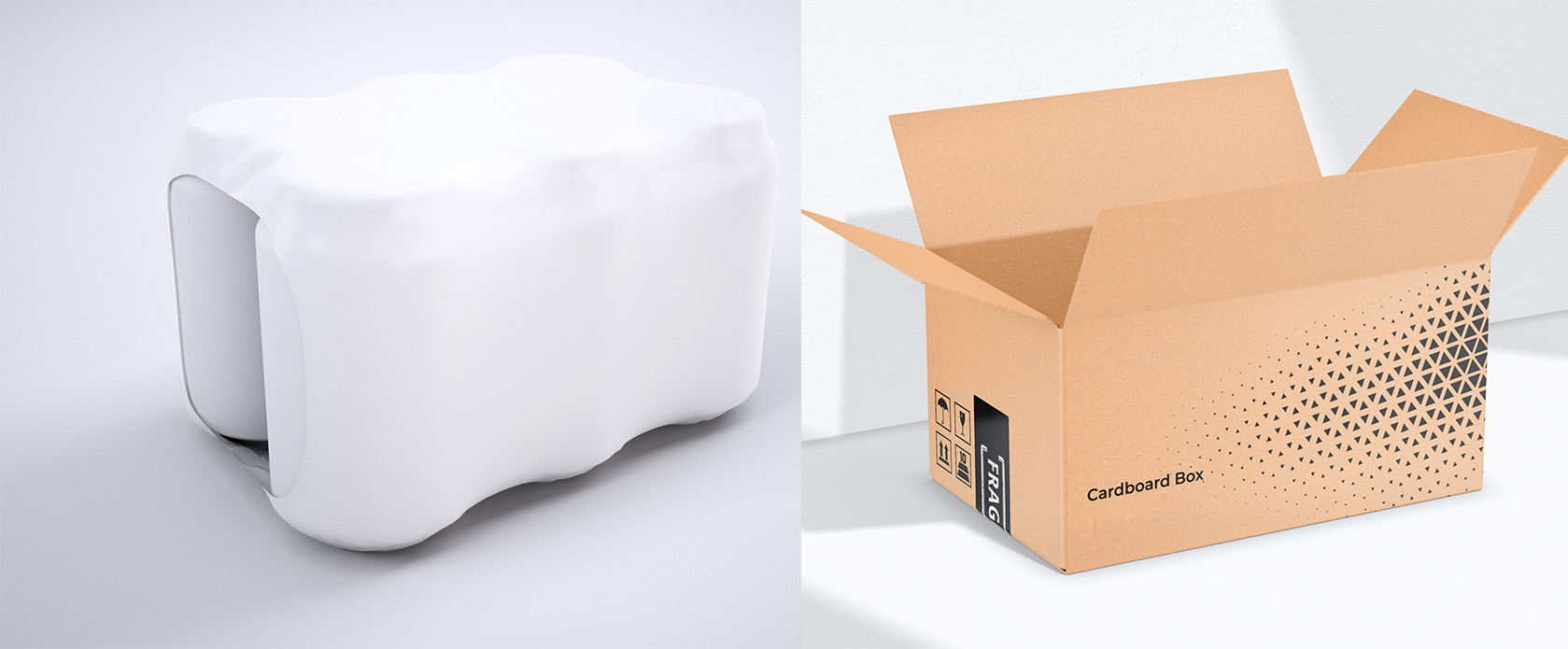
After labeling and coding, finished bottles can be grouped into secondary packages.
Mic Machinery can configure wrap packing or carton packing according to the customer's distribution model and packaging requirements.
The appropriate secondary packaging method depends on bottle size, pack quantity, transportation conditions, and market requirements.
|
 |
Palletizer
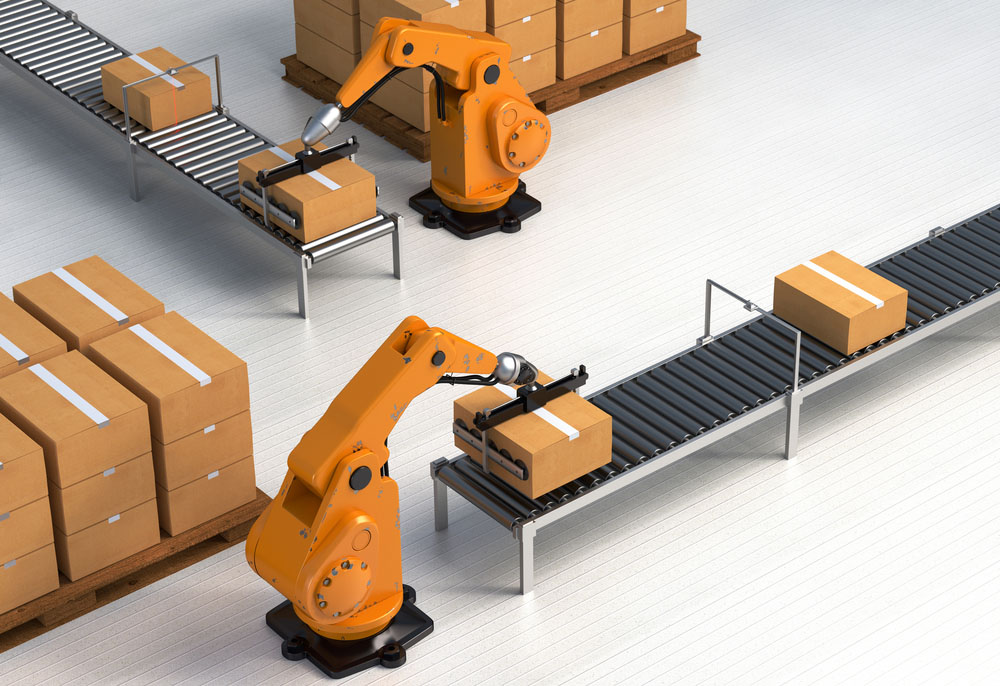
The Palletizer automatically arranges packed cartons or grouped products into stable pallet patterns. Automated palletizing reduces repetitive manual handling and provides a more consistent pallet structure.
For a 1000–2000BPH line, the palletizer can be sized according to the downstream packing format rather than simply matching the bottle-filling speed.
|
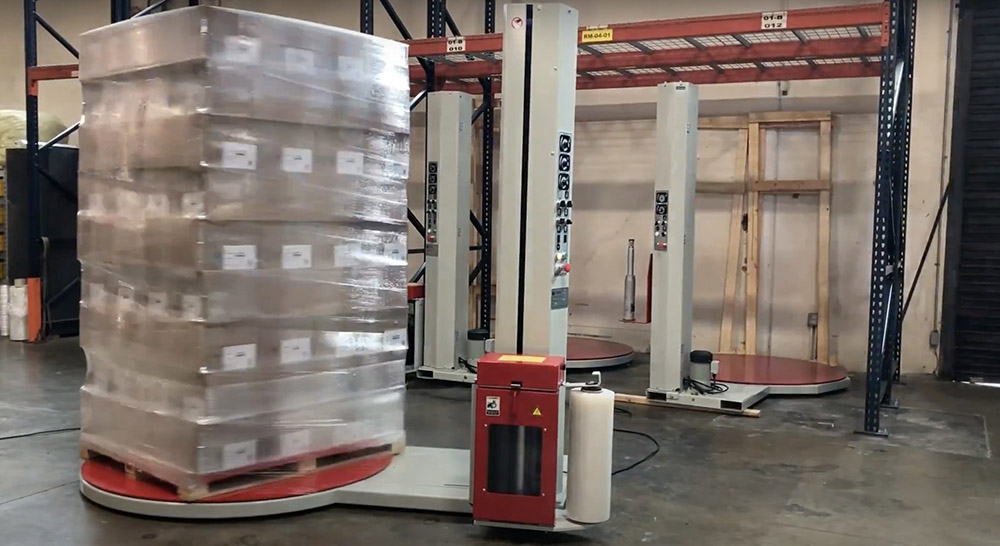 |
Pallet Wrapping Machine
The Pallet Wrapping Machine secures finished pallets with stretch film before storage or shipment. Proper wrapping helps stabilize packaged products during forklift handling, warehouse storage, and transportation.
The pallet wrapping process completes the end-of-line packaging section and allows the finished products to move from production directly into the warehouse or loading area.
|
Custom Capacity Options
Although this solution focuses on 1000–2000BPH, the line should not be treated as a single fixed configuration. Capacity should be selected from the customer's expected sales volume, operating schedule, factory investment, and future expansion plan.
Small Production Line: Around 1000BPH
A 1000BPH configuration is suitable for new beverage factories, regional brands, small beverage producers, and businesses entering a new market.
The main priority at this level is usually achieving reliable automation without creating excessive capital expenditure. The filling section can be combined with essential bottle handling, washing, drying, labeling, and packing equipment while optional automation is added according to budget.
This configuration can be attractive for customers searching for a small beverage production line that can support commercial production while leaving room for future expansion.
Medium Production Line: 1200–1500BPH
A 1200–1500BPH configuration provides a stronger balance between output and automation. It can be suitable for established regional beverage companies or factories that are replacing semi-automatic operations.
At this scale, production balance becomes increasingly important. The depalletizer, filling machine, conveyor system, labeling equipment, and packaging equipment should not create bottlenecks that reduce the practical output of the entire line.
Larger Configuration: Around 1800–2000BPH
A 1800–2000BPH system is suitable for producers with higher regional demand or factories planning to build a more automated operation.
At approximately 2000BPH, project engineering should consider the complete line rather than focusing only on the filling machine. Bottle accumulation, conveyor speed, labeling, packing, palletizing, utilities, operator access, and maintenance space all influence actual production efficiency.
Customers planning a future large carbonated drink plant may require a substantially different high-speed configuration because carbonated beverage filling and glass bottle handling require different engineering considerations. Capacity should therefore never be selected from the BPH number alone.
Factory Layout & Installation Service
A successful bottling project begins before the machines arrive. Factory layout directly affects material flow, operator access, maintenance efficiency, utilities, and future expansion.
For a 1000–2000BPH glass bottle line, the layout normally considers:
-
Raw bottle receiving and storage
-
Empty bottle pallet storage
-
Depalletizing area
-
Washing and filling section
-
Product and utility connections
-
Thermal treatment area when required
-
Drying and labeling section
-
Secondary packaging
-
Palletizing and wrapping
-
Finished-product warehouse
-
Maintenance access
-
Electrical control area
-
Drainage and cleaning requirements
The final production layout should be based on the customer's building dimensions, column positions, door locations, floor height, available utilities, drainage conditions, and material flow.
Overseas Project Installation
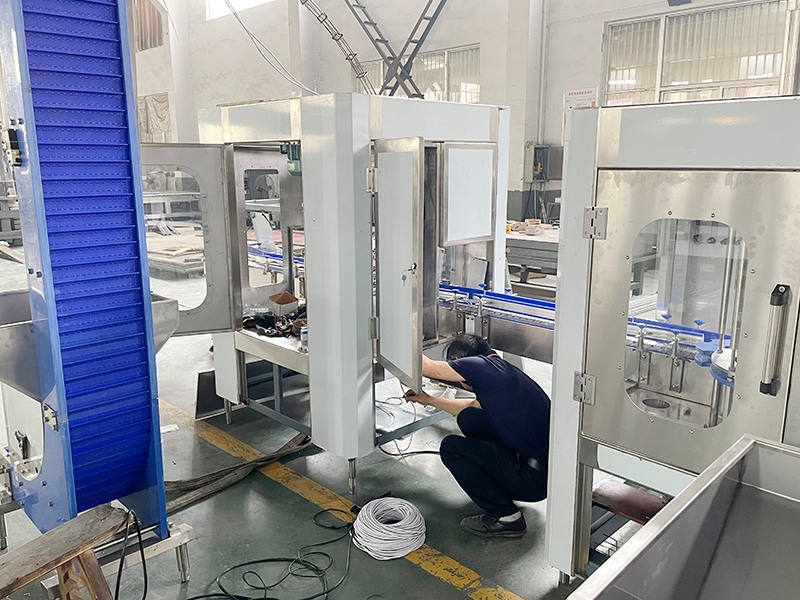
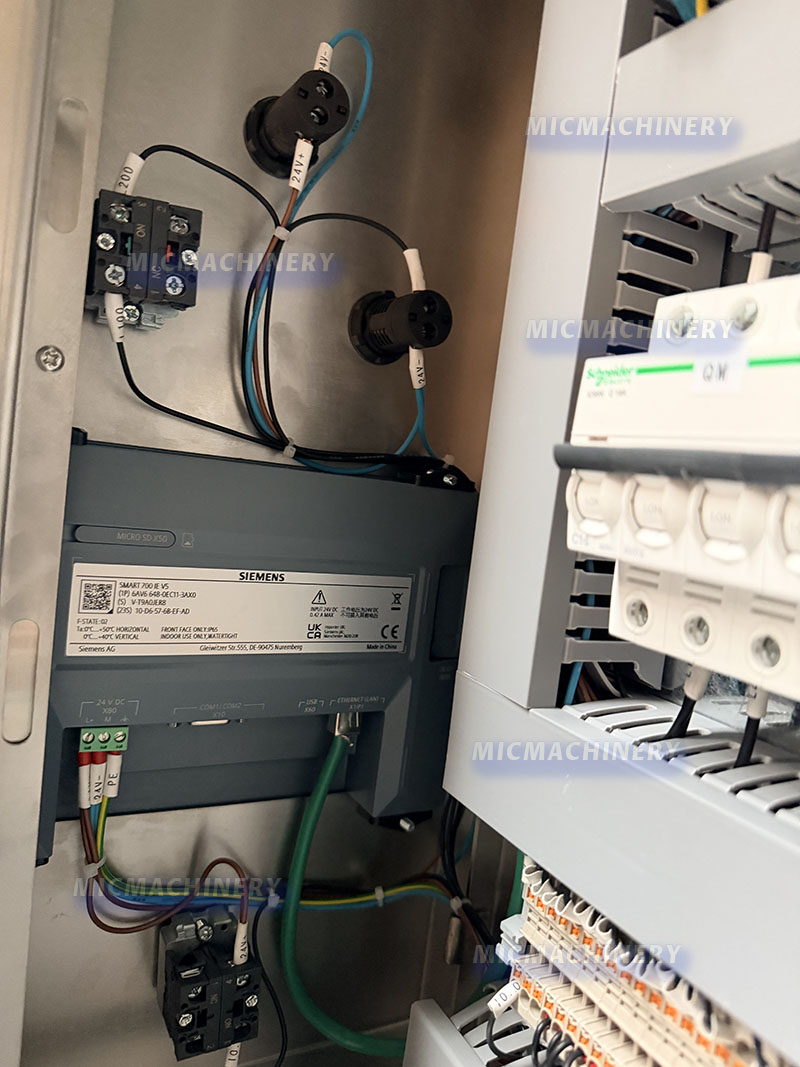
For international projects, equipment delivery is only one part of the project. Installation and commissioning can include machine positioning, mechanical assembly, conveyor alignment, electrical connection, pneumatic connection, process-piping coordination, trial operation, and operator training.
Before installation, the customer should provide accurate factory information so the equipment arrangement can be checked against the actual building.
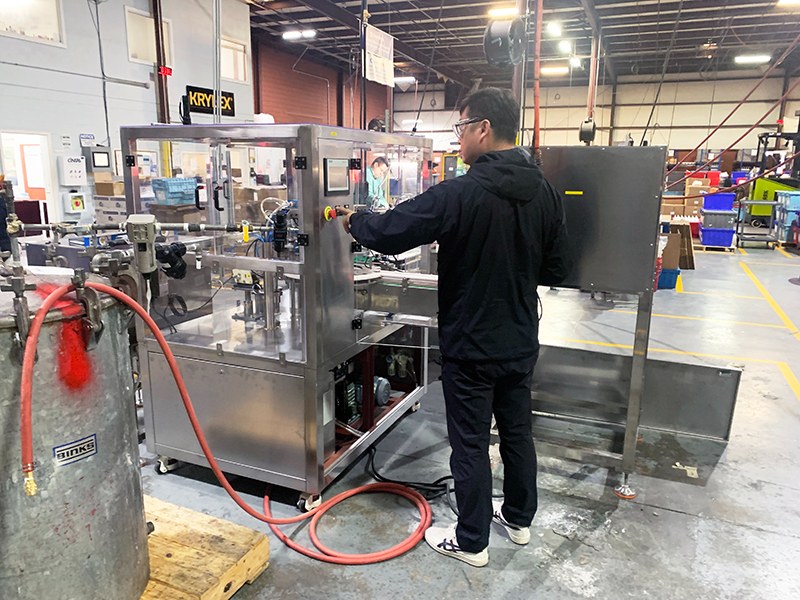
During commissioning, the line should be tested under the customer's actual bottle, closure, beverage, and production conditions whenever possible.
Training and After-Sales Service
Operator training should cover machine operation, routine adjustment, cleaning, basic troubleshooting, safety procedures, and production changeover.
After commissioning, technical support and spare-parts supply can help customers maintain stable operation. A practical after-sales service system should focus not only on repairing equipment but also on helping operators identify problems before they become major production interruptions.
This project-oriented approach is particularly important for overseas customers in Africa, Southeast Asia, and the Middle East, where technical communication, spare-parts planning, and remote support can significantly affect long-term equipment utilization.
Industry Cases For This Solution
Real project experience is an important reference when selecting a complete glass bottle bottling solution. A machine specification alone cannot show whether the equipment can be integrated into an actual factory environment.
El Salvador 2000BPH Vodka Glass Bottle Filling Line
One directly relevant project is the El Salvador 2000BPH Vodka Glass Bottle Filling Line.
The project was delivered in April 2026 for a vodka producer using glass bottles and wooden corks. The core equipment included a 14-12-5 bottle washing, filling and corking machine, together with an air knife dryer and glass bottle capsule heat-shrinking equipment.
The project demonstrates how a 2000BPH glass bottle line can be configured around a specific alcoholic beverage, glass container, and closure requirement rather than using a generic beverage line.
The complete project can be reviewed here:
El Salvador 2000BPH Vodka Glass Bottle Filling Line Project Case
For customers evaluating a similar project, the case provides a practical reference for equipment selection, line integration, and the relationship between filling, drying, capsule treatment, and downstream packaging.
FAQ – Common Questions About Beverage Bottling Line
What beverages can be filled on a 1000–2000BPH glass bottle line?
The solution can be configured for suitable bottled water, juice, non-carbonated beverages, wine, alcoholic beverages, and other liquid products. The filling principle and supporting equipment depend on the product formulation, viscosity, carbonation level, bottle format, closure, and hygiene requirements.
Is 1000–2000BPH suitable for a new beverage factory?
Yes. This capacity range can be practical for new beverage factories and regional brands that need automated production without immediately investing in a high-speed bottling plant. The final capacity should be selected according to expected sales volume and operating hours.
Can the line be expanded later?
A line can be planned with future expansion in mind. Factory space, conveyor arrangement, utility capacity, equipment positioning, and electrical infrastructure should be considered during the initial design if a future capacity increase is expected.
What information is required for a complete quotation?
The main information includes beverage type, bottle material, bottle volume, bottle dimensions, closure type, target BPH, working hours, labeling method, secondary packaging format, factory dimensions, and destination country. Product samples or bottle drawings can further improve engineering accuracy.
Does the customer need a pasteurization machine?
Not necessarily. Pasteurization is selected according to the beverage and process requirements. Some products require thermal treatment, while others do not. Adding unnecessary equipment can increase investment and operating costs.
What factory conditions are required?
The factory should provide adequate production space, electrical power, water, drainage, compressed air where required, ventilation, maintenance access, and sufficient material flow space. Exact utility requirements should be confirmed from the final equipment configuration.
Does Mic Machinery provide overseas installation?
International projects can include installation, commissioning, technical guidance, and operator training according to the project scope. The actual service arrangement should be confirmed during quotation and contract discussions.
What spare parts should be prepared?
Common wear parts, seals, sensors, valves, electrical components, filling-related parts, and other application-specific components can be planned according to the equipment configuration. A recommended spare-parts list should be prepared before shipment for overseas projects.
How long does a complete bottling project take?
Project timing depends on machine configuration, customization, manufacturing schedule, factory readiness, shipping, installation, and commissioning requirements. A specific delivery schedule should be confirmed after the technical specification is finalized.
Get a Complete Glass Bottle Bottling Solution
A successful 1000–2000BPH glass bottle project should be designed around the complete production process rather than a single filling machine.
Mic Machinery can help evaluate the beverage, bottle, closure, target capacity, factory layout, labeling requirements, packaging method, and automation level before recommending the final equipment configuration.
If you are planning a new beverage factory, factory expansion, or bottling automation project, you can request:
Complete 1000–2000BPH Line Proposal – Receive a project-based equipment configuration and production-flow recommendation.
Video Meeting – Discuss your beverage, bottle, capacity, factory conditions, and technical requirements with the project team.
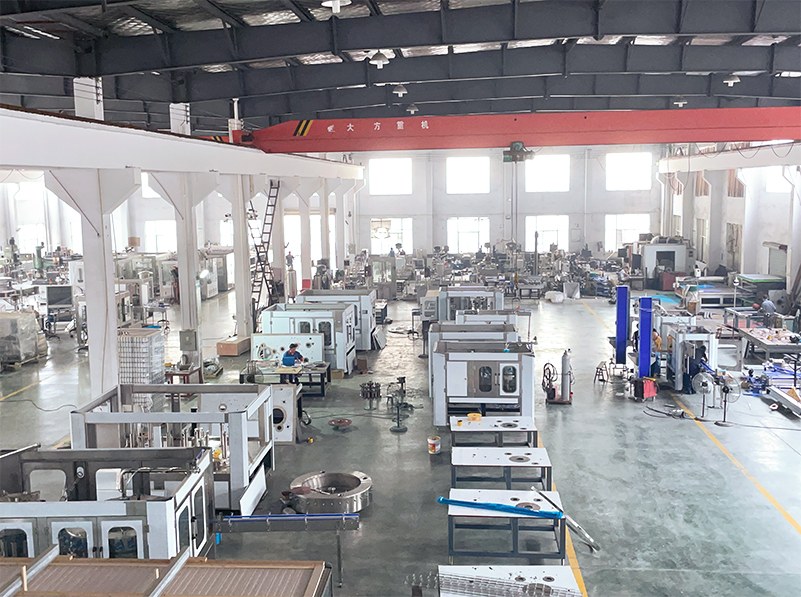
Factory Visit – Arrange a factory visit to review equipment, production lines, manufacturing capability, and project implementation in person.
Request a Quote – Send your bottle drawings, beverage information, target BPH, and packaging requirements to receive a customized solution.
The objective is not simply to supply a glass bottle filling machine, but to build a coordinated bottling system that can support stable production from empty bottle handling through finished pallet delivery.