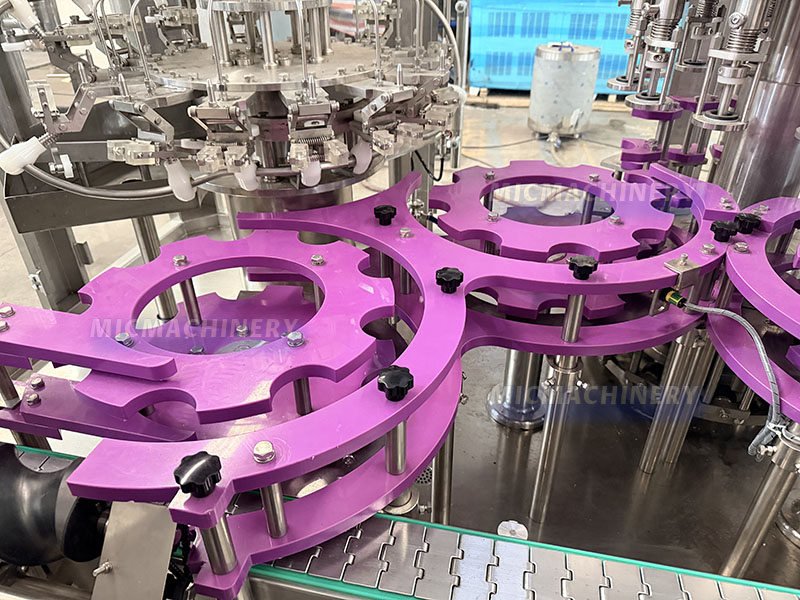
El Salvador 2000BPH Vodka Glass Bottle Filling Line Project Case | Mic Machinery
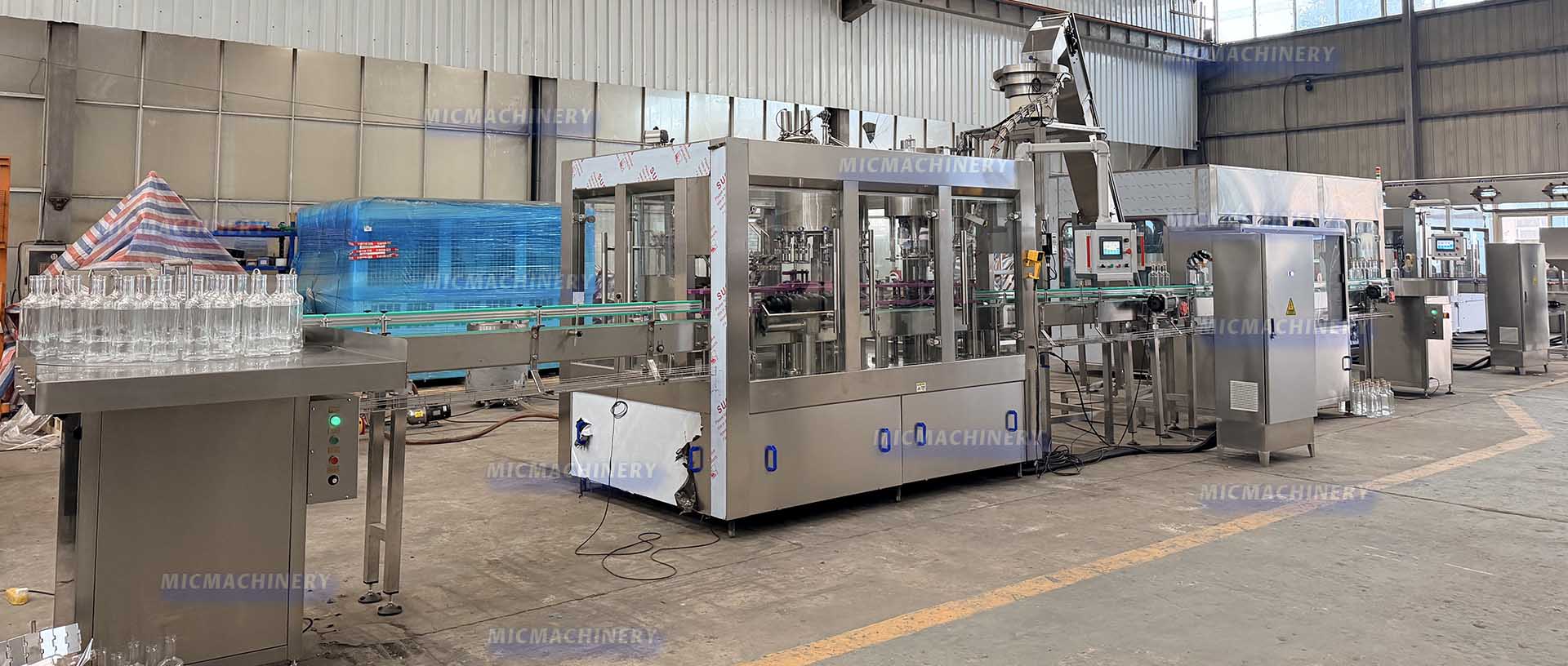
In April 2026, Mic Machinery delivered a 2,000BPH vodka glass bottle filling line for a beverage producer in El Salvador. The project was designed for vodka packaged in glass bottles with wooden cork closures, with the production line centered on a 14-12-5 bottle washing, filling and corking machine.
The customer required a stable and automated solution for washing, filling, corking, bottle drying, and capsule heat shrinking. Based on the product characteristics, glass bottle format, wooden cork closure, and 2,000BPH production target, Mic Machinery developed a customized glass bottle filling and packaging solution.
The project demonstrates how beverage equipment should be selected according to the actual product, container, closure, and production requirements rather than simply comparing machine speeds.
Project Basic Info
The El Salvador project was developed for a vodka producer requiring a 2,000BPH glass bottle filling and packaging line.
The core project information includes:
-
Customer Country: El Salvador
-
Delivery Time: April 2026
-
Production Capacity: 2,000 BPH
-
Beverage: Vodka
-
Bottle Type: Glass bottle
-
Closure: Wooden cork
-
Core Machine: 14-12-5 Bottle Washing, Filling & Corking Machine
-
Bottle Process: Washing → Filling → Corking → Drying → Capsule Heat Shrinking
-
Production Type: Automated glass bottle filling line
The core line supplied for the project included a bottle handling system, 14-12-5 washing filling and corking machine, air knife drying equipment, and a glass bottle capsule heat-shrinking machine.
For a complete production plant, additional labeling, coding, secondary packaging, palletizing, and pallet wrapping equipment can be integrated according to the customer's production requirements and factory layout.
Customer Demand & Pain Points
The El Salvador customer was looking for a reliable production solution for vodka packaged in glass bottles and closed with wooden corks.
The main requirements were related to production efficiency, bottle handling, filling consistency, closure stability, and finished-product appearance.
2,000BPH Continuous Production
The customer required a production capacity of approximately 2,000 bottles per hour.
At this production level, manual bottle handling can become a significant source of labor requirements and production interruptions. The customer therefore needed an automated process that could maintain a stable bottle flow from washing through filling and corking.
Glass Bottle Handling
Glass bottles require more controlled transportation than many plastic containers because excessive impact or unstable bottle movement can result in breakage.
The production line therefore needed smooth bottle transfer between washing, filling, corking, drying, and capsule shrinking.
Integrated Bottle Washing and Filling
Because the project involved new or prepared glass bottles, the customer required bottle washing to be incorporated into the core filling equipment.
The 14-12-5 machine combines bottle washing, filling, and corking functions, allowing the main process to be organized around a continuous production flow.
Wooden Cork Closure
The bottle uses a wooden cork rather than a standard screw cap.
This makes cork insertion an important part of the production process. The filling and corking system needs to maintain stable bottle positioning while completing the closure operation.
Consistent Finished Appearance
The customer also required a heat-shrink process for the glass bottle capsule around the neck and cork.
This finishing process helps create a consistent appearance across the finished vodka bottles and supports the premium presentation of the product.
Our Custom Solution
Based on the customer's requirements, Mic Machinery configured the core production system around a 14-12-5 bottle washing, filling and corking machine.
The main process can be summarized as:
Glass Bottle Handling → Bottle Washing → Vodka Filling → Wooden Corking → Bottle Drying → Capsule Heat Shrinking → Labeling → Coding → Secondary Packaging → Palletizing → Pallet Wrapping
The exact final configuration can be expanded according to the customer's factory, packaging format, and future production requirements.
 |
Bottle Washing, Filling & Corking Machine
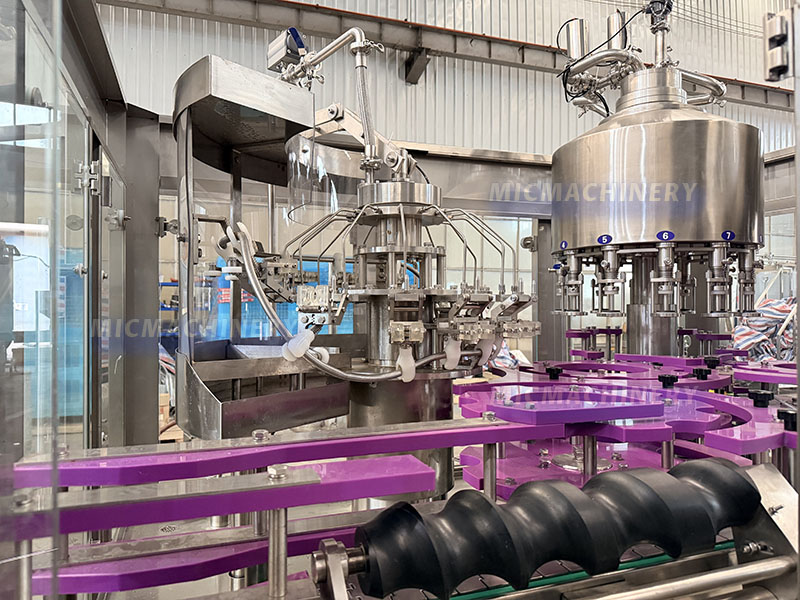
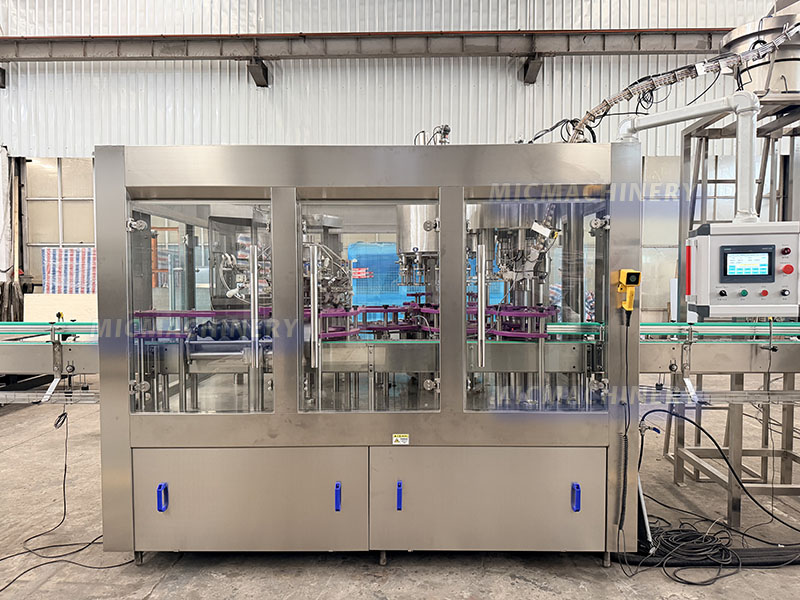
The core equipment for this El Salvador project is the 14-12-5 washing filling and corking machine.
Instead of purchasing separate equipment for every core operation, the machine integrates the main bottle preparation, filling, and closure processes into a coordinated production section.
For the vodka application, the machine is configured around glass bottles and wooden cork closures.
|
 |
Glass Bottle Depalletizer
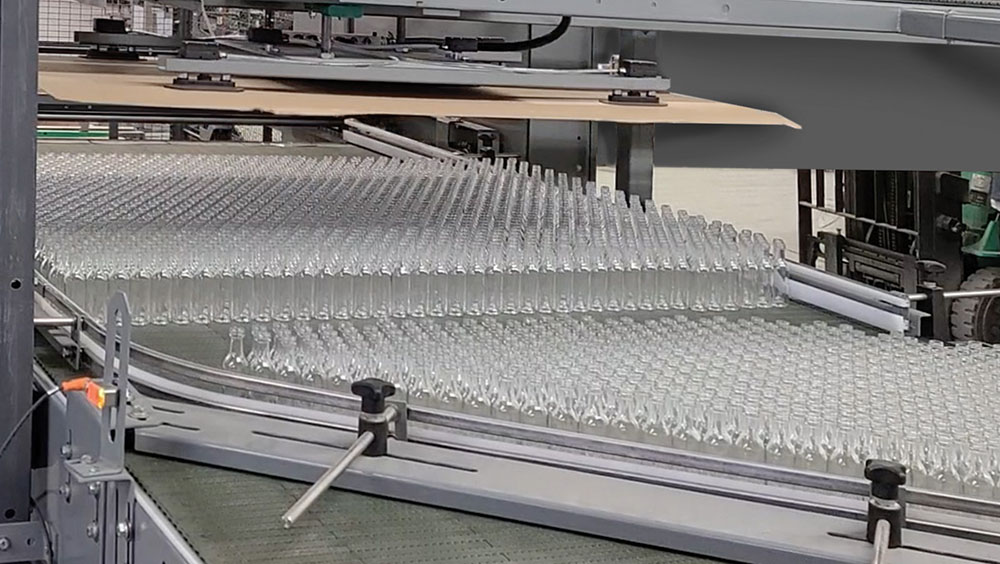
For projects where empty glass bottles are supplied on pallets, a glass bottle depalletizer can be integrated before the washing and filling section.
The depalletizer automatically transfers bottles from pallet layers into the production line, reducing manual handling and helping maintain a continuous bottle supply.
Mic Machinery provides depalletizing equipment for automated beverage packaging applications.
The final depalletizing configuration should be matched to bottle dimensions, pallet format, production capacity, and factory layout.
|
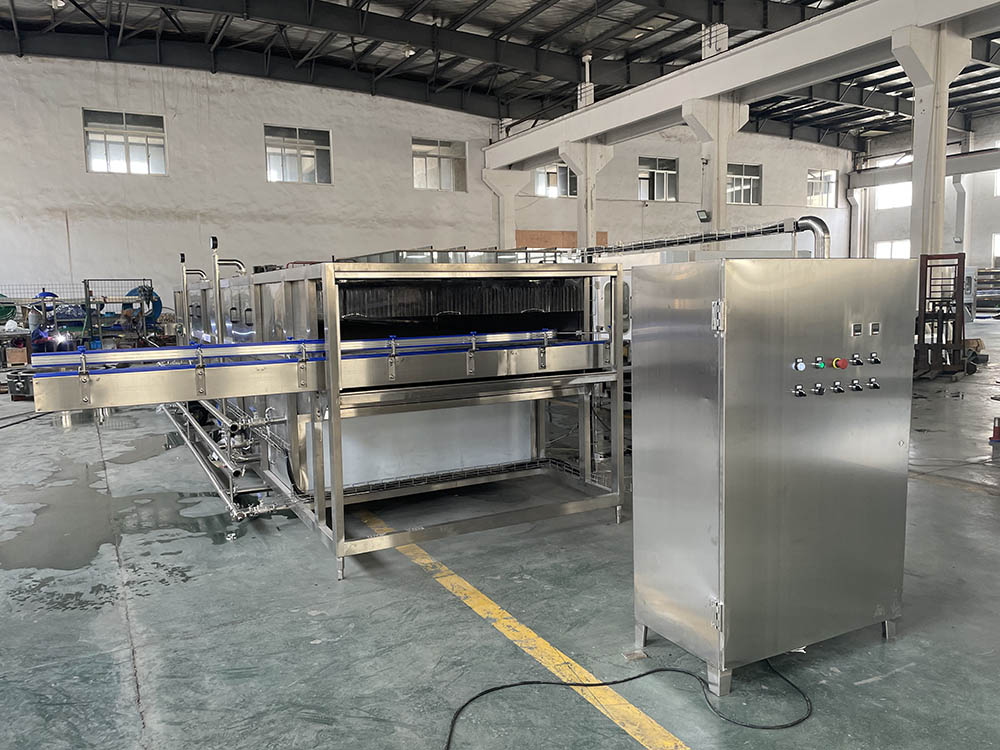 |
Pasteurization Machine
Pasteurization is a process-specific option rather than a mandatory component for every vodka production line.
If the customer's product formulation and validated process require thermal treatment, a pasteurization machine can be incorporated into the complete line.
The final pasteurization parameters should be determined according to the actual product and process requirements rather than applying a standard temperature or holding time to every alcoholic beverage.
|
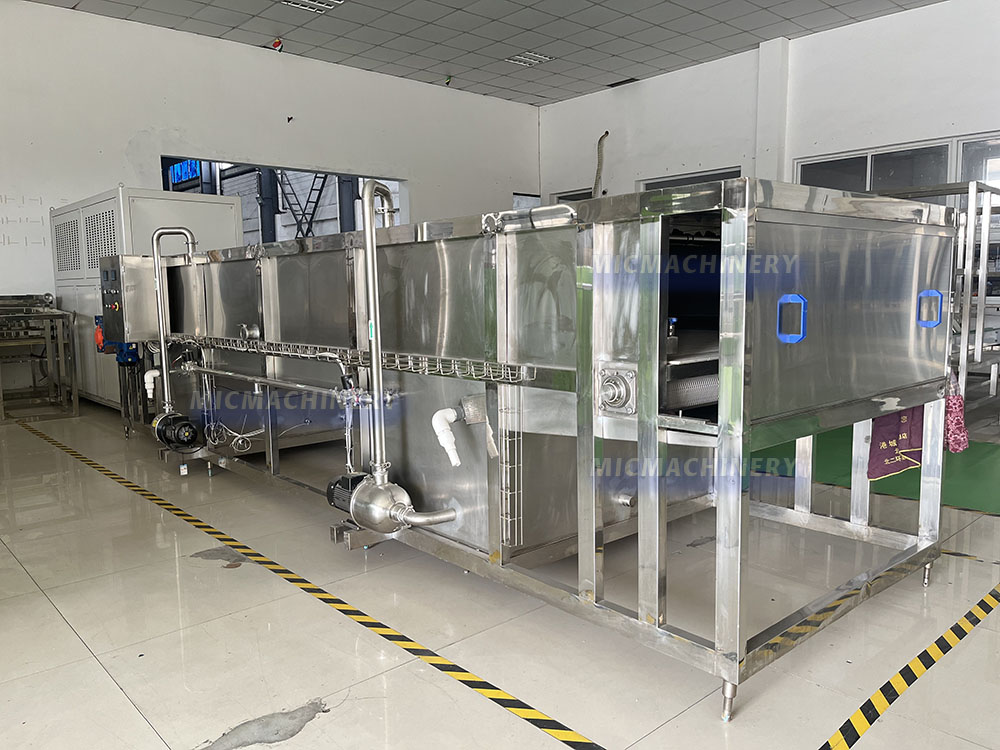 |
Warm Irrigation Machine
Where required by the production process, a warm irrigation stage can be incorporated into the downstream section.
Its actual function, temperature, and treatment time should be established according to the customer's product and packaging process.
For this reason, warm irrigation should be treated as an optional process module rather than a universal requirement for vodka.
|
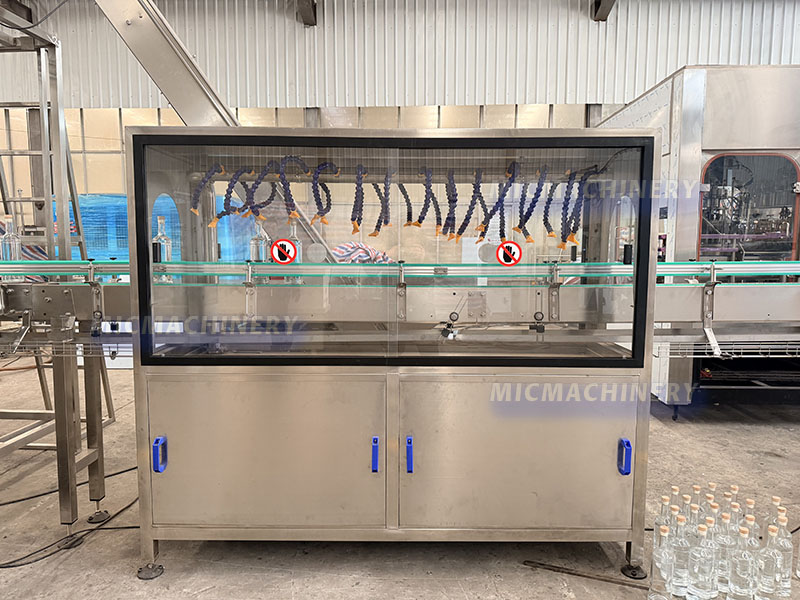 |
Air Knife Dryer
After washing or wet processing, moisture may remain on the outer surface of the glass bottle.
An air knife dryer removes surface water before labeling, coding, and other downstream packaging operations.
Drying is particularly important when adhesive labels are used because excessive moisture can reduce label adhesion and affect the appearance of the finished package.
|
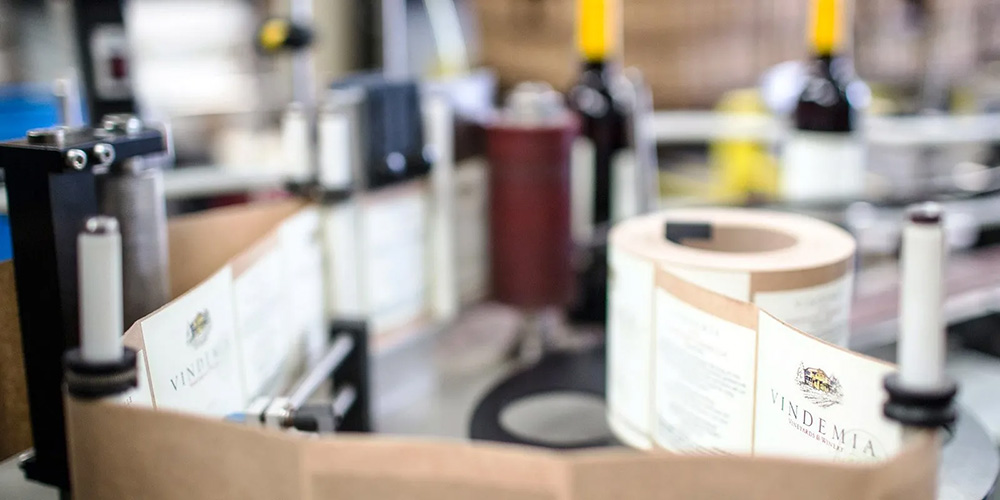 |
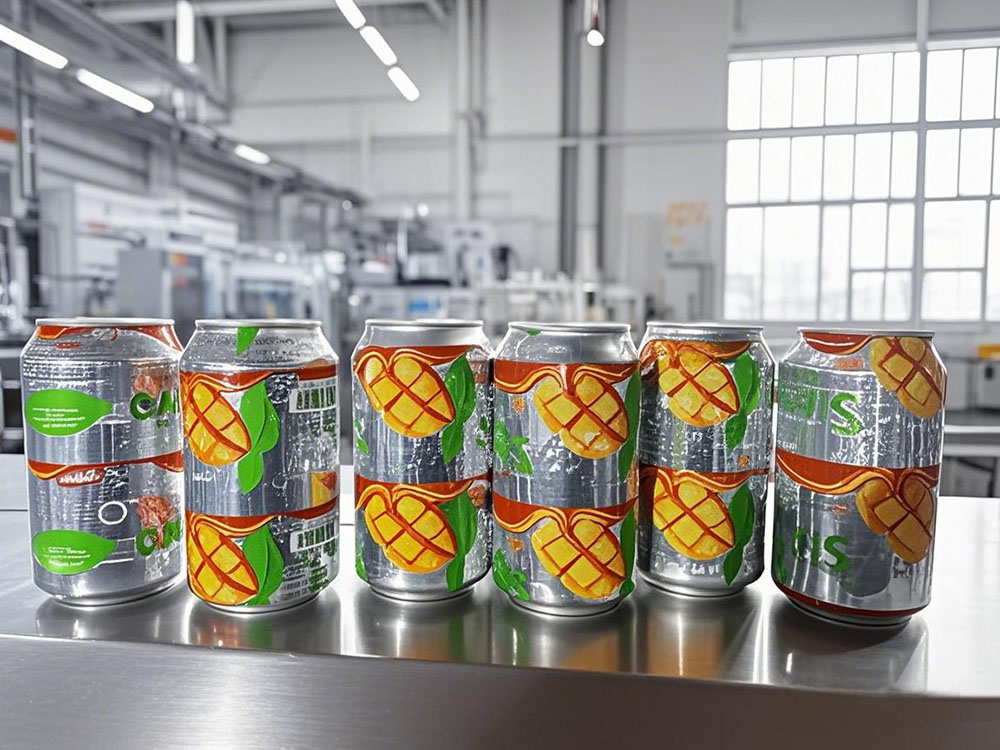
Labeling Machine
After the bottle surface is sufficiently dry, a labeling machine can apply the product label according to the customer's packaging design.
For vodka and other spirits, label positioning can be an important part of product presentation. The final labeling system should therefore be matched to bottle geometry, label material, label position, and required output.
|
 |
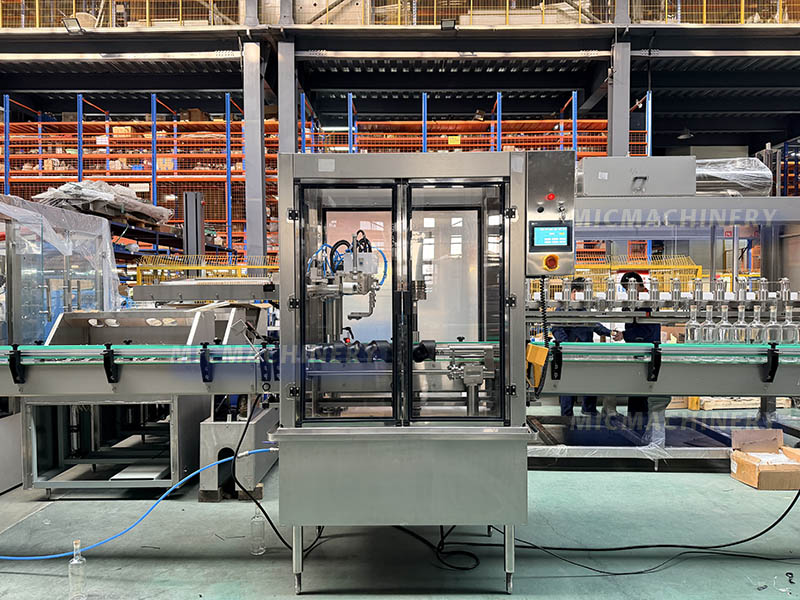
Shrink Sleeve Labeling Machine
If the customer's packaging design uses shrink sleeves, a shrink sleeve labeling machine can be added to the downstream packaging section.
The sleeve application process should be evaluated according to bottle diameter, sleeve dimensions, material characteristics, and line speed.
|
 |
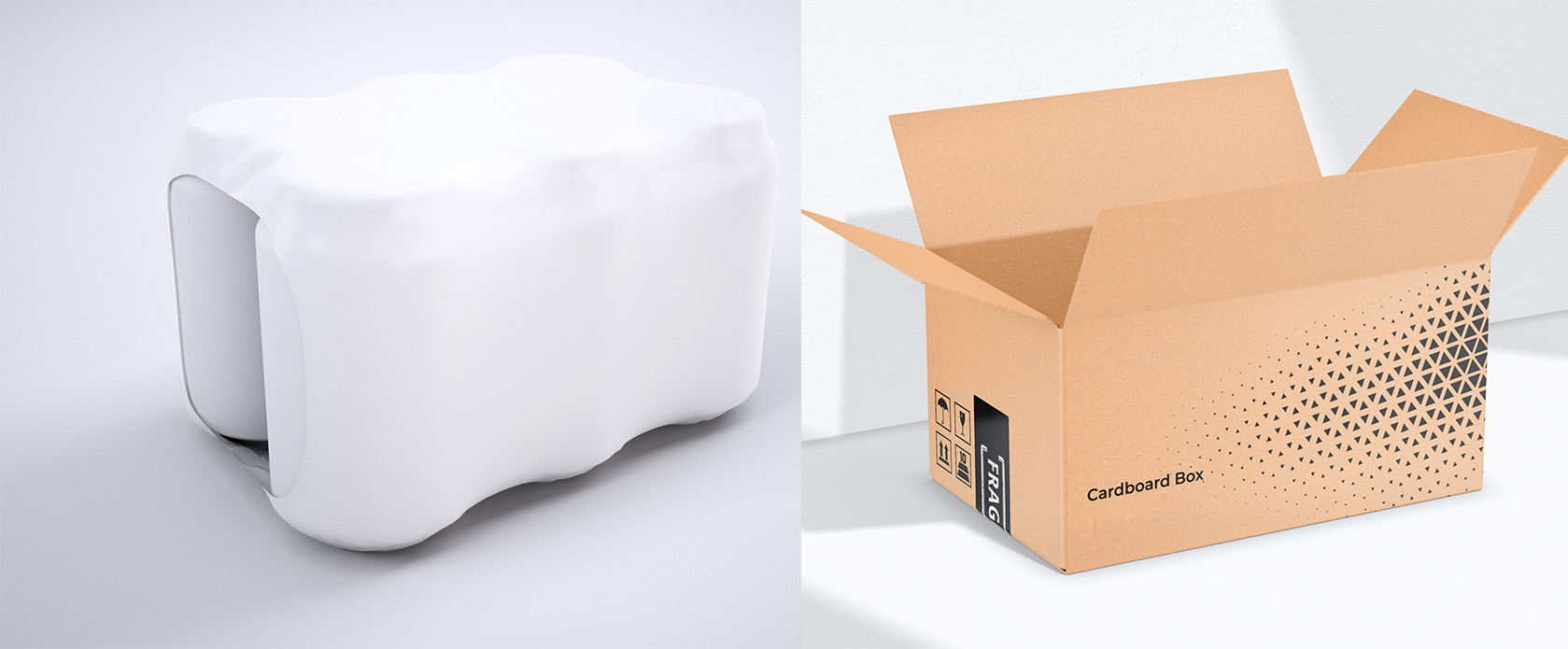
Glass Bottle Capsule Heat Shrinking
The project specifically requires a heat-shrink process for the glass bottle capsule.
After the wooden cork is inserted, the capsule is positioned around the bottle neck and processed through controlled heating.
The purpose is to create a more uniform finished appearance around the cork and bottle neck.
The actual heating conditions should be established according to the capsule material and bottle specifications during commissioning.
|
 |
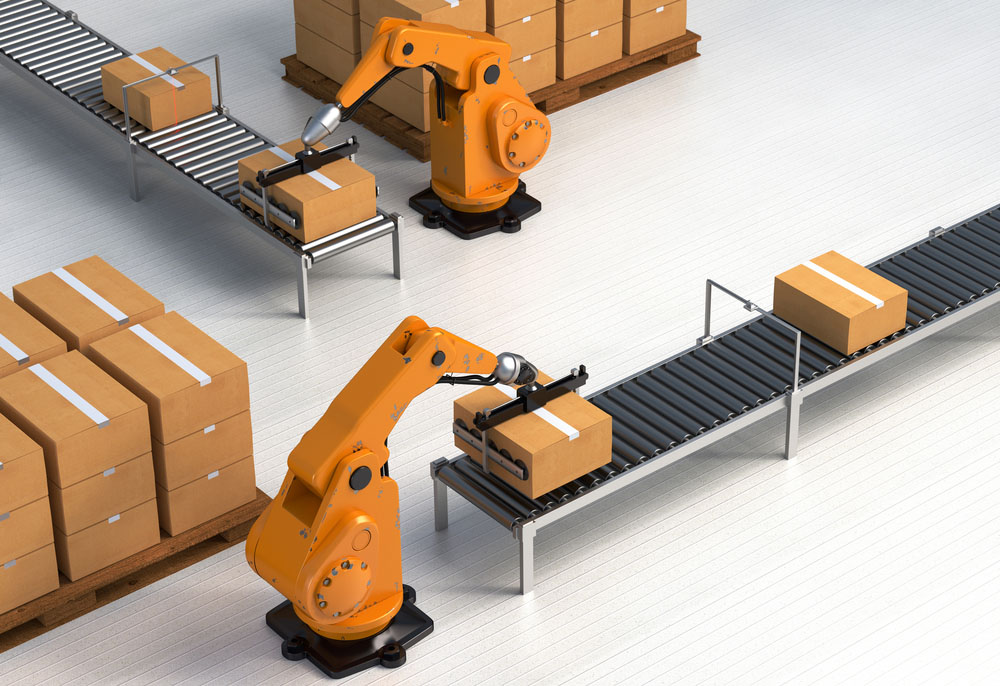
Wrap Packing Machine / Carton Packing Machine
After labeling and coding, finished bottles can be grouped into secondary packages.
Mic Machinery can configure wrap packing or carton packing according to the customer's distribution model and packaging requirements.
The appropriate secondary packaging method depends on bottle size, pack quantity, transportation conditions, and market requirements.
|
 |
Palletizer
For automated warehouse and distribution operations, a palletizer can arrange finished cartons or packages onto pallets.
Palletizing automation can reduce repetitive manual handling while providing a more consistent pallet arrangement.
|
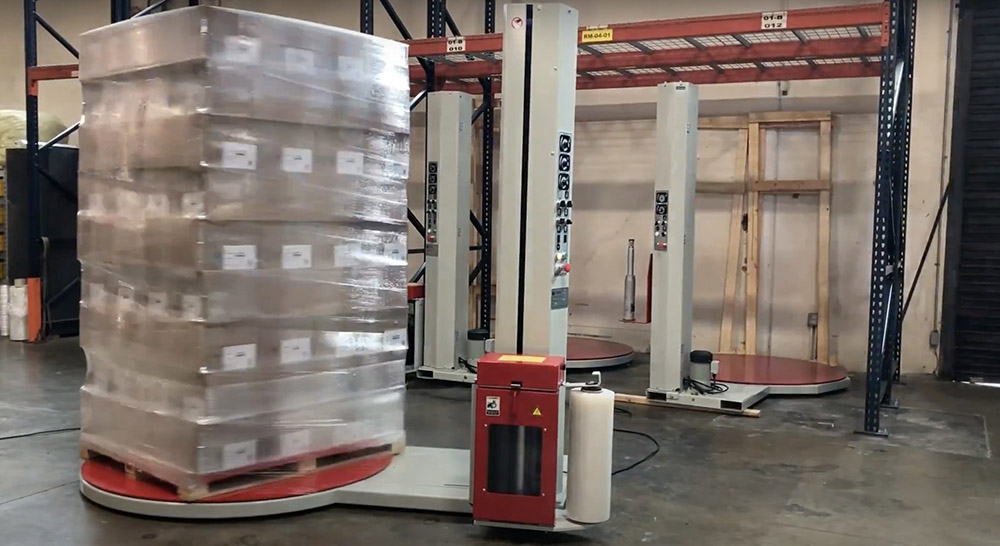 |
Pallet Wrapping Machine
The final pallet wrapping stage stabilizes the completed pallet load for storage and transportation.
The wrapping system should be selected according to pallet dimensions, package configuration, film requirements, and warehouse handling conditions.
|
Why the Customer Chose a Glass Bottle Filling Solution
The El Salvador project uses glass bottles because the customer's vodka product requires a packaging format compatible with its product positioning and wooden cork closure.
This means the filling technology differs from canning equipment.
For example, a juice canning filling machine is primarily designed for canned juice and other compatible non-carbonated beverages. A Beverage canning machine generally handles metal-can filling and seaming, while a drink canning filling machine is also designed around can-based beverage packaging.
These technologies should not be selected simply because their nominal production speeds are similar.
For this project, the correct engineering direction is a glass bottle filling and corking line because the customer uses glass bottles and wooden corks.
This distinction is especially important for buyers comparing beverage filling machines online. Container type, closure method, beverage characteristics, and production process should be defined before comparing machine models.
2000BPH Line Design and Production Balance
A 2,000BPH production target refers to the planned production rate, but the actual line should be evaluated as a complete system.
The bottle washing, filling, corking, drying, capsule shrinking, labeling, coding, packing, and palletizing sections should be coordinated so that one machine does not become a production bottleneck.
For example, if bottle feeding is unstable, the filling machine may have to stop even when its filling capacity is sufficient. Similarly, if the labeling or packing section cannot process the required output, bottles may accumulate downstream.
Therefore, line engineering should consider:
This complete-line approach is especially important for an overseas beverage factory project.
Factory Layout and Installation Considerations
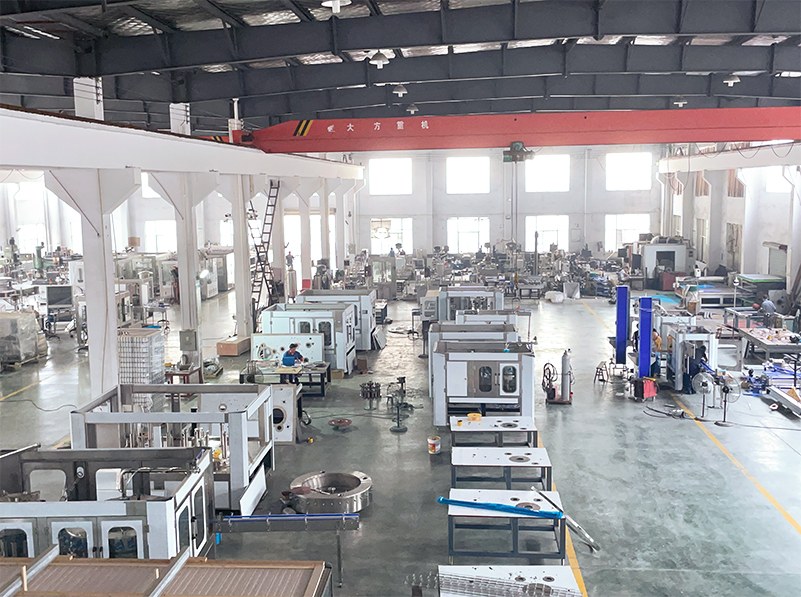
Before equipment manufacturing and installation, the production line should be planned according to the customer's available factory space.
Important considerations include:
For glass bottle lines, bottle movement should be planned carefully because unnecessary transfer points can increase the risk of impact or bottle breakage.
The layout should also leave sufficient space around the filling and corking machine for cleaning, inspection, maintenance, and operator access.
Customer Feedback
“We were looking for a reliable 2,000BPH solution for our vodka glass bottles with wooden corks. Mic Machinery provided a complete configuration around our bottle format, including washing, filling, corking, drying and capsule shrinking. The equipment arrangement made the production process more organized and reduced the amount of manual handling required.”
Similar Project Cases
Mic Machinery's project portfolio covers different beverage categories, production capacities, packaging formats, and international markets. These cases can help buyers compare equipment configurations before selecting a production line.
China 24000BPH Complete Water Bottling Line
The China project demonstrates a high-capacity automated water bottling solution with water treatment, bottle blowing, filling, packaging, and palletizing.
China 24000BPH Complete Water Bottling Line Project Case | Mic Machinery
Germany 6000CPH Beer Can Filling Line
This Germany project provides a useful comparison for buyers considering aluminum-can filling for beer. It uses a higher-capacity canning configuration and isobaric filling technology.
Germany 6000CPH Beer Can Filling Line Project Case | Mic Machinery
Australia 2000BPH Drink Filling Line
The Australia project provides a reference at a similar nominal production scale and can help buyers compare beverage filling configurations for different products and bottle formats.
Australia 2000BPH Drink Filling Line Project Case | Mic Machinery
Russia 2000CPH Isobaric Beer Can Filling Machine
This Russian project has a similar 2,000BPH production scale but uses aluminum cans and isobaric technology for beer. It provides a useful comparison between glass bottle filling and carbonated beverage canning.
Russia 2000CPH Isobaric Beer Can Filling Machine Project Case | Mic Machinery
Italy 6000CPH Juice Can Filling Line
The Italy juice project demonstrates another beverage canning application and can be compared with the El Salvador glass bottle vodka project in terms of beverage type, packaging format, and filling technology.
Italy 6000CPH Juice Can Filling Line Project Case | Mic Machinery
FAQ
What is the capacity of the El Salvador vodka filling line?
The production target for this project is 2,000 bottles per hour (2000BPH).
What beverage is filled in this project?
The line is designed for vodka.
What type of bottle does the customer use?
The project uses glass bottles with wooden cork closures.
What is the core machine model?
The core machine is a 14-12-5 bottle washing, filling and corking machine.
Does the 14-12-5 machine wash, fill and cork the bottles?
Yes. The project configuration integrates bottle washing, liquid filling, and corking into the core production section.
Why is an air knife dryer used?
The air knife dryer removes residual moisture from the outside of the bottles. This can help prepare the surface for subsequent labeling and coding operations.
Does the vodka line require a pasteurization machine?
Not necessarily. Pasteurization depends on the customer's product formulation, process requirements, and validated production specification.
Can the 2000BPH line be used for other beverages?
The suitability for another beverage depends on the liquid properties, bottle dimensions, filling volume, closure, and process requirements. A new product should be evaluated before confirming the final equipment configuration.
Conclusion
The El Salvador 2000BPH vodka glass bottle filling line was developed around a specific combination of product, container, closure, and production capacity.
The project uses a 14-12-5 bottle washing, filling and corking machine as the core equipment, with bottle drying and glass bottle capsule heat shrinking forming the main downstream processes. Additional labeling, coding, secondary packaging, palletizing, and pallet wrapping equipment can be integrated according to the customer's complete production requirements.
For beverage manufacturers in El Salvador and other Latin American markets, this project provides a practical reference for planning a 2,000BPH glass bottle vodka production line.
If you are planning a similar-scale vodka, spirits, juice, water, or other beverage filling project, the correct machine should be selected according to the product, bottle or can format, closure type, required capacity, factory layout, and future expansion plans.
Need a similar 2,000BPH production line? Contact Mic Machinery for a customized quotation and equipment selection recommendation, or arrange a video factory tour to review the machines and production environment.