How to Choose a Normal-Pressure Can Filling Machine? | Mic Machinery
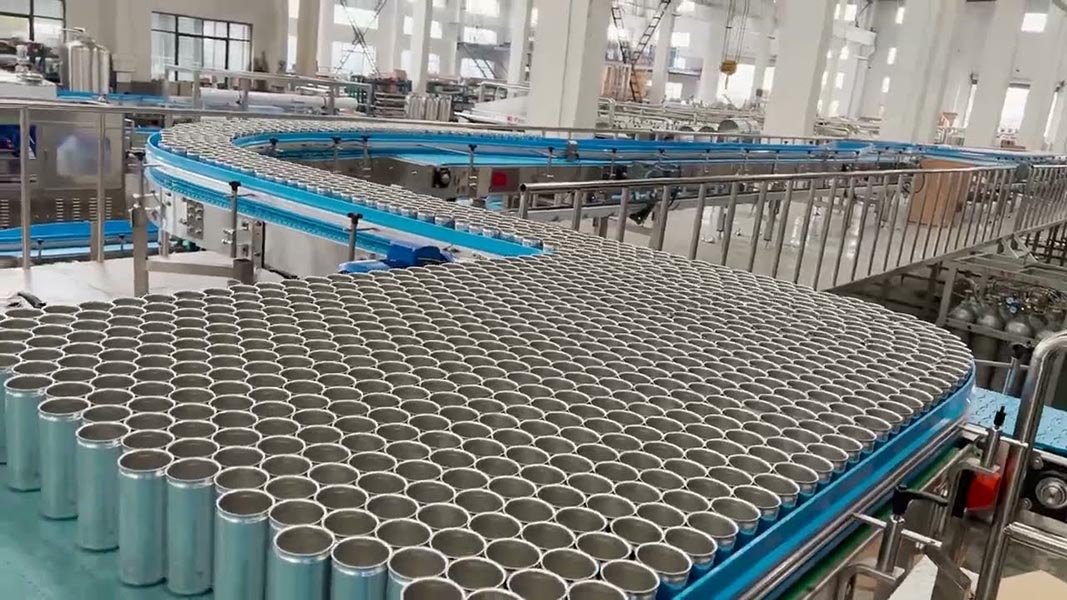
Choosing a normal-pressure can filling machine depends on more than the advertised filling speed. For non-carbonated beverages such as juice, still water, tea, and other still drinks, buyers should evaluate the beverage characteristics, can size, filling volume, target capacity, filling method, seaming performance, downstream packaging, factory layout, and future production requirements together. A well-matched normal-pressure can filling machine should not only achieve the required output but also operate as part of a balanced and maintainable canning production line.
For cans, the final closure is technically called seaming, rather than bottle-style capping. Therefore, when buyers search for a “can filling and capping machine,” they are generally looking for an integrated or connected system that fills the beverage and then seals the can reliably.
What Is a Normal-Pressure Can Filling Machine?
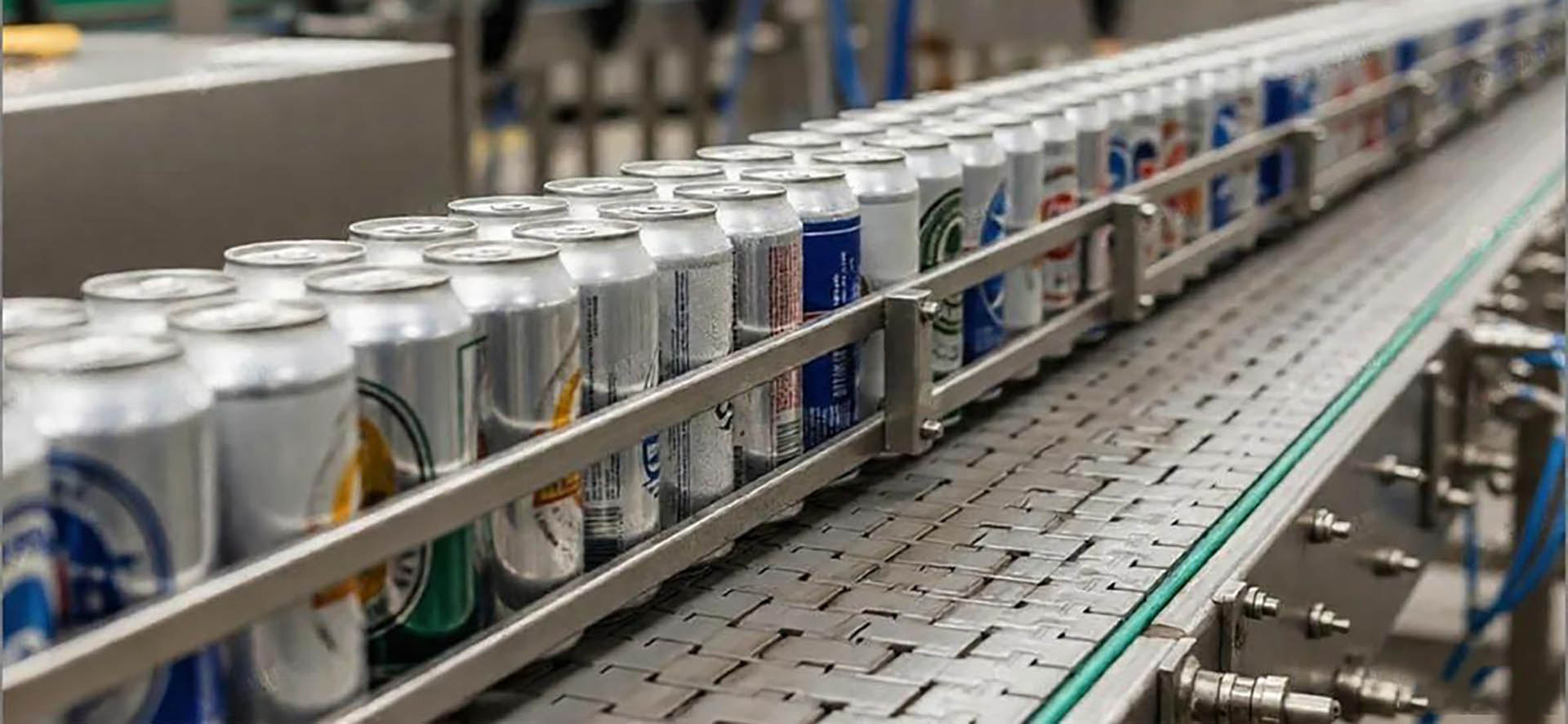
A normal-pressure can filling machine is designed primarily for non-carbonated beverages. Unlike isobaric filling systems used for beer, carbonated soft drinks, and sparkling water, normal-pressure filling does not require pressure balancing between the product tank and the can during filling. This makes it a suitable process for products such as juice, still water, herbal tea, and other non-carbonated drinks.
The filling machine is normally positioned within a wider production process rather than operating as an isolated piece of equipment. A typical automated configuration may include water treatment, beverage preparation, thermal processing, empty-can depalletizing, filling and seaming, warm irrigation, air-knife drying, labeling, coding, secondary packaging, palletizing, and pallet wrapping.
How Does a Normal-Pressure Can Filling Line Work?
The basic production process can be understood as a continuous material flow:
Water Treatment → Beverage Preparation → Pasteurization → Can Depalletizing → Normal-Pressure Filling & Seaming → Warm Irrigation → Air Knife Drying → Labeling → Coding → Secondary Packaging → Palletizing
Not every project requires every machine. The final configuration depends on the beverage formulation, processing method, can specifications, production capacity, packaging design, and factory automation requirements.
1. Empty Can Handling
Empty cans are supplied to the production line and can be automatically unloaded from pallets by a can depalletizer. At several thousand cans per hour, automated can feeding helps reduce repetitive manual handling and maintain a continuous supply to the filling section.
2. Filling and Seaming
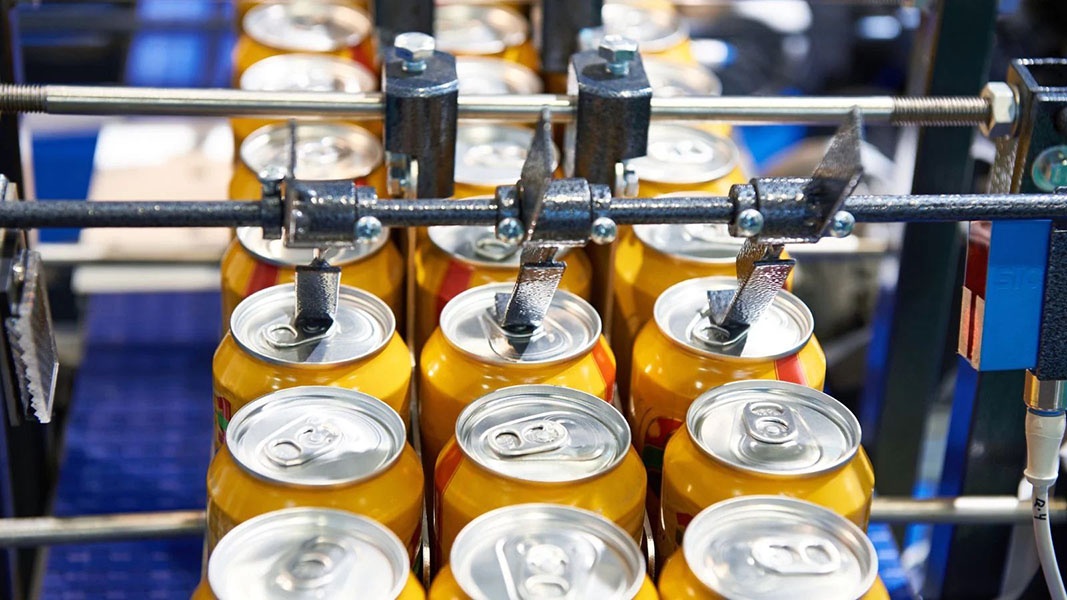
The cans enter the filling section, where the non-carbonated beverage is filled according to the specified volume and process requirements. After filling, the cans are sealed through a seaming process.
The filler should be evaluated together with can feeding, conveying, seaming, and downstream packaging. A filling machine with sufficient nominal capacity may still cause production interruptions if another section of the line becomes a bottleneck.
3. Drying, Labeling and Coding
After filling or water-based treatment, residual moisture can remain on the outside of the cans. An air knife dryer removes surface water before coding and labeling, helping downstream equipment work more consistently.
Depending on the packaging design, manufacturers may use conventional labels or a shrink sleeve system. Laser coding can then add batch numbers, production information, or traceability codes to the cans.
How to Choose the Right Can Filling Machine Capacity?
Capacity should be calculated from actual production demand rather than simply choosing the highest machine speed.
A practical selection process is:
Market Demand → Annual Output → Working Hours → Beverage Characteristics → Can Specification → Required CPH → Filling Machine → Downstream Equipment → Factory Layout
For example, a new beverage producer with limited initial demand may not need a 6000CPH system. A smaller configuration can reduce the initial investment while leaving room for later automation. Conversely, an established manufacturer with strong distribution channels may find a 2000CPH line restrictive if the downstream packaging system needs to operate at a substantially higher rate.
MIC's normal-pressure canning solution covers approximately 2000–6000CPH, allowing manufacturers to select a configuration according to their current production requirements and future expansion plans. Around 2000CPH can suit smaller beverage producers, while 3000–5000CPH provides a middle range, and around 6000CPH is suitable for higher continuous output within this solution range.
Juice Can Filling Machine Technical Specification
|
Model
|
MIC 12-1
|
MIC 18-6
|
MIC 24-6
|
MIC 32-8
|
MIC 40-10
|
|
Application
|
Juice, Cold Coffee, Herbal Tea, Non-carbonated Drinks And So On
|
|
Packing Type
|
Aluminum Cans, Tin Cans, PET Cans, etc
|
|
Speed
|
1000-2000CPH
|
4000-7000CPH
|
4000-8000CPH
|
10000CPH
|
12000CPH
|
|
Filling Arrange
|
130ml,250ml, 330ml, 355ml, 500ml, 120z, 16oz, 1L and so on (0.1-1L)
|
|
Power
|
1.1KW
|
2.5KW
|
3.5KW
|
4.2KW
|
5.5KW
|
|
Size
|
1.8*1.3*1.95 (M)
|
2.3*1.4*1.9 (M)
|
2.58*1.7*1.8 (M)
|
2.8*1.7*1.95 (M)
|
3.0*1.9*2.1 (M)
|
|
Weight
|
1800KG
|
2500KG
|
3000KG
|
3800KG
|
4500KG
|
Which Beverage Is Suitable for Normal-Pressure Filling?
Normal-pressure filling is mainly intended for beverages without carbonation.
Typical applications include:
By comparison, beer, carbonated soft drinks, and sparkling water normally require isobaric or counter-pressure filling because the filling process needs to control the pressure relationship between the product and container. This helps reduce excessive foaming and unnecessary CO₂ loss.
Therefore, the first question when selecting a beverage canning machine should be “What product will be filled?” rather than “How many cans per hour can the machine fill?”
Normal-Pressure vs. Isobaric Can Filling: Which Is Better?
The two technologies are not simply competing machine types. They are designed for different beverage characteristics.
Normal-pressure filling is generally used for juice, still water, and still tea. It is appropriate when the beverage does not require pressure balancing during filling.
Isobaric filling is generally used for beer, carbonated soft drinks, and sparkling water. The filling system manages pressure conditions between the product and container to help control foaming and carbonation loss.
For this reason, a buyer should not choose an isobaric machine simply because it appears to be a more advanced solution. If the product is non-carbonated juice, a properly configured normal-pressure system can be the more appropriate technology.
What Should Buyers Compare Between Different Can Filling Machines?
When comparing models, filling speed is only one parameter. A professional evaluation should include at least six areas.
Product Compatibility
Confirm whether the machine is designed for the beverage being produced. Juice viscosity, pulp content, temperature, and processing method may affect the final equipment configuration.
Can Specifications
Can diameter, height, material, and filling volume should be confirmed before the machine model is finalized. Different can formats can require different handling and adjustment arrangements.
Production Capacity
Compare the practical line capacity rather than the isolated filler capacity. Depalletizing, conveyors, labeling, coding, packing, and palletizing should all support the required production rate.
Filling and Seaming Integration
The filling section and seaming section need to work continuously. Buyers should consider can positioning, transfer stability, sealing consistency, cleaning requirements, and accessibility for maintenance.
Automation Level
A semi-automatic solution may be suitable for small-scale production, while larger factories can benefit from automatic can depalletizing, filling, labeling, packaging, and palletizing. MIC also describes fully automatic drink filling systems as suitable for commercial-scale production with integrated controls and downstream equipment.
Future Expansion
A machine should be selected according to both current demand and realistic growth. A modular production layout can make it easier to add packaging automation or increase capacity later.
Real Project Example: Italy 6000CPH Juice Can Filling Line
A practical way to evaluate a juice canning filling machine is to examine a real production project.
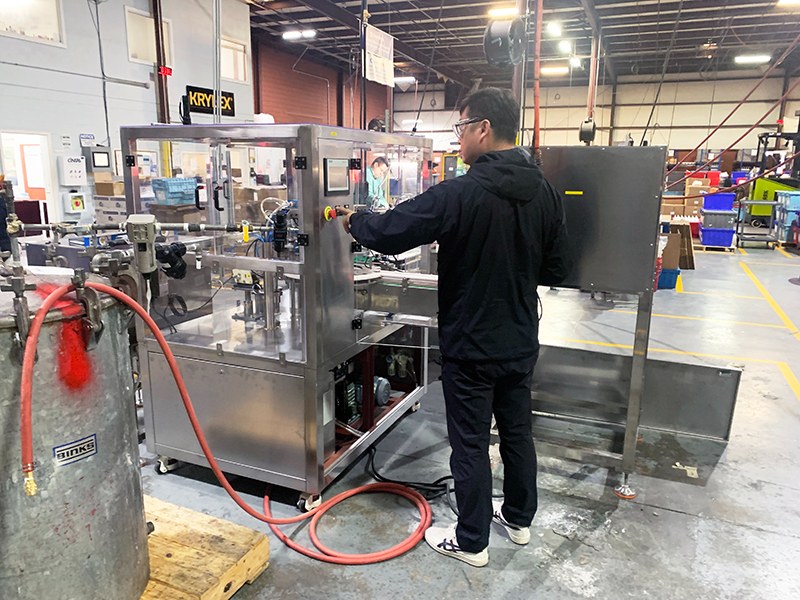
In September 2025, MIC Machinery delivered a 6000CPH 12-4 normal-pressure juice can filling line to an Italian beverage producer. The project was designed for non-carbonated juice packed in aluminum cans. The core equipment was a 12-4 Juice Can Filling Machine, supported by a can depalletizer and shrink sleeve labeling system.
The broader recommended configuration covered water treatment, pasteurization, can depalletizing, filling and seaming, warm irrigation, air-knife drying, labeling, shrink sleeve labeling, laser coding, secondary packaging, palletizing, and pallet wrapping.
The project demonstrates an important equipment-selection principle: the 12-4 configuration was not selected because it simply had a high advertised speed. The selection considered the 6000CPH production target, non-carbonated juice, aluminum cans, normal-pressure filling, automated can handling, and downstream packaging requirements.
Read the Italy 6000CPH Juice Can Filling Line Project Case
How Should the Complete Production Line Be Configured?
For a new beverage factory, purchasing only the filling machine may create integration problems later. The production line should be planned around the complete material flow.
MIC's 2000–6000CPH normal-pressure can filling line can integrate water treatment, beverage preparation, pasteurization, can depalletizing, filling and seaming, warm irrigation, drying, labeling, coding, packing, palletizing, and pallet wrapping.
The packaging section is particularly important. If a filling machine can process 6000 cans per hour but the packing machine cannot maintain the same throughput, the complete line will still experience stoppages. This is why line balancing should be considered during project engineering.
See the Complete Normal Pressure Can Filling Line 2000–6000CPH
What Maintenance Does a Can Filling Machine Require?
Regular maintenance should focus on the parts that directly affect filling accuracy, can transfer, seaming quality, hygiene, and line continuity.
Operators should routinely inspect filling components, product-contact areas, conveyors, sensors, pneumatic components, seaming mechanisms, and lubrication points according to the machine manufacturer's maintenance schedule.
Cleaning is equally important for beverage applications. Product residues should not be allowed to accumulate around filling valves, transfer areas, conveyors, or other product-contact components. Where the selected system supports CIP or other defined cleaning procedures, the cleaning process should follow the validated operating instructions.
Downstream equipment also needs attention. A wet can surface can affect coding and labeling, while unstable can feeding can interrupt the filling section. Therefore, drink bottling machine maintenance should be understood as complete-line maintenance rather than maintenance of the filler alone.
For international projects, buyers should also evaluate spare-parts availability, remote technical support, troubleshooting assistance, operator training, and engineering support before placing an equipment order.
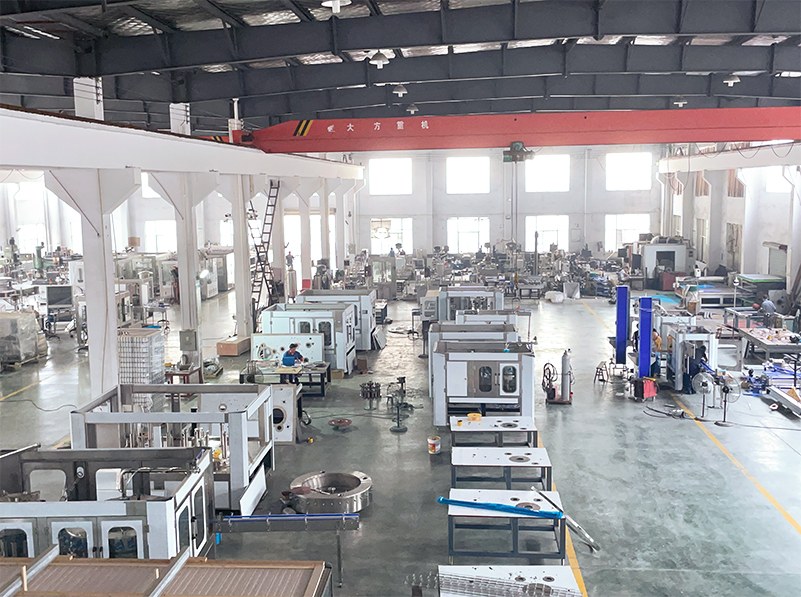
What Factory Conditions Should Be Considered Before Installation?
Equipment selection should be completed together with factory layout planning.
Before manufacturing and installation, the customer should provide available building dimensions, column positions, doors, floor height, utility locations, drainage points, and material-handling routes. Maintenance clearance should also be reserved around major equipment.
Depending on the final configuration, the project may require electricity, compressed air, process water, drainage, and thermal energy. Planning these utilities before equipment delivery can reduce installation delays caused by insufficient capacity or unsuitable connection points.
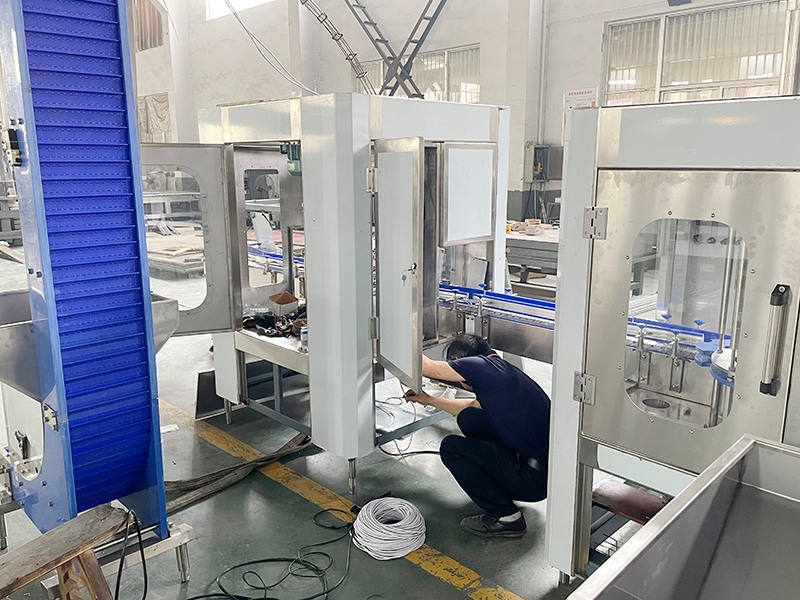
For overseas projects, installation can include equipment positioning, mechanical assembly, conveyor alignment, electrical and pneumatic connections, process piping, commissioning, production testing, and operator training.
FAQ: Normal-Pressure Can Filling Machine
Can a normal-pressure can filler handle juice?
Yes. Normal-pressure filling is primarily intended for non-carbonated beverages, including juice, still water, tea, and similar drinks. The final configuration should be based on the beverage formulation, filling temperature, can format, and production requirements.
Is normal-pressure filling suitable for beer?
Generally, no. Carbonated beer normally requires an isobaric or counter-pressure filling process to manage carbonation and reduce excessive foaming during filling.
What capacity can a normal-pressure canning line achieve?
MIC's complete normal-pressure canning solution covers approximately 2000–6000CPH. The appropriate capacity should be selected according to actual market demand, working hours, product characteristics, can specifications, and downstream equipment capacity.
Is a 6000CPH filling machine enough for a 6000CPH production line?
Not necessarily. The complete line must be balanced. Can depalletizing, conveying, seaming, labeling, coding, packing, and palletizing should all support the required throughput.
What is the difference between can capping and can seaming?
For metal beverage cans, the technically correct term is usually “seaming.” The seaming process mechanically joins the can body and lid to form the finished closure. Therefore, buyers searching for a “can filling and capping machine” should also evaluate equipment described as a can filling and seaming machine.
How should I choose a can filling machine for a new factory?
Start with the beverage type, annual production target, working schedule, can size, filling volume, required CPH, automation level, factory space, utilities, packaging format, and future expansion plan. Machine price and nominal speed should be evaluated only after these requirements are defined.
Should I buy a filling machine or a complete canning line?
For a new beverage factory, a complete-line approach is generally easier to engineer because filling, conveying, labeling, packaging, utilities, and factory layout can be coordinated from the beginning. Existing factories may instead choose a core filler first and add downstream automation according to production growth.
Conclusion
Selecting a normal-pressure can filling machine is ultimately a process-engineering decision, not simply a comparison of machine prices or advertised speeds. For non-carbonated beverages, the correct solution should match the product, aluminum or tin can format, filling volume, production capacity, filling and seaming process, downstream packaging, factory layout, and maintenance requirements.
The Italy 6000CPH juice project demonstrates how these factors can be combined into a practical automated production system. For manufacturers planning a new plant, factory expansion, or automation upgrade, a complete 2000–6000CPH normal-pressure canning solution can provide a scalable starting point for production planning.
Need a customized can filling solution? Contact Mic Machinery for model selection advice and a production-line recommendation based on your beverage, can format, capacity, and factory requirements.