Start bottled water manufacturing with three fixed inputs: the source, the legal water category, and the finished-water specification. Use laboratory data to select treatment, then protect the treated water, prepare bottles and closures, fill and seal in a controlled area, inspect each pack, apply traceable labels and codes, and build the finished shipping unit.
Treatment follows the source analysis and legal water category. Select or exclude reverse osmosis, ultraviolet treatment, ozone, activated carbon, filtration, and remineralization according to the finished-water target and the treatments permitted for that category. The process has to preserve the legal identity of the water while meeting the applicable safety and quality requirements.

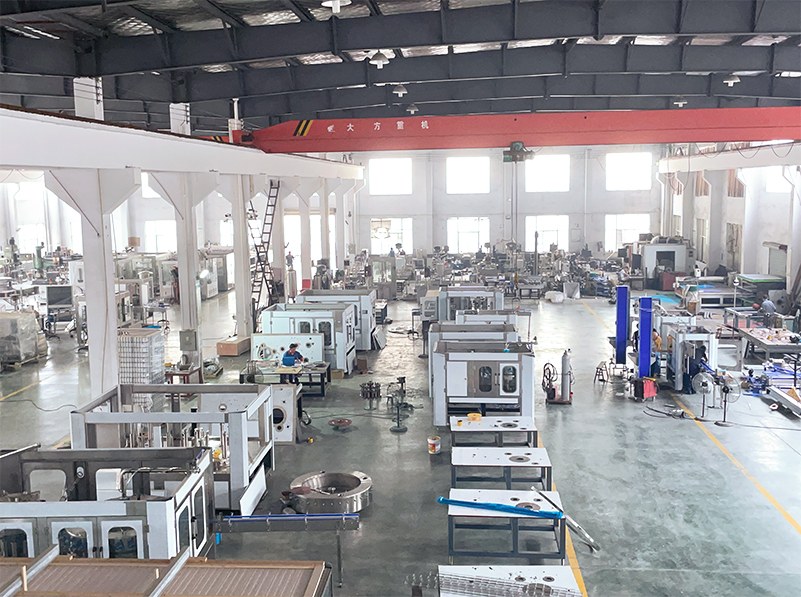
Figure 1. A complete water line coordinates treatment, bottle preparation, filling, labeling, packing, and material flow. Image source: MIC Water Filling Line.
How bottled water is made: process and equipment map
|
Stage
|
Main purpose
|
Typical equipment
|
Release evidence
|
|
Source and raw-water intake
|
Receive protected water with known quality and variation
|
Well or municipal connection, sanitary piping, pumps, raw-water tank, sampling points, and instruments
|
Source approval, sampling plan, laboratory results, and intake records
|
|
Treatment
|
Meet the finished-water specification without creating uncontrolled by-products or residues
|
Media filtration, cartridge filtration, activated carbon, membranes, ion exchange, UV, ozone, dosing, remineralization, and process instruments as selected
|
Validated operating limits, online readings, laboratory checks, chemical records, and deviation handling
|
|
Treated-water storage and distribution
|
Preserve treatment result until filling
|
Hygienic tank, closed loop or sanitary piping, vent filtration where specified, pumps, valves, and cleaning connections
|
Tank and loop sanitation records, trend data, and sample results
|
|
Bottle preparation
|
Supply clean, approved containers
|
PET preform handling and blow molder, or bottle depalletizer/unscrambler, inspector, rinser or decontamination system
|
Bottle drawings and certificates, dimensional checks, visual inspection, and sanitation verification
|
|
Filling and closing
|
Transfer water into the package and seal it against contamination
|
Rinser-filler-capper or separate machines, cap feed and treatment as required, enclosed filling zone, and CIP system
|
Fill checks, cap or closure checks, environmental and sanitation records, and reject data
|
|
Inspection and coding
|
Detect nonconforming packs and create lot traceability
|
Fill-level or mass inspection, cap and label inspection, leak test where specified, date/lot coder, and reject station
|
Challenge tests, code verification, reject records, and retained samples
|
|
Labeling and secondary packing
|
Present the legal product information and form a transport pack
|
Labeler, dryer where needed, shrink wrapper or case packer, conveyors, palletizer, and pallet wrapper
|
Approved artwork, readable codes, pack integrity, pallet pattern, and release records
|
|
Warehousing and dispatch
|
Protect finished water through shipment
|
Finished-goods area, pallet handling, stock control, and loading equipment
|
Lot status, warehouse conditions, stock rotation, and dispatch traceability
|
1. Approve and monitor the water source
The source may be a protected spring or borehole, another groundwater source, surface water after appropriate treatment, or a public supply, depending on the product category and local law. Select treatment from the measured source condition and the finished-water target. The project needs laboratory results that cover the microbiological, chemical, physical, and radiological parameters required by the competent authority and the intended product specification.
Sampling has to represent seasonal and operating variation. Record where the sample was taken, when it was taken, the source condition, the laboratory method, and the result. The source specification should also identify flow availability, temperature range, turbidity, hardness or scaling tendency, organic load, disinfectant residual where relevant, and contaminants that drive treatment or monitoring.
U.S. bottled-water CGMP provides one jurisdictional example. 21 CFR 129.35 requires an approved source, source-water sampling and records, finished-water compliance, and suitable quality for compressed air directed at product water or product-contact surfaces. Other countries set their own sampling frequencies and limits.
2. Fix the legal category before designing treatment
"Purified water," "spring water," "natural mineral water," and ordinary bottled drinking water can have different definitions and permitted treatments. The sales market, source, label claim, and treatment route must therefore be agreed before equipment is ordered.
The European Commission states that natural mineral water is distinguished by purity at source and stable mineral composition; treatments beyond specified separation techniques require authorization, and recognized natural mineral waters follow an official procedure. See the European Commission overview. An RO skid therefore belongs only in a mineral-water project whose product identity and local rules permit it.
For packaged drinking water other than natural mineral water, the Codex hygienic code CXC 48-2001 recommends controlled treatment that avoids contamination, toxic by-products, and treatment residues at levels of health concern. It also addresses container handling, filling, sealing, and contamination control.
3. Build treatment from the water analysis
A treatment system is a series of unit operations, each assigned to a defined raw-water condition and finished-water target. Common options include:
- screening or prefiltration for particles that would load downstream equipment;
- media filtration for selected suspended solids or other specified duties;
- activated carbon where adsorption or disinfectant removal is required;
- cartridge or membrane filtration at a defined retention rating;
- reverse osmosis or another membrane process when dissolved constituents must be reduced;
- ion exchange or dosing for a defined hardness, alkalinity, or mineral target;
- UV or ozone as part of a validated microbial-control strategy;
- remineralization and final adjustment where permitted and required by the product specification.
The order and inclusion depend on the source. Activated carbon can remove a disinfectant residual that had protected upstream water, while membranes create a concentrate stream and require pressure, pretreatment, cleaning, and integrity control. Ozone systems need dose and contact control and may create regulated by-products from susceptible source constituents. Every step needs a purpose, an operating limit, a monitoring method, and a response when it drifts.
The FDA gives distillation, reverse osmosis, absolute 1-micron filtration, and ozonation as examples of treatments used for bottled water in the United States: Bottled Water Everywhere. Select among these processes from the actual treatment duty.

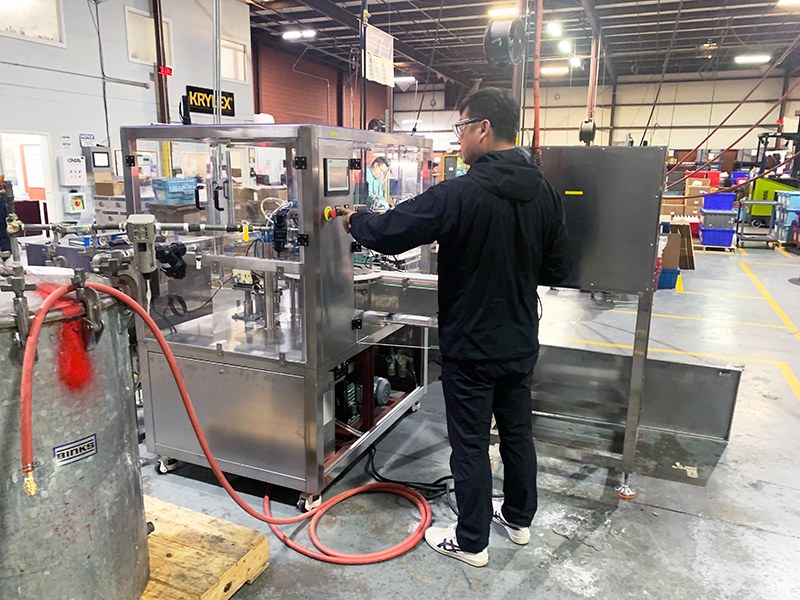
Figure 2. Treatment modules must be selected from source-water analysis and the finished-water target, not from a fixed equipment list. Image source: MIC Water Filling Line.
4. Protect treated water before filling
A poorly designed tank or distribution loop can undo the treatment result. Hygienic storage should control ingress, stagnation, inaccessible surfaces, dead legs, unsuitable seals, and cleaning coverage. Vent treatment, tank turnover, recirculation, temperature, and microbial controls should follow the validated plant design.
Specify the product-contact materials, surface finish, slopes and drainability, valve type, instrument connections, sampling points, spray devices, CIP circuit, and maximum hold time. A complete tank specification includes these hygienic interfaces along with volume.
Product water and operations water may have different duties. Keep their piping, identification, and connection controls clear. Water or compressed air used on product-contact surfaces must meet the site's hygienic specification.
5. Make or receive the bottle
PET bottles can arrive as finished containers or be stretch blow molded from preforms in the bottling plant. An integrated PET bottling line may include the bottle-making and transfer scope. On-site blowing requires preform storage and feeding, a blow molder and molds, high-pressure air, cooling, bottle inspection, and transfer to the filler. Purchased bottles replace that equipment with higher empty-bottle storage and handling needs.
Glass or purchased plastic bottles normally arrive palletized or otherwise packed. The line may use a depalletizer or unscrambler, conveyors, inspection, and rinsing or disinfection as required by the bottle condition and process. Returnable containers need a separate washing and inspection system.
The Codex hygienic code advises that reused containers, and other containers when necessary, be washed and disinfected in an appropriate system and positioned to minimize contamination before filling and sealing. It also calls for inspection of new containers and suitable treatment when needed. Base container preparation on a documented risk assessment and the verified condition of the incoming bottles.

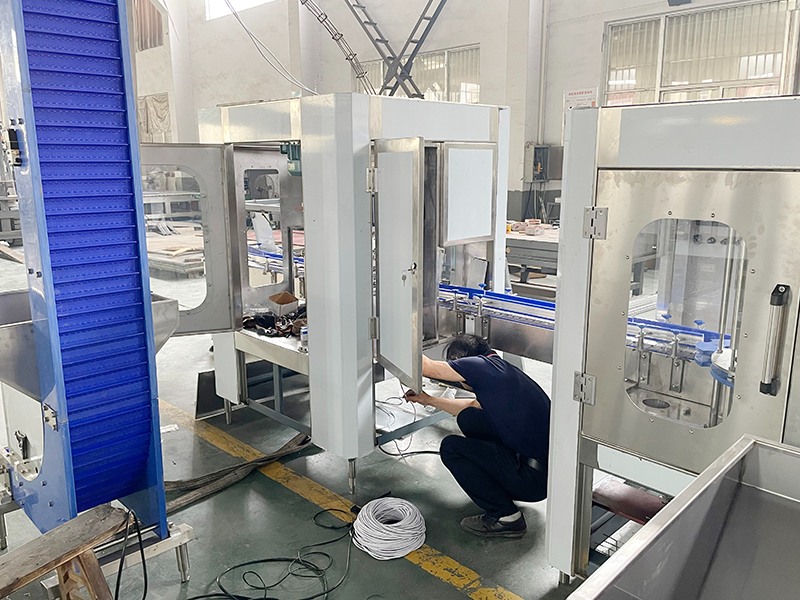
Figure 3. On-site PET bottle making adds preform handling, blow molding, high-pressure air, cooling, inspection, and transfer to the filler. Image source: MIC Water Filling Line.
6. Fill and close in a controlled zone
Still bottled water commonly uses a gravity or normal-pressure water filling machine. Carbonated water requires a pressure-controlled route that manages dissolved gas. The filler may combine rinsing, filling, and capping in one block, or the operations may be separate. In either case, the hygienic boundary, bottle exposure, cap route, operator interventions, and cleaning method must be defined.
The MIC water filling line page presents a commercial sequence that includes treatment, PET bottle blowing, filling and capping, labeling, coding, secondary packing, and pallet handling. Use it as an equipment-scope checklist. The final project can omit, add, or replace modules only after the source, package, output, and buyer/supplier responsibilities are fixed.
The same Codex code recommends conducting filling and sealing in a way that protects against contamination, including control of dust, airborne microorganisms, dirt, and condensation in the filling area. The cap feed should prevent contamination and damage, while the capper must achieve the specified application condition. Filled containers should move promptly to inspection without uncontrolled manual contact.

Figure 4. The filling and closing zone must preserve treated-water quality and control bottle, cap, sanitation, and operator interfaces. Image source: MIC Water Filling Line.
7. Inspect water, package, and closure
Quality control is distributed through the process. Source-water tests, finished-water tests, and package inspection each cover a different control point.
The quality plan can include:
- source, post-treatment, tank, filler, and finished-product sampling at defined points and frequencies;
- online monitoring for the parameters assigned to treatment control;
- bottle appearance, dimensions, neck finish, contamination, and damage checks;
- fill quantity or level, cap presence and application, tamper evidence, and leak checks;
- microbiological sampling of product, environment, and contact surfaces where required by the plan;
- calibration, challenge tests for inspection and reject devices, retained samples, and lot hold/release.
Define action limits, who reviews the data, how affected product is isolated, and what evidence is required before release. An alarm without a product-disposition rule leaves the main quality decision unresolved.
8. Dry, label, and code the bottle
The bottle surface has to match the labeling technology. Add controlled drying before labeling or coding when condensation or rinse water disrupts the approved label, adhesive, ink, or vision system. The approved label artwork should match the legal water category, source statement, treatment declaration where required, net content, business identification, date or lot code, and local language rules.
The coder must create a legible, durable identifier that connects the pack to production and quality records. Verify code content at startup and after a product, artwork, date, printer, or format change. Vision inspection or barcode checks can support control, but the acceptance method should be defined.
9. Build the shipping pack
Single bottles can be grouped in shrink film, trays, cartons, reusable crates, or another approved format. The packer, conveyors, palletizer, and wrapper must match bottle stability, pack pattern, pallet size, warehouse method, and transport conditions.
Light PET bottles can deform if film shrink, gripping, pack compression, pallet pattern, or stacking load is unsuitable. Glass needs impact and breakage control through packing and distribution. Run transport and stacking tests with the final bottle, cap, label, pack, pallet, and route.
Size the line from saleable output
Factory output follows the complete line. Calculate required saleable bottles from demand, working days, shifts, net operating time, planned changeovers, sanitation, maintenance, and expected losses. Then balance treatment flow, treated-water storage, blow molding or bottle supply, filling, labeling, packing, and pallet handling.
Buffering can separate short stops between machines, but it also occupies space and may increase container contact or product residence time. Define which machine controls each conveyor zone, how the line stops and restarts, and where nonconforming product is rejected.
Utilities and factory interfaces
The equipment schedule should identify water for product and cleaning, electricity, compressed air at each quality and pressure level, cooling, ozone generation or destruction where used, ventilation, drainage, chemical storage, and waste streams. PET blow molding may add a high-pressure air system beyond ordinary service air.
The layout needs hygienic flow for people, materials, bottles, caps, chemicals, waste, and finished goods. Include maintenance access, lifting routes, spare-parts storage, laboratory space, cleaning stations, and safe access to elevated equipment.
Common process mistakes
- Ordering reverse osmosis before the source analysis and product category are approved.
- Treating nominal filler speed as guaranteed saleable line output.
- Accepting a generic "3-in-1" description without defining bottle, cap, sanitation, CIP, and inspection interfaces.
- Assuming new bottles and caps need no risk-based inspection or treatment.
- Designing labeling before controlling bottle-surface moisture and temperature.
- Leaving reject handling, product isolation, and release decisions out of the control plan.
- Comparing quotations with different limits of supply and local responsibilities.
RFQ inputs for a bottled water production line
Send potential suppliers:
- Source-water analysis, source approval status, seasonal data, flow, and intake conditions.
- Finished-water specification, legal product category, sales markets, and label claims.
- Approved treatment concept or the data needed to develop one, including waste and by-product limits.
- Bottle or preform drawing, samples, neck finish, cap, label, pack, pallet, and transport route.
- Required saleable output by SKU, production calendar, changeover plan, and future formats.
- Factory drawing, hygiene zones, utility conditions, drainage, environmental limits, and local supply scope.
- Quality plan, FAT and site acceptance tests, documentation, training, spare parts, and responsibility matrix.
FAQ
How is bottled water made in a factory?
The factory approves and monitors the source, applies only the treatment needed for the legal product category and specification, protects the treated water, prepares containers and closures, fills and seals, inspects and codes each lot, and packs the product for distribution.
Does every bottled water manufacturing line use reverse osmosis?
No. Reverse osmosis is used when the source analysis, finished-water target, and legal product category support it. Spring water or natural mineral water can face different treatment restrictions, so the market and label claim must be fixed before equipment is selected.
Which machine sets the output of a bottled water line?
The constraint can be treatment, blowing or bottle supply, filling, labeling, packing, or pallet handling. Size the project from sustained saleable output for each SKU, including sanitation, changeovers, planned stops, and expected rejects.
Does water treatment remove the need for hygienic filling?
No. Treated water can be recontaminated in tanks, pipes, fillers, closures, air, or operator interventions. The hygienic design, sanitation program, environmental controls, monitoring, and release plan must protect the water through filling and closing.
What is the difference between purified, spring, and natural mineral water?
They are legal product categories, not interchangeable marketing names. Source requirements, permitted treatments, composition rules, and label statements depend on the sales market. Confirm the intended category and country requirements before fixing the treatment process or label.
Next step: specify the source-to-pallet system
A bottled water line has to preserve water quality at every interface. Start with source evidence and the legal product identity. Then select treatment from the measured risk and composition, protect the treated water, qualify the package, control filling and closing, and release only inspected, traceable packs.
MIC's water-line page is a practical checklist for the equipment modules. The project specification should then state the treatment duty, package, output, utilities, test conditions, and limits of supply.