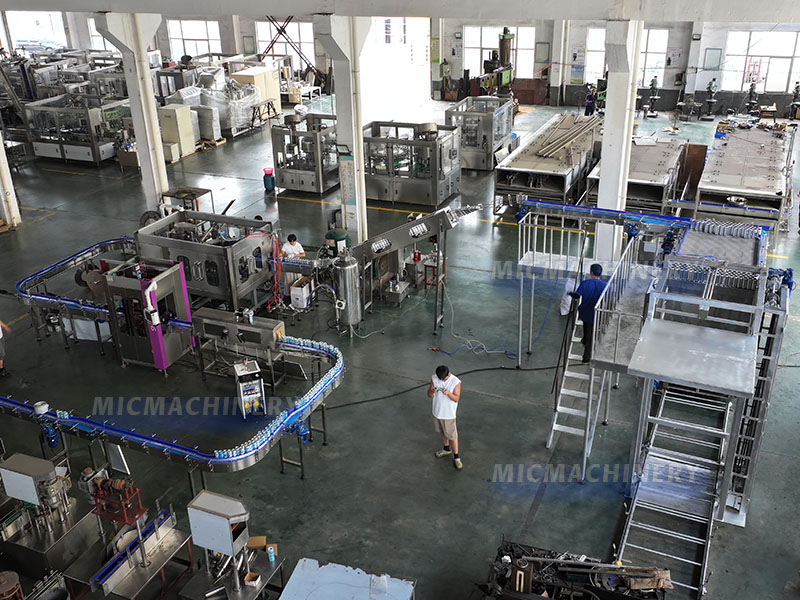
2000–6000CPH Normal Pressure Can Filling Production Line | Mic Machinery
A normal pressure can filling production line is designed for non-carbonated beverages such as juice, drinking water, tea, fruit drinks, and other still beverages packed in aluminum or tin cans. For production requirements from 2,000 to 6,000CPH, the complete solution can be configured from can depalletizing and filling to labeling, coding, secondary packaging, palletizing, and finished-product handling.
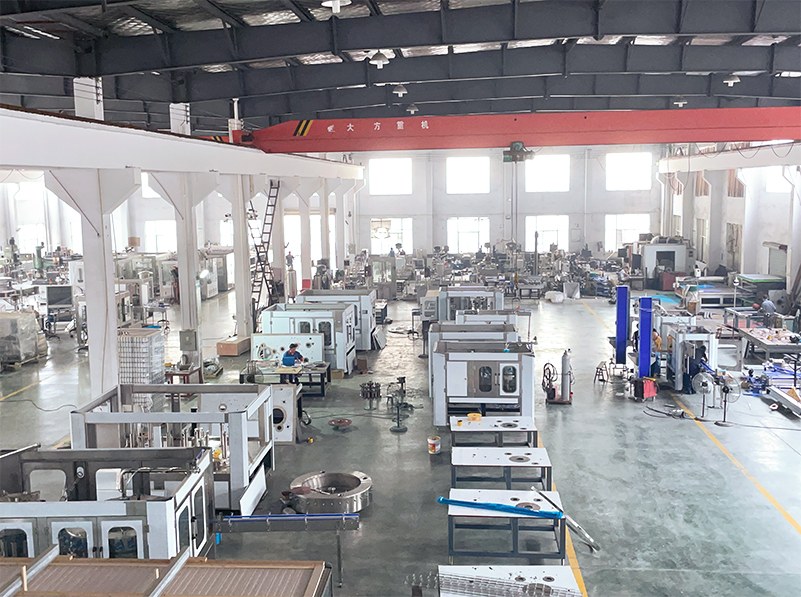
Mic Machinery provides integrated beverage production solutions for new beverage factories, factory expansion projects, and production-line automation upgrades. Instead of selecting a filling machine independently, buyers can plan the complete process around product characteristics, can specifications, production capacity, factory space, packaging requirements, and future expansion.
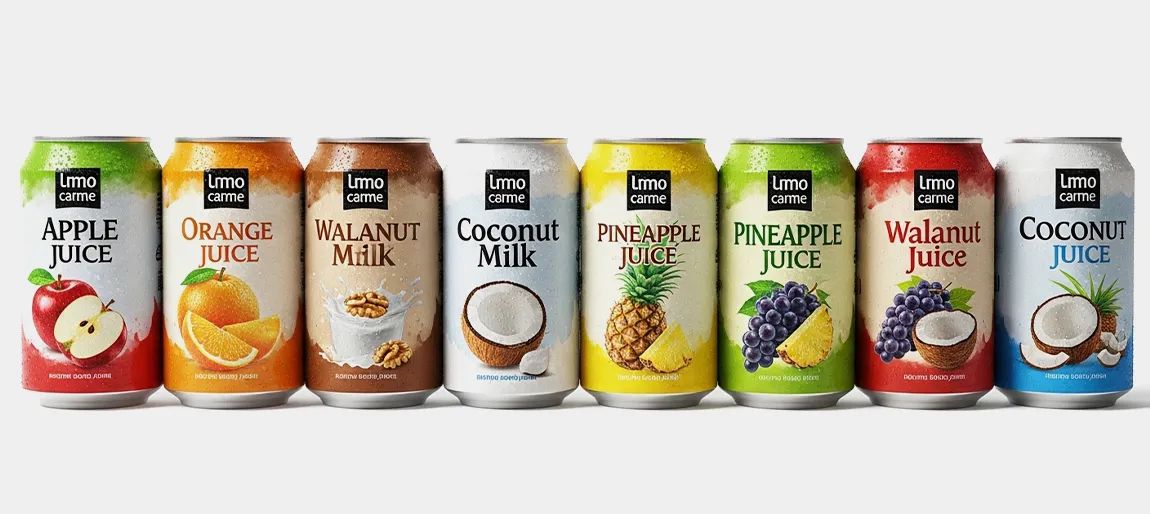
Project Overview
A 2,000–6,000CPH normal pressure canning line is generally suitable for beverage producers that need a medium-scale automated production system without moving immediately to a very high-capacity industrial line.
The solution can be used in three common project scenarios.
New beverage factories can use the complete configuration to establish a production line from water treatment and beverage preparation through filling and finished-product packaging. This approach allows the factory layout, utilities, conveyors, and equipment capacity to be planned as one system from the beginning.
Automation upgrade projects can replace labor-intensive can handling, filling, labeling, and packaging operations with interconnected automatic equipment. The objective is not simply to increase filling speed but to reduce manual transfer points and improve production continuity.
The normal-pressure filling principle is primarily intended for non-carbonated beverages. Juice, still water, tea, and similar products do not require the counter-pressure filling process normally associated with carbonated beer, soda, or sparkling beverages.
For this reason, the production line should be designed according to the actual beverage rather than selecting equipment based only on a target CPH number.
A complete project may include water treatment, beverage preparation, pasteurization, empty-can depalletizing, normal-pressure filling and seaming, warm irrigation, air drying, labeling, coding, secondary packaging, palletizing, and pallet wrapping.
The 2,000–6,000CPH capacity range provides flexibility for small and medium beverage manufacturers while leaving room for different product and packaging configurations.
Full Line Configuration
A complete normal-pressure canning solution can be configured as:
Water Treatment → Beverage Preparation → Pasteurization → Can Depalletizing → Normal-Pressure Can Filling & Seaming → Warm Irrigation → Air Knife Drying → Labeling → Shrink Sleeve Labeling → Laser Batch Coding → Wrap/Carton Packing → Palletizing → Pallet Wrapping
Not every project requires every machine. The final configuration depends on the beverage, filling process, packaging material, production capacity, and customer's automation requirements.
 |
Water Treatment Equipment
Water Treatment Equipment provides the treated process water required for beverage production.
For a new beverage factory, water treatment should be considered at the beginning of the engineering process because water consumption affects equipment selection, utility planning, drainage, production capacity, and factory layout.
The appropriate treatment process depends on the customer's source-water quality and beverage formulation. A complete project may therefore require an analysis of raw-water conditions before the final equipment configuration is confirmed.
|
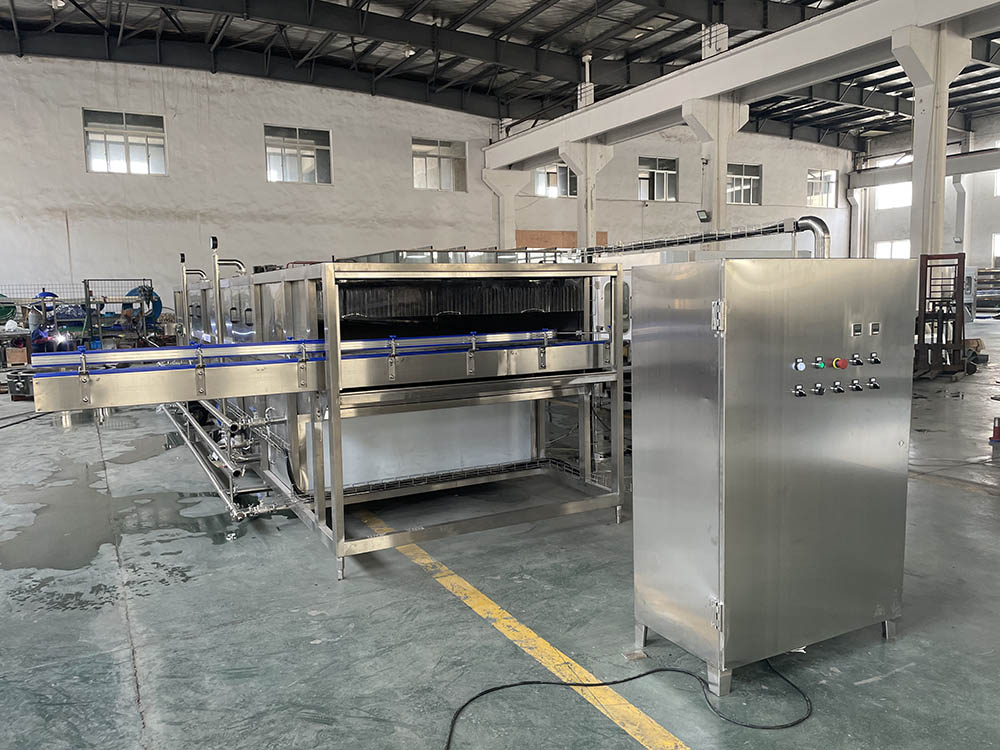 |
Pasteurization Machine
Pasteurization Machine can be incorporated when the beverage requires controlled thermal processing.
For juice and other beverages with specific microbiological and shelf-life requirements, the pasteurization process needs to be coordinated with filling temperature, product formulation, container material, and downstream cooling or drying.
The actual heating and holding parameters should be established according to the product process rather than applying one standard temperature to every beverage.
|
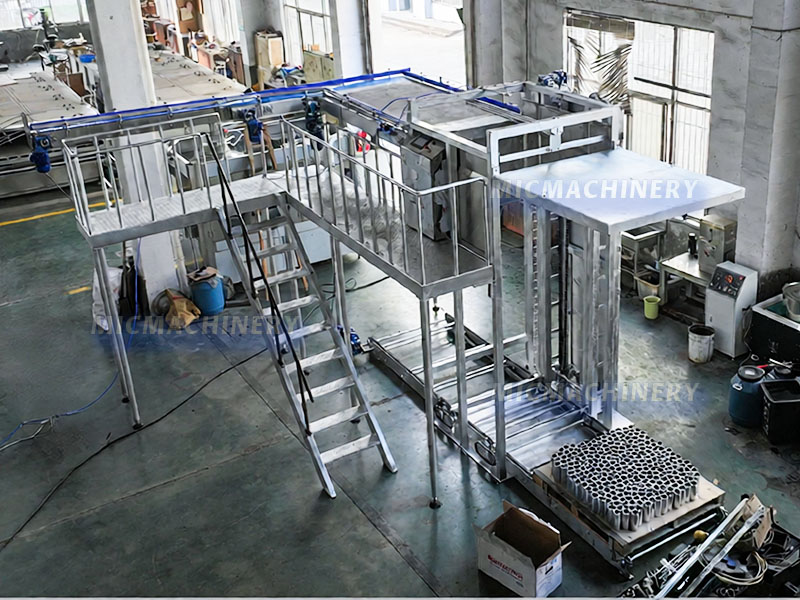 |
Can Depalletizer
Can Depalletizer automatically transfers empty cans from pallets into the production line.
At 2,000–6,000CPH, automated can handling can significantly reduce repetitive manual work. The depalletizer should be synchronized with the can conveyor and filling machine so that the filling section receives a stable supply of empty cans.
This equipment is particularly useful for factories seeking to increase automation while maintaining a compact production footprint.
|
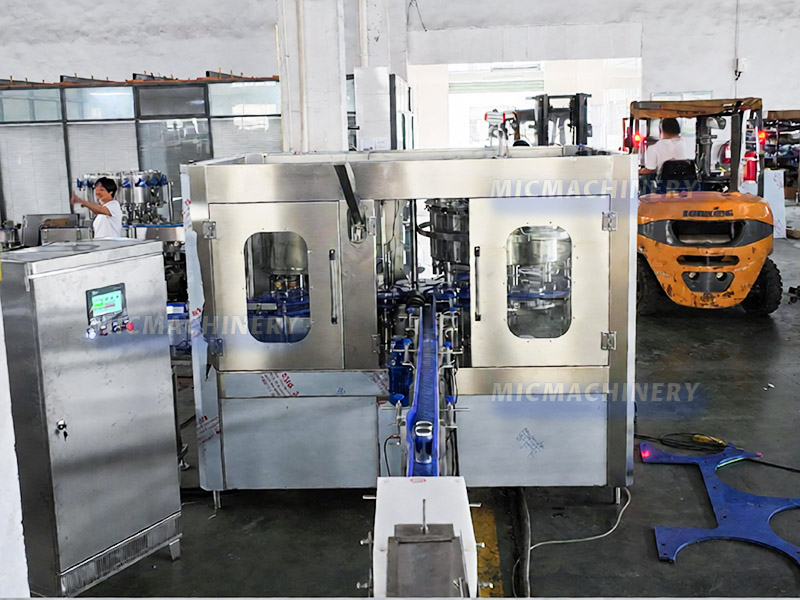 |
12-4 Juice Can Filling Machine
The 12-4 Juice Can Filling Machine serves as the core filling equipment for suitable non-carbonated canned beverage applications.
The filling system is designed around normal-pressure filling rather than the counter-pressure process used for carbonated products. It can therefore be considered for applications such as juice, still beverages, tea, and other compatible liquid products.
For a 2,000–6,000CPH project, the final filling configuration should be selected according to the required output, can diameter, can height, filling volume, product viscosity, filling temperature, and seaming requirements.
|
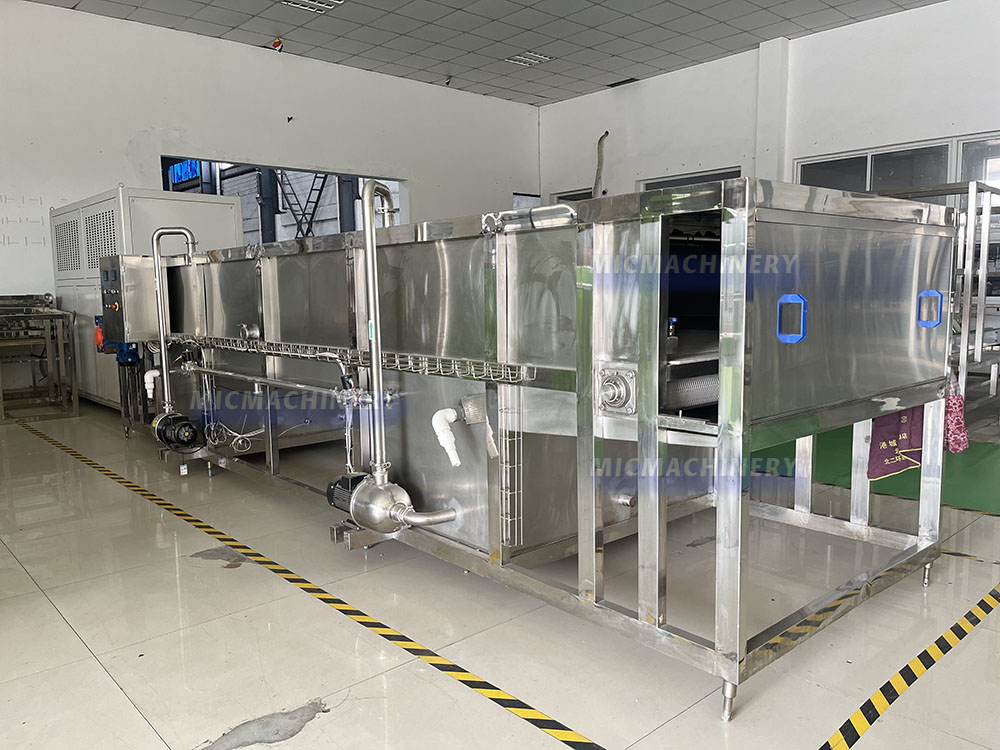 |
Warm Irrigation Machine
A Warm Irrigation Machine can be incorporated into the downstream process when the customer's thermal treatment and packaging process requires it.
Warm irrigation can help manage the temperature of filled cans before drying and labeling. It may also be used as part of a controlled post-filling treatment process depending on the beverage and production technology.
Because the required temperature and treatment time vary by product, the final process should be confirmed during engineering design.
|
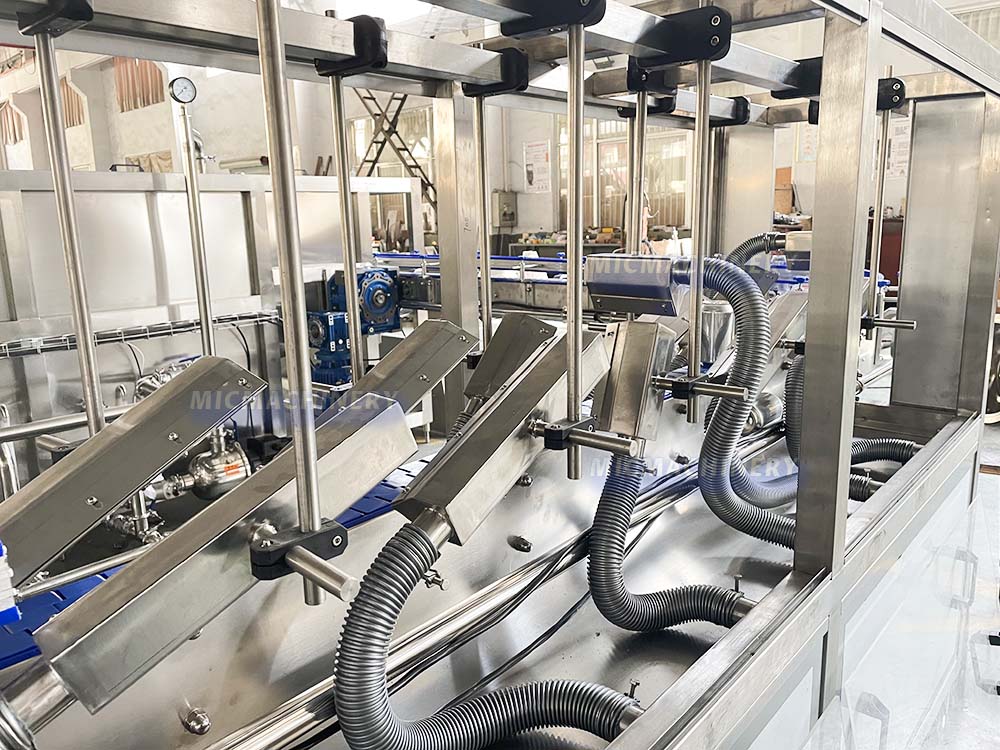 |
Air Knife Dryer
Air Knife Dryer removes residual moisture from the outside of cans before coding and labeling.
This stage becomes particularly important when cans pass through water-based treatment, rinsing, or warm irrigation. A dry external surface helps downstream coding and labeling equipment operate more consistently.
The dryer is therefore not simply an auxiliary machine. It contributes to the stability of the complete packaging process.
|
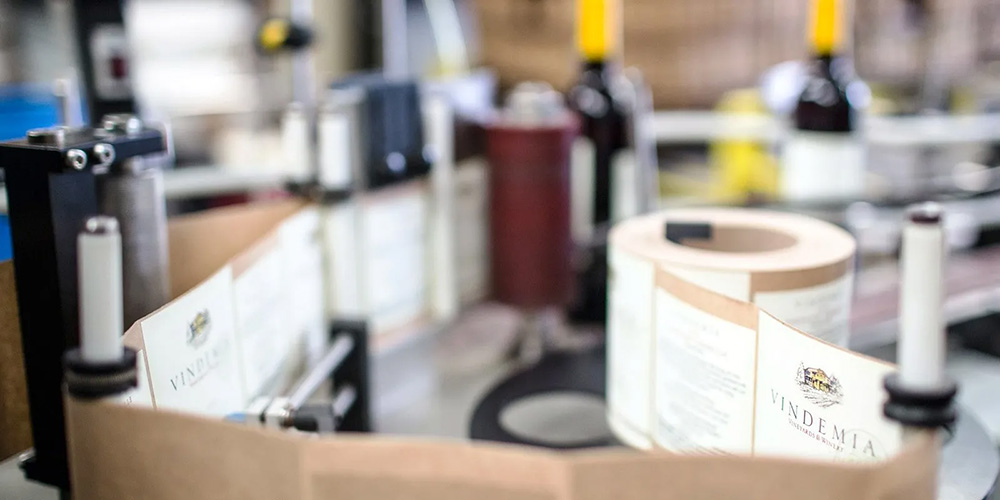 |
Labeling Machine
Labeling Machine can be selected when the customer's packaging requires conventional label application.
Labeling equipment should be matched to the can shape, label material, labeling position, production speed, and required appearance.
For a production line operating at several thousand cans per hour, stable container spacing and conveyor synchronization are important for maintaining consistent label positioning.
|
 |
Shrink Sleeve Labeling Machine
A Shrink Sleeve Labeling Machine can be selected when the customer requires full-body or high-coverage product branding.
Shrink sleeves are particularly useful for beverage products where the packaging design plays an important role in retail presentation. The machine can be integrated after filling, thermal treatment, and drying according to the production process.
The choice between conventional labeling and shrink sleeve labeling should be based on packaging design, production speed, material cost, product positioning, and downstream requirements.
|
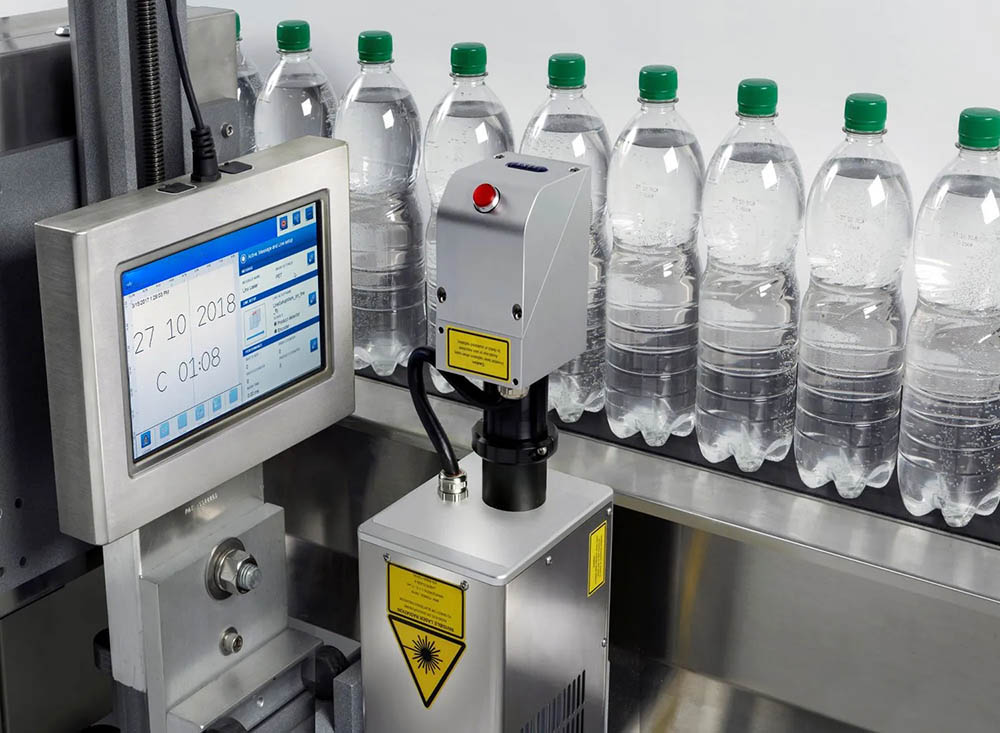 |
Laser Batch Coding Machine
Laser Batch Coding Machine provides a method for marking batch information, production information, or other traceability data on finished beverage containers.
The coding position should be selected according to the container surface and the labeling process. If coding is performed after wet processing, adequate drying should be provided before marking.
For commercial beverage production, reliable batch coding also supports production traceability and inventory management.
|
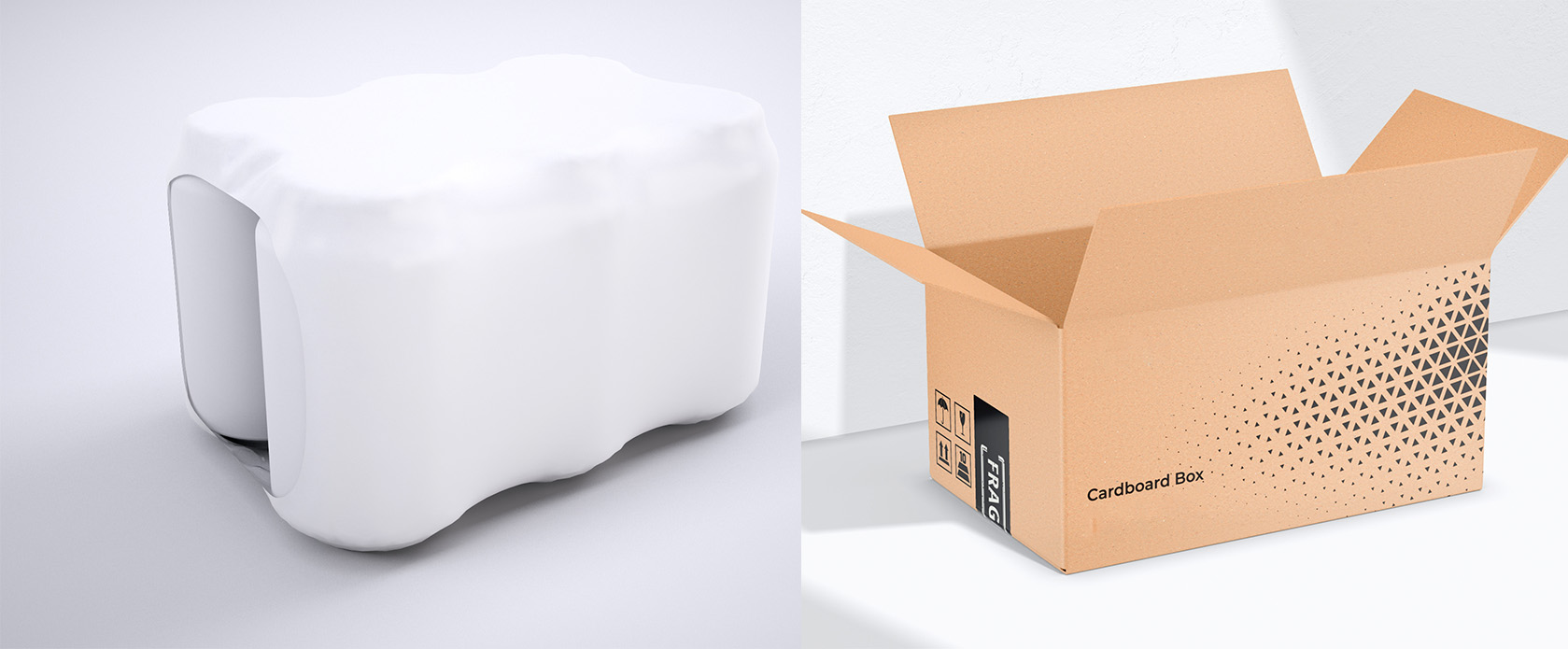 |
Wrap Packing / Carton Packing Machine
Finished cans can be grouped into secondary packages through a Wrap Packing Machine or Carton Packing Machine.
The appropriate system depends on the required pack format, can quantity per package, carton size, transportation method, and customer distribution model.
Secondary packaging is an important part of line balancing. If the packing section cannot maintain the required output, the filling machine may need to stop even when its own filling capacity is sufficient.
|
 |
Palletizer
A Palletizer automatically arranges finished cases or packages onto pallets.
For factories targeting higher automation, palletizing can reduce manual handling after the packaging stage and provide a more organized transfer to finished-product storage.
The palletizer should be selected according to package dimensions, pallet specifications, stacking patterns, required output, and available factory space.
|
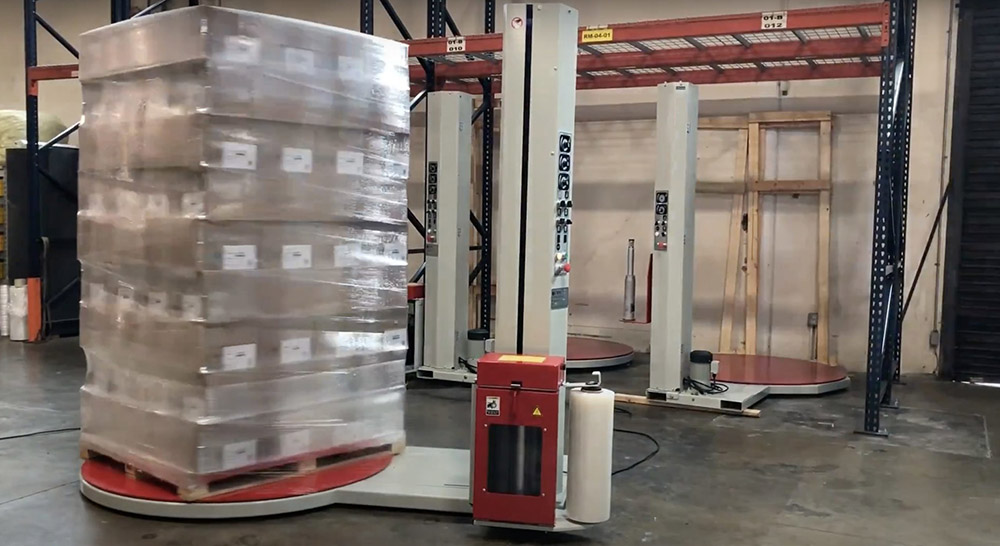 |
Pallet Wrapping Machine
The Pallet Wrapping Machine stabilizes completed pallets for storage and transportation.
After palletizing, wrapping provides a final packaging step before the finished goods move to the warehouse or loading area.
Together, palletizing and pallet wrapping create a continuous end-of-line packaging process with less manual intervention.
|
Custom Capacity Options
The 2,000–6,000CPH solution can be adapted to different investment stages and factory sizes.
Small Beverage Production Line: Around 2000CPH
A 2,000CPH configuration is suitable for new beverage factories, regional brands, small juice producers, and companies entering canned beverage production for the first time.
At this scale, the customer can prioritize the core filling and seaming system while selecting only the downstream equipment required for current production.
The line can also be designed with future expansion in mind, allowing additional packaging automation to be introduced as sales volume increases.
This approach is useful for customers searching for a small beverage production line with controlled initial investment.
Medium Beverage Production Line: Around 3000–5000CPH
A 3,000–5,000CPH line provides a balance between production capacity and factory investment.
This range can suit established regional beverage producers, contract manufacturers, and factories adding canned products to an existing beverage portfolio.
At this level, automatic can depalletizing, labeling, coding, secondary packaging, and palletizing become increasingly valuable because manual handling can become a production bottleneck.
Large Beverage Production Line: Around 6000CPH
A 6,000CPH line is appropriate for manufacturers requiring higher continuous production within the 2,000–6,000CPH solution range.
At this capacity, line balancing becomes particularly important. The filler should not be treated as the only capacity-defining machine. Can feeding, conveyors, labeling, packing, and palletizing all need sufficient capacity.
For customers planning a large carbonated drink plant, a separate isobaric filling technology should be evaluated because normal-pressure filling is intended for non-carbonated products.
How to Choose the Right Capacity?
The correct capacity should be based on actual production demand rather than selecting the highest available machine speed.
A buyer should first calculate the required cans per hour from annual sales, operating days, working shifts, planned downtime, and packaging size.
For example, a factory with a modest initial market may not benefit from installing a 6,000CPH line if actual demand only supports approximately 2,000CPH.
Conversely, a manufacturer with established distribution channels may find a 2,000CPH line restrictive if the packaging section is expected to operate continuously at a much higher production rate.
The recommended selection process is:
Market Demand → Target Annual Output → Working Hours → Beverage Characteristics → Can Specification → Required CPH → Filling Machine → Downstream Equipment → Factory Layout
This method provides a more reliable basis for equipment selection than comparing machine prices alone.
Factory Layout & Installation Service
A complete beverage canning project needs to be considered at factory level.
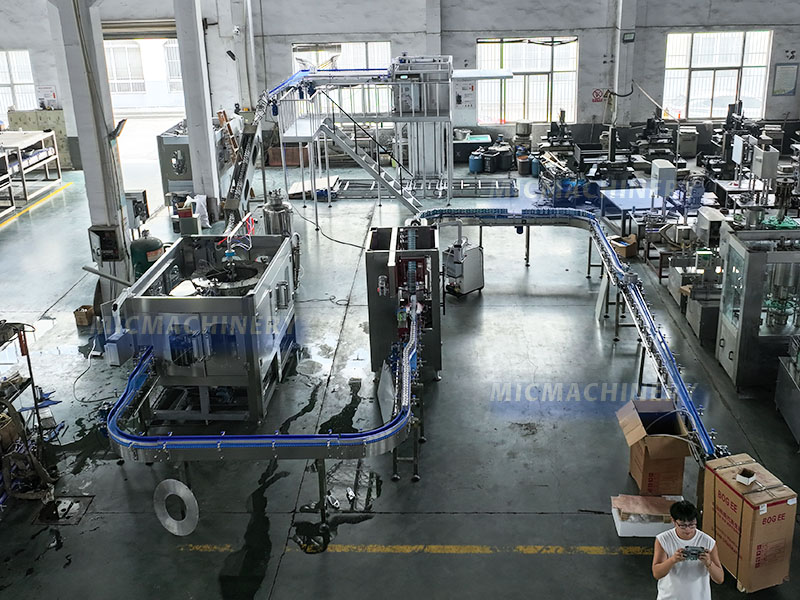
The production layout should normally follow the material flow:
Raw Water / Ingredients → Beverage Preparation → Empty Can Storage → Depalletizing → Filling & Seaming → Thermal Treatment → Drying → Labeling → Coding → Packaging → Palletizing → Finished Product Warehouse
The actual layout can be straight-line, U-shaped, L-shaped, or another arrangement depending on the building.
Factory Space Planning
Before equipment manufacturing, the customer should provide available factory dimensions, column positions, door locations, floor height, utility locations, drainage points, and material-handling routes.
Maintenance space should also be reserved around major machines.
A compact layout should not sacrifice access to filling valves, electrical cabinets, pumps, conveyors, or other components that require inspection and maintenance.
Utility Planning
A complete production line may require electricity, compressed air, process water, drainage, and thermal energy depending on the selected configuration.
The utility requirements should be calculated during project engineering rather than after equipment delivery.
This reduces the risk of installation delays caused by insufficient power supply, inappropriate compressed-air capacity, inadequate drainage, or insufficient water supply.
Overseas Installation
For international projects, equipment delivery is only one part of the project.
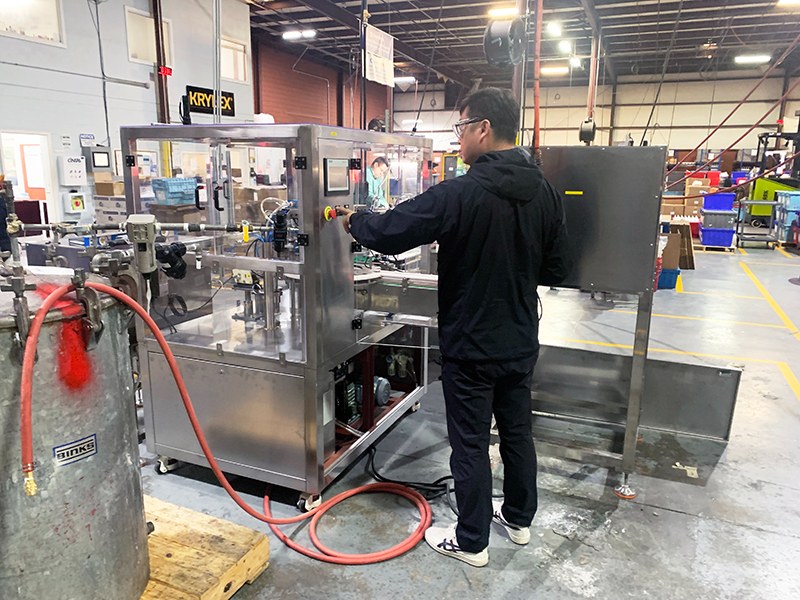
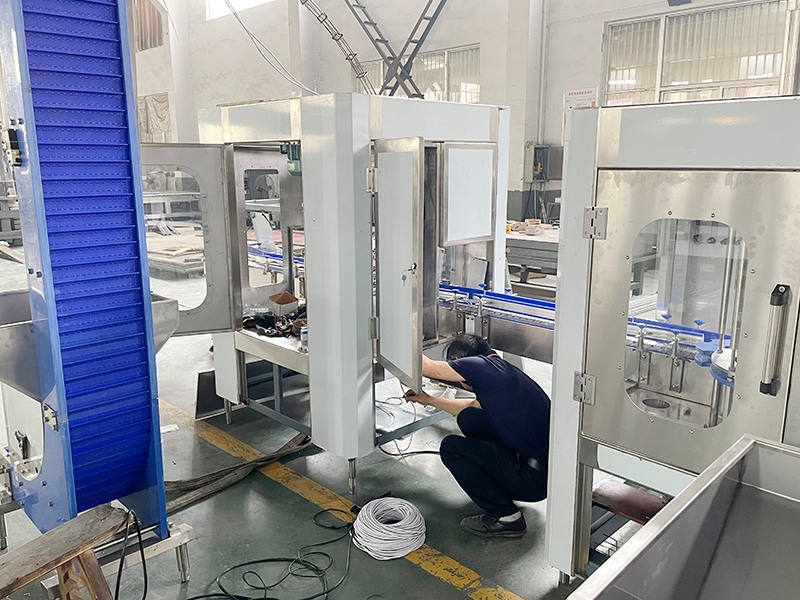
A complete project installation process can include equipment positioning, mechanical assembly, conveyor alignment, electrical connection, pneumatic connection, process-piping connection, commissioning, production testing, and operator training.
Mic Machinery can provide technical support for overseas beverage production projects according to the project scope.
Commissioning and Training
During commissioning, individual machines are first checked separately before the complete line is tested as an integrated system.
Operators can then receive training covering machine operation, routine inspection, cleaning, basic maintenance, production adjustment, and common troubleshooting procedures.
The objective is to help the customer's team operate the line independently after project handover.
After-Sales Service
A reliable after-sales service system is important when purchasing equipment internationally.
Customers may require remote technical support, troubleshooting assistance, spare parts, operating guidance, and engineering consultation after the production line has entered operation.
For this reason, buyers should evaluate the supplier's technical support capability together with machine specifications and price.
Industry Cases For This Solution
Real project cases provide buyers with a more practical way to evaluate a beverage equipment supplier.
A relevant reference is the Italy 6000CPH Juice Can Filling Line Project Case, which demonstrates a 6000CPH canned juice application using a 12-4 filling configuration.
The Italy project is particularly relevant for customers evaluating normal-pressure filling for non-carbonated beverages in aluminum cans. It provides a reference for production capacity, can handling, filling equipment, labeling, and international project delivery.
Other beverage projects can also be used to compare different products and technologies.
The China 24000BPH Complete Water Bottling Line Project Case provides a reference for high-capacity bottled-water production and demonstrates how water treatment, PET bottle production, filling, labeling, wrapping, and palletizing can be integrated.
The Germany 6000CPH Beer Can Filling Line Project Case provides a useful comparison at a similar production scale but uses beer and can-filling technology suitable for carbonated products.
The Australia 2000CPH Drink Filling Line Project Case can help buyers compare a smaller beverage production project.
For carbonated beer can applications, the Russia 2000CPH Isobaric Beer Can Filling Machine Project Case demonstrates a different filling principle from the normal-pressure juice application.
Together, these projects create a useful reference cluster covering different beverages, capacities, packaging formats, and filling technologies.
Normal Pressure vs. Isobaric Can Filling
Choosing the correct filling principle is one of the most important decisions in a canning project.
Normal-pressure filling is generally intended for non-carbonated beverages. It is suitable for applications where the product does not require pressure balancing during filling.
Isobaric filling is designed for carbonated beverages. The filler controls the pressure relationship between the product and container to reduce excessive foaming and CO₂ loss during filling.
Therefore:
Juice / Still Water / Still Tea → Normal-Pressure Filling
Beer / Carbonated Soft Drinks / Sparkling Water → Isobaric Filling
If the beverage portfolio includes both carbonated and non-carbonated products, the factory should discuss whether separate filling technologies or a suitable multi-product production strategy is required.
Common Production & Maintenance Considerations
A production line operating continuously at 2,000–6,000CPH requires routine inspection and preventive maintenance.
Operators should regularly inspect filling valves, product-contact components, can feeding systems, seaming components, conveyor chains, sensors, labeling equipment, coding equipment, and packaging machinery.
Filling Accuracy Problems
Inconsistent filling levels may be related to product supply, filling pressure, valve condition, product temperature, can positioning, or machine adjustment.
The first troubleshooting step should be to determine whether the variation occurs across all filling heads or only specific stations.
Can Feeding Problems
Can jams can result from incorrect conveyor spacing, damaged cans, unstable pallet unloading, sensor problems, or inappropriate conveyor adjustment.
Maintaining a stable can flow before the filling machine is important for achieving the expected production rate.
Seaming Problems
Poor seaming can affect product integrity and shelf life.
Seaming components should therefore be inspected regularly, and adjustments should follow the machine manufacturer's recommended procedures and the customer's validated can specifications.
Labeling Problems
Incorrect label position can be caused by can spacing, conveyor speed, sensor position, label material, or equipment synchronization.
A stable dry can surface is especially important when labels or sleeves are applied after thermal or water-based treatment.
CIP Cleaning
Where the process configuration supports it, CIP cleaning should be incorporated into the customer's sanitation procedure.
Clean-in-Place procedures help clean product-contact pipelines and equipment without requiring complete machine disassembly.
The actual CIP chemicals, concentration, temperature, flow rate, and cleaning duration must be determined according to the beverage process, equipment materials, and the customer's validated sanitation procedure.
FAQ – Common Questions About Beverage Bottling Line
Is a normal-pressure can filling machine suitable for juice?
Yes. Normal-pressure filling is commonly considered for compatible non-carbonated beverages such as juice, still water, tea, and similar products. The final filling method should be confirmed according to the product formulation and processing requirements.
What capacity can this beverage canning line achieve?
This solution is designed for approximately 2,000–6,000CPH. The actual achievable output depends on the selected filling configuration, can dimensions, filling volume, beverage characteristics, and the capacity balance of the complete line.
Can the line fill both juice and water?
A properly configured system can potentially handle different non-carbonated beverages, but product compatibility, cleaning procedures, filling components, filling volume, and process parameters should be reviewed before confirming multi-product production.
Can this line be used for carbonated beer?
A normal-pressure filling line is not the preferred solution for carbonated beer. Carbonated beer generally requires isobaric or counter-pressure filling technology to control pressure and reduce foaming and CO₂ loss.
What factory space is required for a 2000–6000CPH line?
There is no single standard factory size because the footprint depends on the selected equipment, packaging format, conveyor length, storage requirements, utility layout, and building structure. Mic Machinery can develop the production layout after receiving the customer's factory dimensions and process requirements.
How long does equipment delivery take?
Project lead time depends on the line configuration, equipment quantity, customization requirements, manufacturing schedule, testing, and shipping arrangements. The delivery schedule should be confirmed during quotation and technical specification approval.
Does Mic Machinery provide overseas installation?
Overseas installation and commissioning can be arranged according to the project scope and customer requirements. Support may include equipment positioning, assembly, line commissioning, production testing, and operator training.
What spare parts should a beverage factory prepare?
Common spare parts can include sensors, electrical components, seals, filling-related components, conveyor wear parts, and other machine-specific consumables. The recommended spare-parts list should be prepared according to the final equipment configuration and expected operating hours.
Can the production line be expanded later?
Yes. A scalable production layout can be considered for factories expecting future growth. During initial planning, space, conveyor routing, utility capacity, and equipment positions can be reserved for potential expansion.
Why Plan the Complete Plant Instead of Only the Filler?
A beverage filling machine is only one part of the production system.
A filler may be capable of reaching the required nominal speed, but the actual production output can still be limited by empty-can supply, thermal treatment, drying, labeling, coding, packing, or palletizing.
For this reason, a complete plant approach evaluates the entire production chain.
The engineering process should begin with:
Product → Container → Production Capacity → Filling Technology → Supporting Equipment → Packaging → Factory Layout → Utilities → Installation → Training → After-Sales Service
This approach helps prevent common project problems such as insufficient conveyor space, incompatible packaging equipment, inadequate utility capacity, or downstream bottlenecks.
For new beverage factories, it also provides a clearer path from initial investment to commercial production.
Conclusion
A 2000–6000CPH normal pressure can filling production line provides a flexible solution for manufacturers producing juice, still water, tea, and other compatible non-carbonated beverages in cans.
The complete system can integrate water treatment, pasteurization, can depalletizing, normal-pressure filling and seaming, warm irrigation, air drying, labeling, shrink sleeve labeling, laser coding, secondary packaging, palletizing, and pallet wrapping.
For buyers planning a new beverage factory, expanding an existing facility, or upgrading manual operations, the key is to select the entire production system rather than focusing only on the filling machine.
Mic Machinery can evaluate the beverage, can format, target capacity, packaging method, factory dimensions, utility conditions, and automation requirements to develop a suitable turnkey production concept.
Planning a 2,000–6,000CPH beverage canning project? Contact Mic Machinery for a complete line proposal, arrange a video meeting with an engineer, or request a factory visit to evaluate the equipment and production environment.