How to Choose the Right Water Filling Machine? | Beverage Filling Machine Guide | Mic Machinery
Choosing the right water filling machine depends on more than the required bottles per hour. For a bottled-water factory, buyers should evaluate water quality, bottle type, filling capacity, automation level, hygiene requirements, factory layout, packaging format, and future expansion plans together. A properly selected machine should work as part of a balanced production line rather than operate as an isolated piece of equipment.
For new factories, the filling machine is one of the most important pieces of production equipment because it directly connects treated water with downstream capping, labeling, packaging, and palletizing. For existing beverage manufacturers, the right machine can also help increase output, reduce manual intervention, and solve production bottlenecks.
This guide explains how to select a water filling machine, how the filling process works, which machine configuration fits different production requirements, and what buyers should check before purchasing.
What Is a Water Filling Machine?
A water filling machine is industrial equipment designed to transfer treated water into bottles at a controlled production rate. In an automatic bottling system, the machine normally works together with bottle conveying, filling, capping, and downstream packaging equipment.
A typical bottled-water production process is:
Water Treatment → Bottle Blowing → Bottle Conveying → Water Filling → Capping → Labeling → Packaging → Palletizing
The actual configuration varies according to bottle material, bottle volume, required capacity, production environment, and packaging requirements.
For a small producer, a relatively compact automatic filling system may be sufficient. A large commercial factory may require a complete high-speed line with water treatment, PET bottle blowing, automatic filling, labeling, wrapping, and palletizing.
For customers evaluating complete production systems, the Turnkey Complete Water Bottling Line 24000BPH provides a reference for how a high-capacity bottled-water project can be engineered as an integrated production system.
How to Choose a Water Filling Machine?
The best filling machine is determined by the production requirements rather than by machine speed alone. Buyers should evaluate several key parameters before selecting a model.
1. Determine the Required Production Capacity
Capacity is usually expressed as BPH, meaning bottles per hour.
Common project ranges may include:
2000–6000BPH: suitable for small or regional bottled-water factories
6000–12000BPH: suitable for growing beverage manufacturers
12000–24000BPH: suitable for large-scale production
Capacity should be calculated according to bottle volume and actual production demand.
For example, a factory producing 500 mL bottles and a factory producing 1.5 L bottles may have different production requirements even if their target number of bottles per hour is similar.
A common purchasing mistake is selecting a machine based only on its maximum rated speed. A better approach is to consider the expected operating speed, working hours, product demand, and future expansion.
2. Confirm Bottle Specifications
Bottle characteristics directly affect filling-machine configuration.
Before purchasing, provide:
Bottle volume
Bottle diameter
Bottle height
Neck size
Bottle material
Bottle shape
Cap type
Expected bottle weight
PET bottles are widely used in bottled-water production, but glass bottles and other containers may require different handling and filling configurations.
The bottle specifications should also be compatible with the upstream blowing system and downstream labeling and packaging equipment.
3. Consider the Water Product
Not all water products have identical processing requirements.
A project may involve:
Purified water
Mineral water
Spring water
Drinking water
Functional water
Flavored water
The filling machine should therefore be selected according to the actual product characteristics and hygiene requirements.
For standard still water, a conventional hygienic filling system may be appropriate. If the product has special formulation or processing requirements, additional engineering evaluation may be necessary.
Water Bottling Machine Technical Specifications
Water Bottling Machine:
|
Model
|
MIC 12-1
|
MIC 8-8-3
|
MIC 14-12-5
|
MIC 18-18-6
|
MIC 24-24-8
|
MIC 32-32-8
|
MIC Linear
|
|
Application
|
Juice, Cold Coffee, Herbal Tea, Non-carbonated Drinks And So On
|
|
Packing Type
|
Glass Bottle, Aluminum Bottle, PET Bottle, etc
|
|
Speed
|
500-1000BPH
|
600-1000BPH
|
1000-2000BPH
|
2000-5000BPH
|
4000-8000BPH
|
8000-12000BPH
|
1800BPH
|
|
Filling Arrange
|
180ml, 250ml, 330ml, 355ml, 440ml, 500ml, 8oz, 12oz, 16oz, 1L and so on (0.1-1L)
|
From a Water Filling Machine to a Complete Bottling Plant
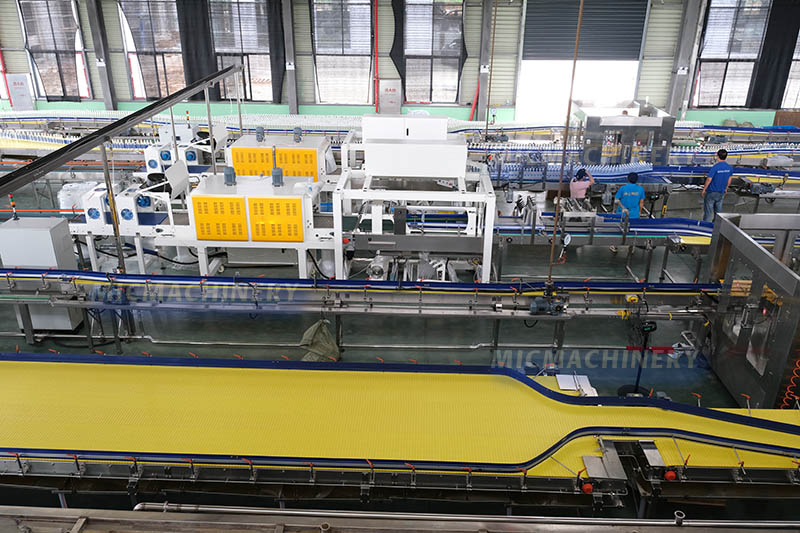
For a new bottled-water factory or an existing manufacturer planning capacity expansion, selecting a water filling machine is only one part of the project. The filling capacity must be balanced with water treatment, PET bottle blowing, capping, labeling, secondary packaging, and palletizing to achieve stable overall production. Mic Machinery provides a Turnkey Complete Water Bottling Line 24000BPH solution covering approximately 2000–24000BPH, with equipment configuration, production layout, utility planning, installation, commissioning, and after-sales support considered as one integrated project.
For large-scale projects, the system can integrate water treatment → PET bottle blowing → water filling → capping → labeling → film wrapping → palletizing, allowing each section to be matched to the target production capacity rather than selecting machines independently. The solution is suitable for turnkey water filling plants, new bottled-water factories, and factory expansion bottling lines where production efficiency, automation, and future capacity expansion are important.
A practical reference is Mic Machinery's China project, which included two 24000BPH water bottling production lines with water treatment, bottle blowing, filling, labeling, film wrapping, and palletizing equipment.
If you are planning a 2000–24000BPH bottled-water project, explore the complete solution to compare equipment configuration, factory layout, installation, and production capacity before selecting your water filling machine.
How Does the Water Filling Process Work?
Understanding the water bottling process helps buyers evaluate equipment more effectively.
Step 1: Treated Water Supply
Raw water first passes through the appropriate treatment process. The treated water is then transferred to the filling system.
The treatment system must have sufficient capacity to support the filling machine continuously.
Step 2: Empty Bottle Feeding
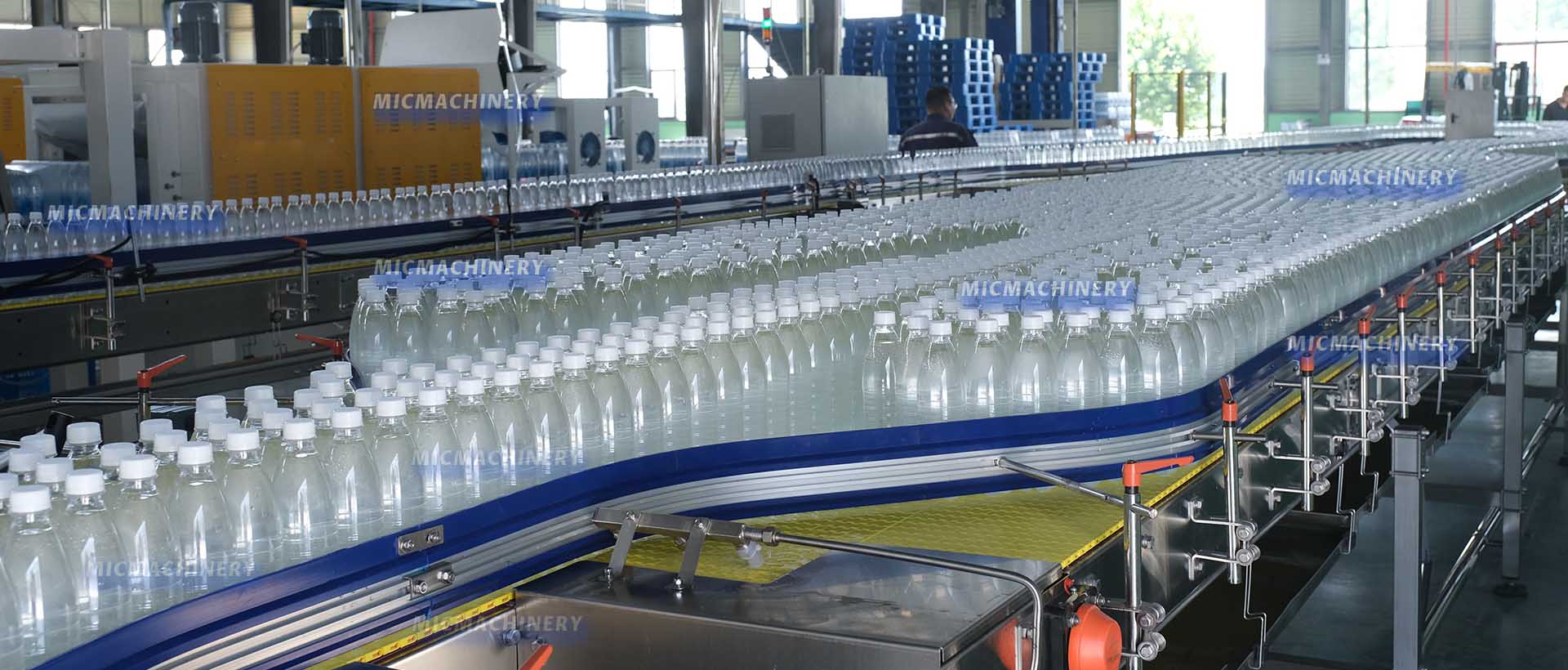
PET bottles produced by the bottle-blowing machine or supplied from an external source are transferred onto the conveyor.
The conveyor sends bottles toward the filling machine while maintaining the required spacing.
Step 3: Bottle Positioning
The bottles are positioned below the filling valves.
Stable positioning is important because inconsistent bottle placement can affect filling performance.
Step 4: Filling
The filling valves introduce treated water into the bottles according to the machine's operating principle.
The objective is to achieve stable filling while maintaining the required production rate.
Step 5: Capping
After filling, bottles are transferred to the capping machine.
The cap is automatically placed and tightened according to the selected configuration.
Step 6: Labeling and Packaging
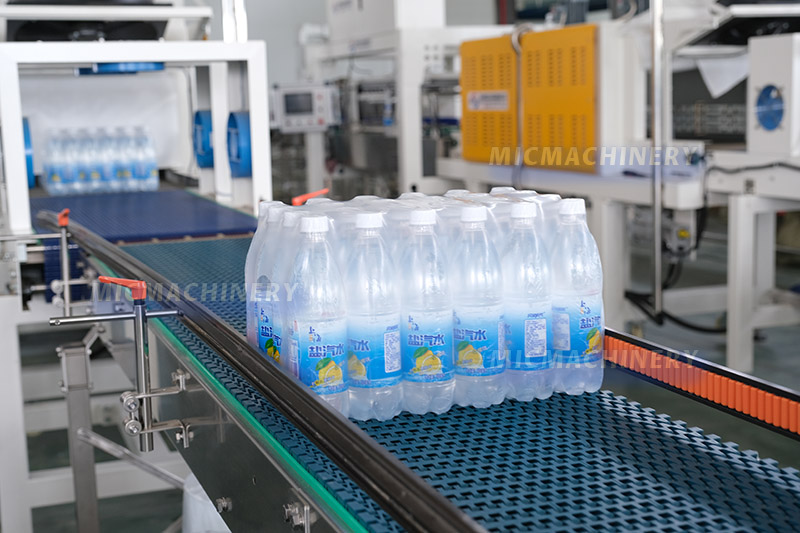
Capped bottles then enter the labeling section and subsequently move to secondary packaging.
For large-scale factories, automatic packaging and palletizing can reduce repetitive manual handling.
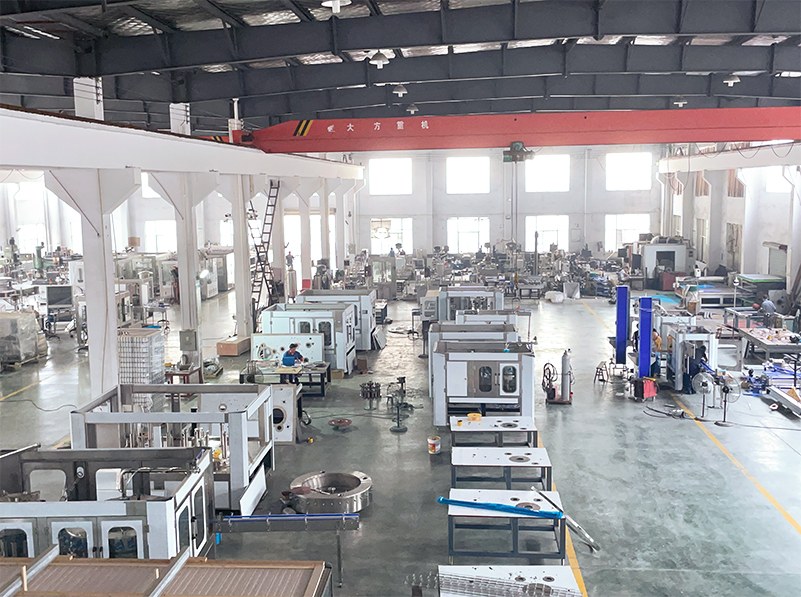
How Does Factory Layout Affect Filling Machine Selection?
Machine selection should begin before the final factory layout is completed.
A complete production layout should consider:
Raw Water Area → Water Treatment → Bottle Production → Filling → Labeling → Packaging → Palletizing → Finished Goods Warehouse
The physical arrangement should provide enough space for:
Equipment installation
Operator movement
Conveyor routing
Maintenance
Electrical cabinets
Utility connections
Spare parts
Packaging materials
Finished-product transportation
For a large turnkey water filling plant, factory dimensions should be provided to the equipment supplier during the engineering stage.
This allows engineers to develop a production layout based on actual building conditions instead of using a generic arrangement.
What Should You Check Before Buying a Water Filling Machine?
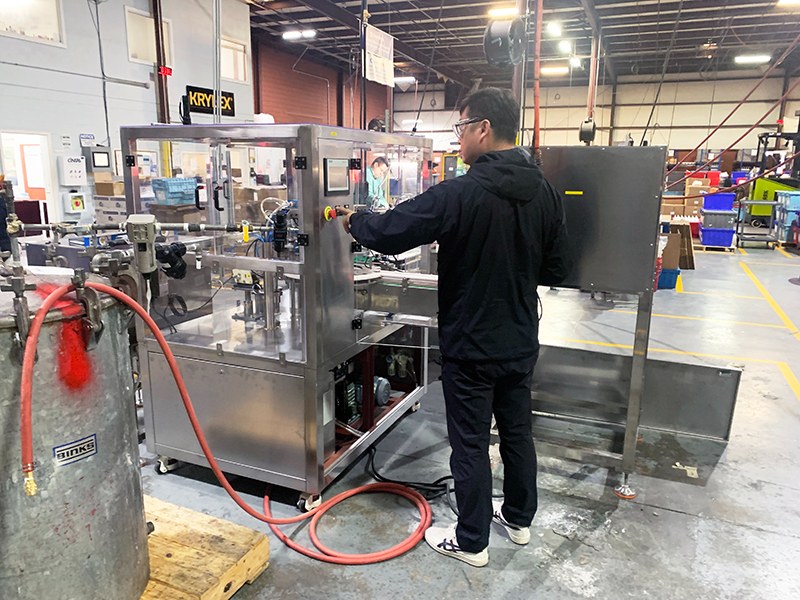
Filling Accuracy and Stability
Check how the machine maintains consistent filling performance under normal production conditions.
Automation Level
Determine whether you need semi-automatic operation or a fully automatic production line.
Material and Hygiene
Product-contact components should be selected according to the water product and applicable hygiene requirements.
Cleaning and Maintenance
Ask how filling valves, pipelines, tanks, and product-contact components are cleaned and maintained.
For high-utilization factories, maintenance accessibility is particularly important because difficult-to-access components can increase downtime.
Spare Parts
Before placing an order, clarify which wearing parts are recommended as initial spare parts and how replacement components can be obtained.
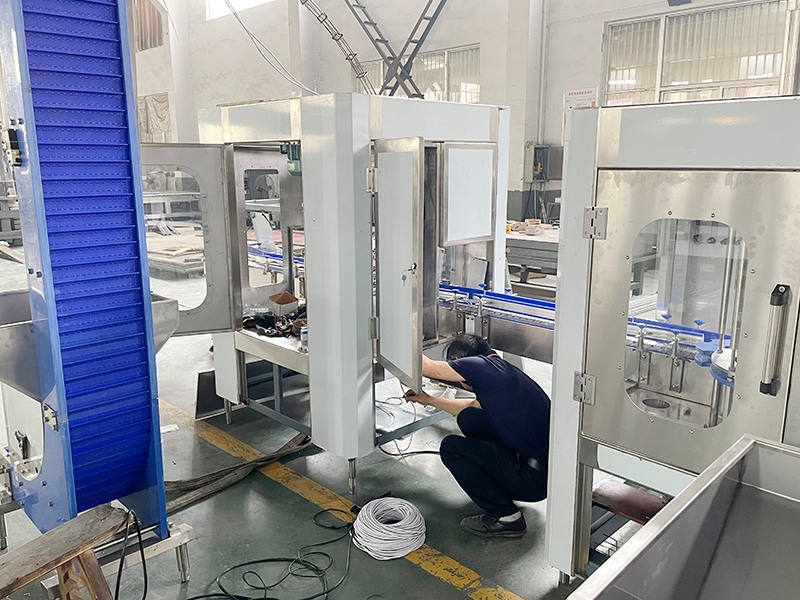
After-Sales Service
International buyers should evaluate technical support, installation, commissioning, operator training, troubleshooting, and spare-parts availability.
A machine with suitable specifications but inadequate project support may create greater long-term costs than a properly supported solution.
Common Water Filling Machine Problems and Troubleshooting
Even a properly selected machine can experience operating problems if installation, water supply, bottle handling, or maintenance is inadequate.
Inconsistent Filling Level
Possible causes include unstable product supply, incorrect machine settings, filling-valve issues, or bottle-positioning problems.
Recommended checks: verify water supply conditions, inspect filling valves, check bottle positioning, and confirm operating parameters.
Water Splashing During Filling
Splashing can be associated with unsuitable filling conditions, bottle movement, filling speed, or bottle geometry.
Recommended checks: inspect bottle stability and filling parameters and verify that the selected filling configuration matches the bottle specification.
Bottle Jams
Bottle jams can occur in conveyors, transfer sections, or the capping area.
Recommended checks: inspect conveyor alignment, bottle spacing, guide-rail settings, and bottle dimensions.
Unexpected Production Stops
Frequent stoppages may result from sensor signals, conveyor synchronization, material supply, or downstream equipment limitations.
A useful troubleshooting method is to determine whether the problem originates from the filling machine itself or from another section of the integrated line.
For high-capacity factories, monitoring the entire line is more effective than focusing on one machine.
Water Filling Machine Maintenance Guide
Regular maintenance is essential for stable long-term production.
Daily Checks
Operators can inspect:
Filling valves
Bottle conveyors
Sensors
Water supply
Abnormal noise
Leakage
Machine cleanliness
Periodic Maintenance
Maintenance personnel should check mechanical transmission components, electrical connections, sensors, pneumatic components, and other wear parts according to the manufacturer's maintenance schedule.
Cleaning
The cleaning method should follow the product requirements and machine design. Product-contact pipelines, tanks, and valves require particular attention in hygienic beverage production.
For larger factories, preventive maintenance should be integrated into the production schedule instead of being performed only after equipment failure.
China 24000BPH Water Bottling Project: A Real Production Reference
When researching a supplier, real project information can provide more useful insight than a product specification sheet alone.
Mic Machinery's China 24000BPH Complete Water Bottling Line Project Case records a high-capacity bottled-water project in China.
The project included two 24000BPH production lines for bottled water in PET bottles. The equipment configuration covered the major production stages, including water treatment, bottle blowing, filling, labeling, film packaging, and palletizing.
This type of project demonstrates the importance of coordinating individual machine capacities and factory logistics when developing a large-scale bottled-water plant.
For buyers researching water filling machine suppliers, real project cases can help answer practical questions such as:
What production capacities has the supplier delivered?
Can the supplier integrate multiple machines?
Can the supplier support complete factory projects?
How is the production line arranged?
What equipment is included?
Does the supplier provide installation and commissioning support?
FAQ About Water Filling Machines
1.What is the best water filling machine for a new factory?
The best machine depends on capacity, bottle specification, water product, automation requirements, factory space, and budget. A complete-line assessment is generally more useful than selecting the filling machine independently.
2.How many bottles per hour can a water filling machine produce?
Capacity depends on the machine configuration and bottle specifications. Mic Machinery's solution range can be configured for approximately 2000–24000BPH according to project requirements.
3.Can one filling machine handle different bottle sizes?
Some configurations can support multiple bottle formats, but this depends on the machine design and required changeover components. Bottle specifications should be confirmed before equipment selection.
4.What equipment is needed for a complete bottled-water factory?
A complete plant may include water treatment, bottle blowing, filling, capping, labeling, packaging, conveying, and palletizing systems.
5.How often should a water filling machine be maintained?
Routine inspections should be performed regularly, while detailed maintenance should follow the manufacturer's recommended schedule and actual operating conditions.
6.What information should I provide when requesting a quotation?
Provide the water type, bottle specifications, target BPH, working hours, packaging requirements, factory dimensions, and desired automation level. These details help engineers develop a more accurate solution.
Conclusion: Choose the Filling Machine as Part of the Whole Project
Selecting a water filling machine should be treated as a production-engineering decision rather than a simple equipment purchase. Capacity, bottle specifications, water treatment, filling technology, capping, labeling, packaging, factory layout, utilities, maintenance, and after-sales support all influence the final performance of a bottled-water factory.
For startups, a compact 2000–6000BPH line may provide a practical entry point. Growing manufacturers can consider 6000–12000BPH solutions, while established producers may require 12000–24000BPH high-capacity systems.
Most importantly, the filling machine should be balanced with the complete production line. A well-designed turnkey water filling plant can reduce manual intervention, improve production continuity, simplify project management, and provide a clearer path for future capacity expansion.
Need a customized water filling solution? Contact Mic Machinery for equipment selection advice, a complete production-line proposal, and a factory layout based on your required capacity and bottle specifications.