Turnkey Complete Water Bottling Line 2000–24000BPH | Mic Machinery
Project Overview
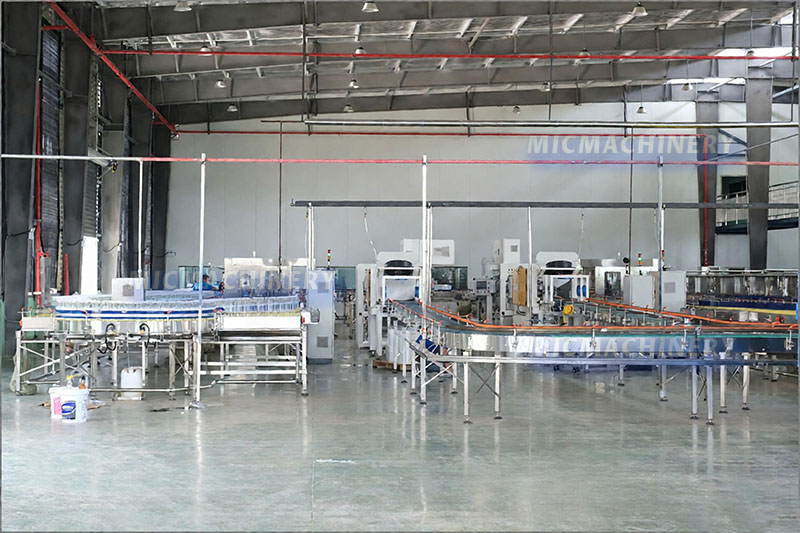
A bottled-water production project is not simply a matter of selecting a fast filling machine. For a new factory or an existing beverage manufacturer planning expansion, the complete production system must be considered as one connected process—from water treatment and PET bottle production to filling, capping, labeling, secondary packaging, and finished-product handling.
Mic Machinery provides turnkey water filling plant solutions covering approximately 2000–24000BPH, allowing the production capacity, equipment configuration, factory layout, and automation level to be matched to the customer's actual project requirements.
This capacity range can serve different investment stages. A smaller production line may be suitable for a startup bottled-water business or regional beverage brand, while a high-capacity 24000BPH configuration can support large-scale commercial production. For existing factories, a new factory expansion bottling line can also be planned around current production bottlenecks, available factory space, and future market demand.
A complete project typically connects:
Water Treatment → PET Bottle Blowing → Filling → Capping → Labeling → Secondary Packaging → Palletizing → Finished Product Warehouse
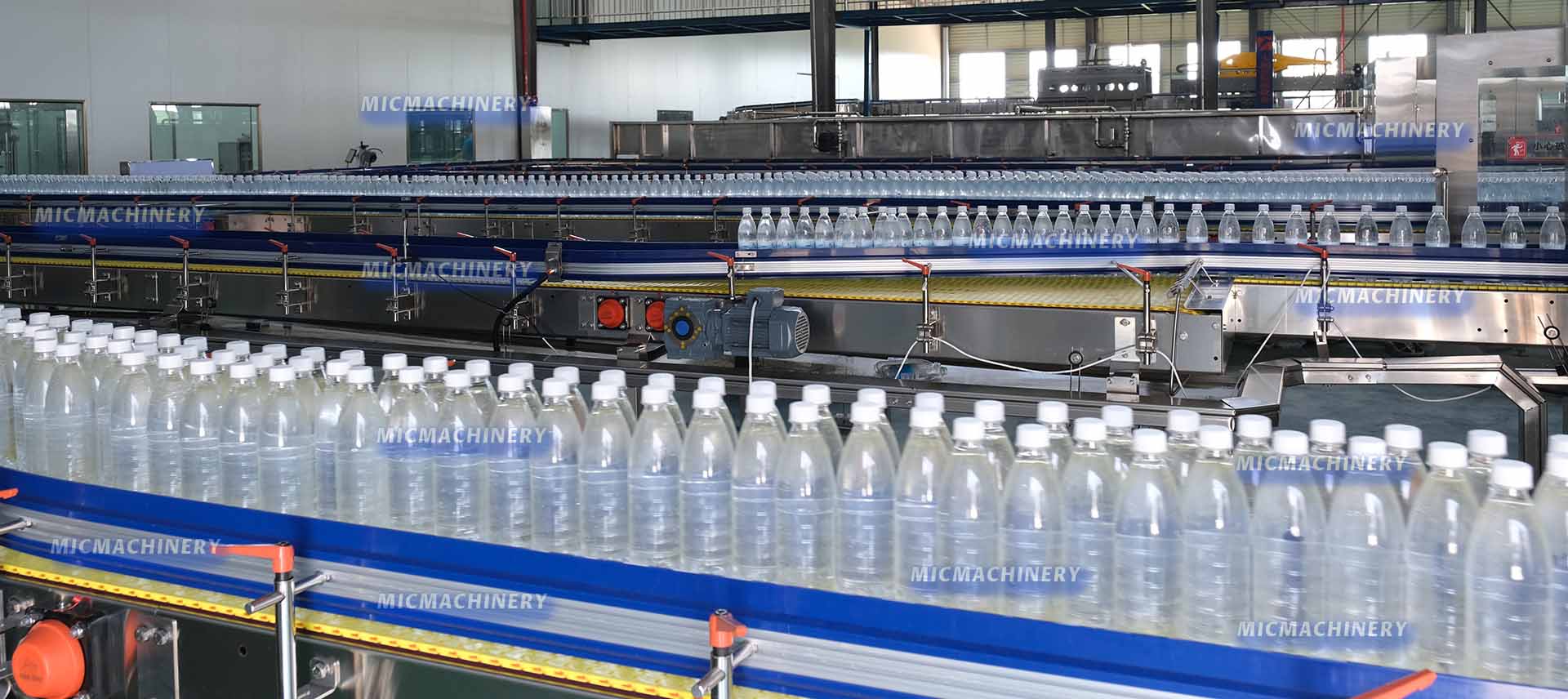
The objective is to maintain a balanced production flow rather than maximizing the speed of only one machine. For example, if the filling machine can process 24000 bottles per hour but the labeling or packaging section has insufficient capacity, the actual finished output will be lower than the target.
For investors, this makes complete-line engineering particularly important. Equipment selection, production layout, utilities, operator access, maintenance space, installation, commissioning, and after-sales service should be considered before the project is finalized.
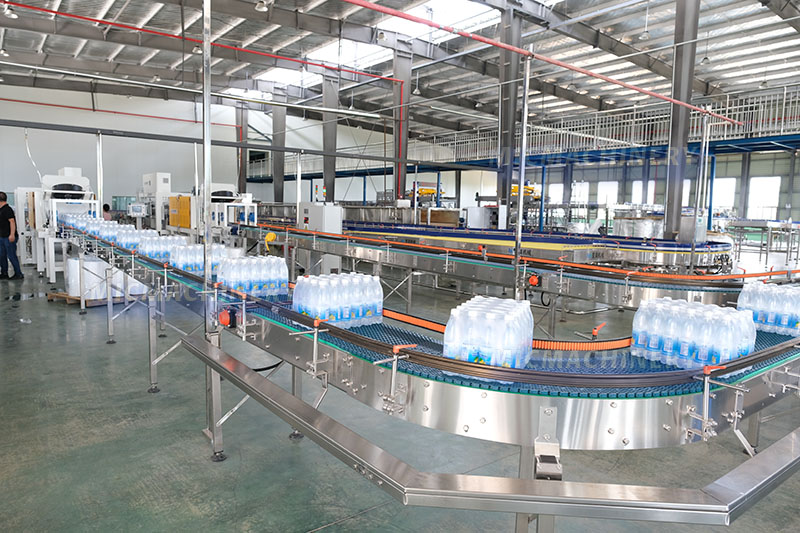
A representative reference is the China 24000BPH Complete Water Bottling Line Project, where the customer installed two high-capacity bottled-water production lines. The project included water treatment, bottle blowing, filling, labeling, film wrapping, and palletizing equipment. China 24000BPH Complete Water Bottling Line Project Case
Full Line Configuration
The exact equipment configuration of a complete water bottling line depends on water quality, bottle specifications, target capacity, packaging format, factory conditions, and the customer's automation requirements. A turnkey project integrates each section into one production system.
 |
Water Treatment Equipment
Water treatment is the upstream foundation of a bottled-water factory.
The treatment configuration should be determined by the customer's water source and the required finished-water specifications. Instead of using an identical system for every project, the engineering process should begin with an evaluation of the raw-water characteristics and production requirements.
Depending on the application, the treatment system can be engineered around the necessary purification and conditioning stages.
For high-capacity plants, treatment capacity is especially important because insufficient treated-water supply can limit the performance of the entire filling line.
|
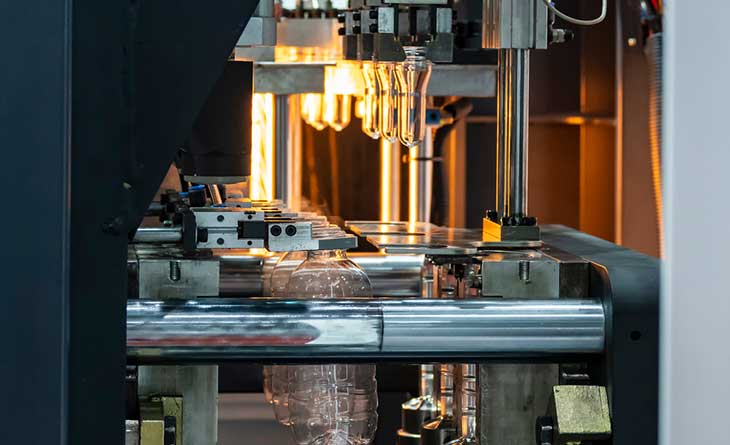 |
Plastic Bottle Blowing Machine
Blow the preform into the mold using high-pressure air for molding
Equipped with a stretching rod for longitudinal stretching, improving the strength of the bottle body
Automatic embryo delivery and bottle dispensing system for continuous production
Adopting PLC control system to precisely control the heating and blowing process
|
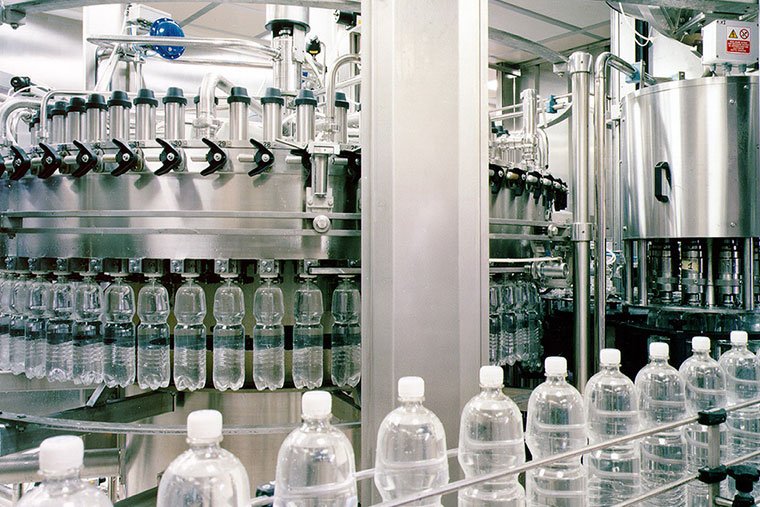 |
Water Bottle Filling Machine
The water filling machine is the core production equipment connecting treated water with the downstream packaging process.
Selection should consider:
Target BPH
Bottle volume
Bottle dimensions
Filling method
Filling accuracy
The machine should not be selected according to speed alone. The filling capacity must be balanced with bottle blowing, labeling, packaging, and palletizing.
For customers comparing individual filling equipment, the Water Filling Machine can be selected as part of a complete production-line engineering process.
|
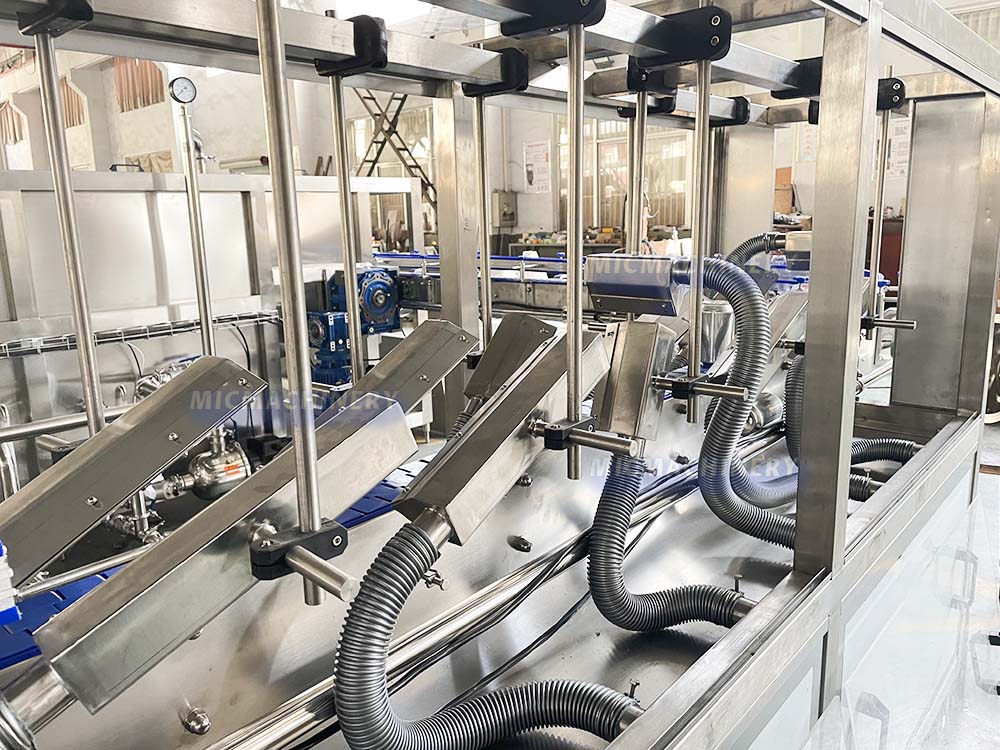 |
Air Knife Dryer
High speed fan: this equipment is equiped with a power, high strength roots blower, can produce a certain air knife effect.
High quality materials: the whole machine except accessories are made of stainless steel.
|
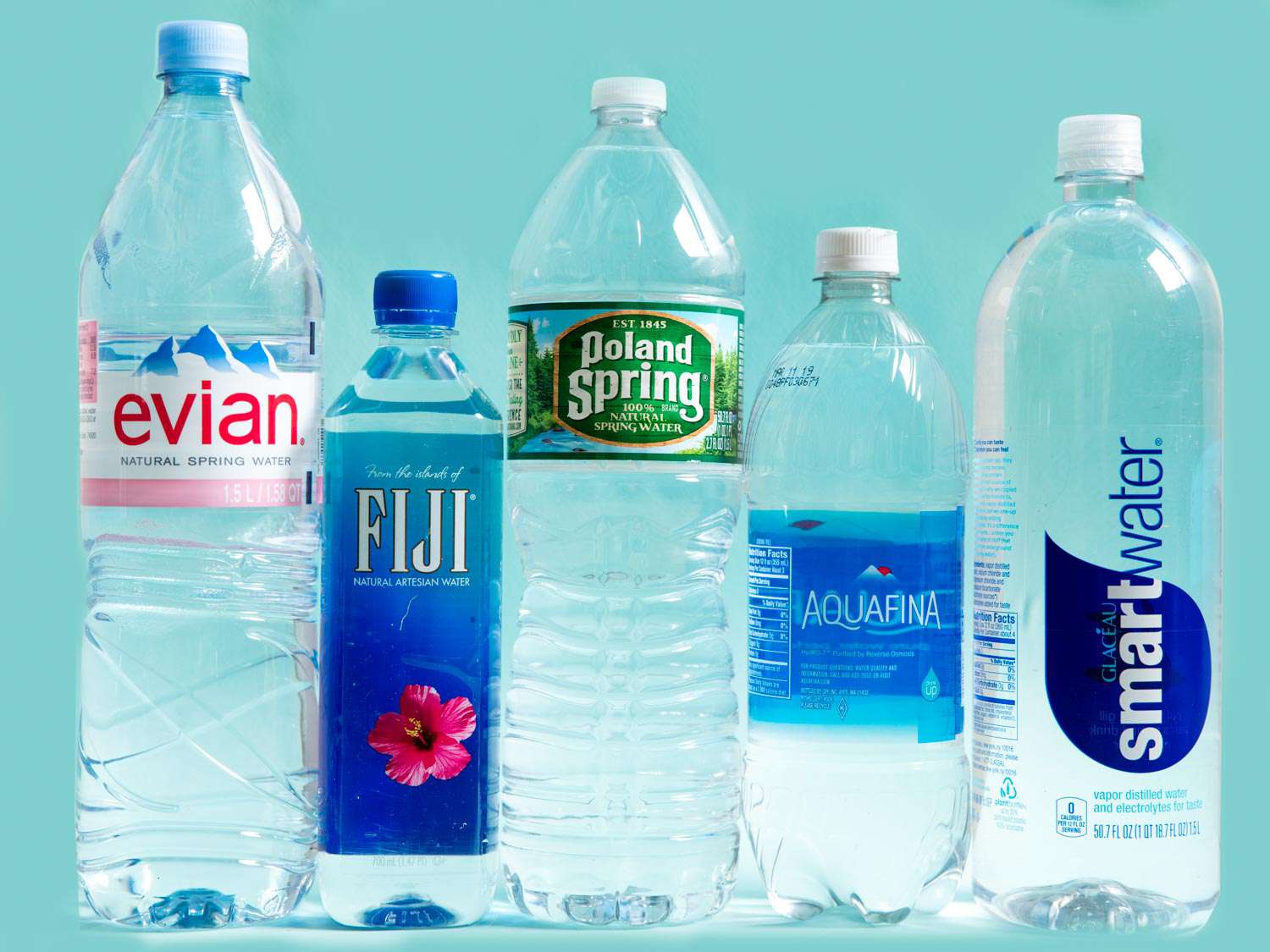 |
Shrink sleeve labeling machine
Feeds shrink film from a roll and cuts it into individual sleeves
Applies sleeves over bottles using a servo-controlled mandrel or drop system
Uses pulling and feeding wheels to maintain label tension and alignment
Compatible with round, square, and custom-shaped containers
|
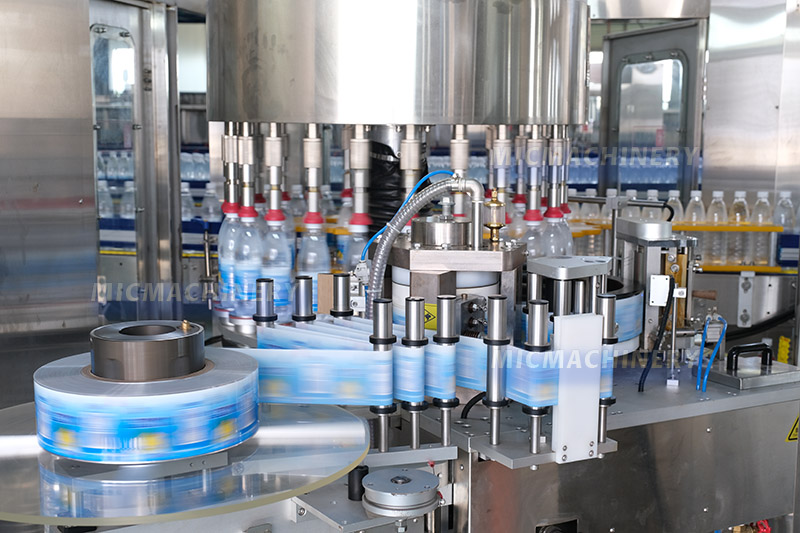 |
Labeling Machine
After capping, bottles enter the labeling section.
An automatic labeling machine applies labels consistently while reducing manual handling. The equipment configuration depends on bottle shape, label material, label dimensions, positioning requirements, and production speed.
For a high-capacity line, the labeling system should have sufficient capacity to keep pace with the filling and capping sections.
This is an important aspect of complete water bottling plant planning because downstream packaging capacity can directly influence the actual finished-product output.
|
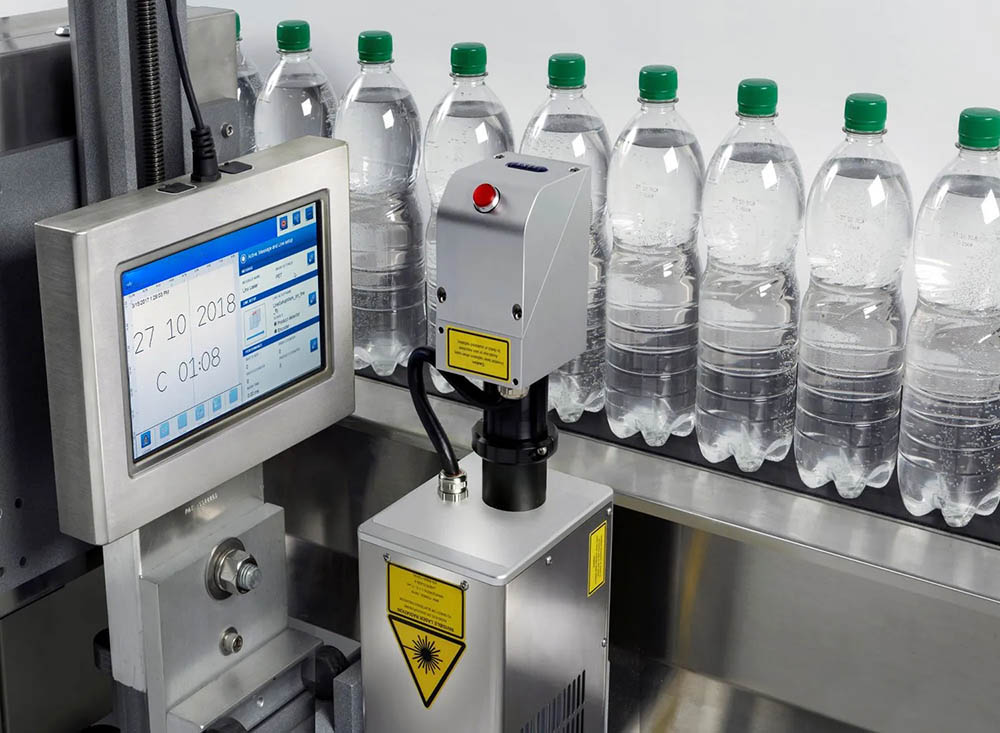 |
Laser Batch Coding Machine
Uses a focused laser beam to etch or mark codes directly onto product surfaces
No ink or consumables required, ensuring clean and permanent coding
Compatible with various packaging lines: bottles, pouches, cartons, etc.
Supports dynamic data input for variable codes like batch numbers and dates
|
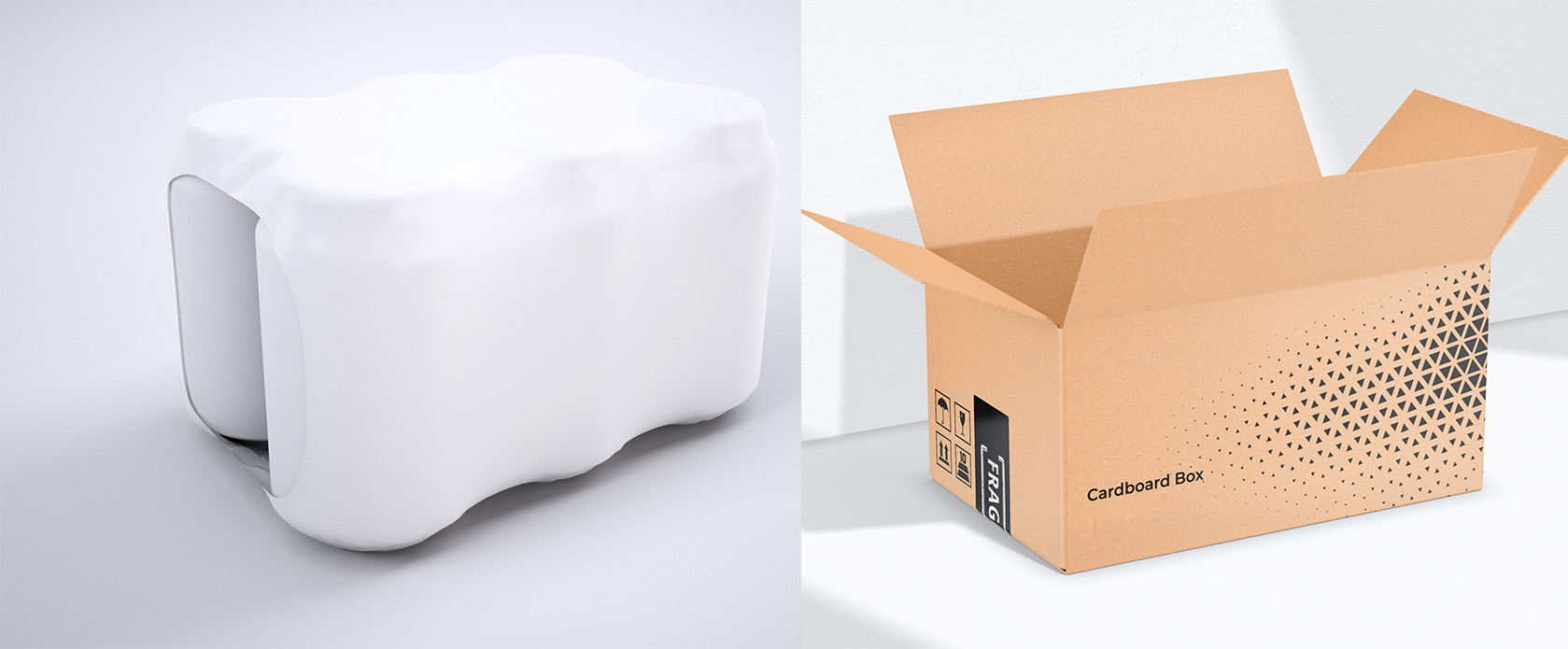 |
Wrap packing machine/Carton packing machine
Products are pushed or dropped into the open carton by mechanical arms or pushers
Equipped with sensors to detect product presence and carton position
Synchronizes with upstream filling or labeling equipment
Adjustable guides accommodate different carton sizes
|
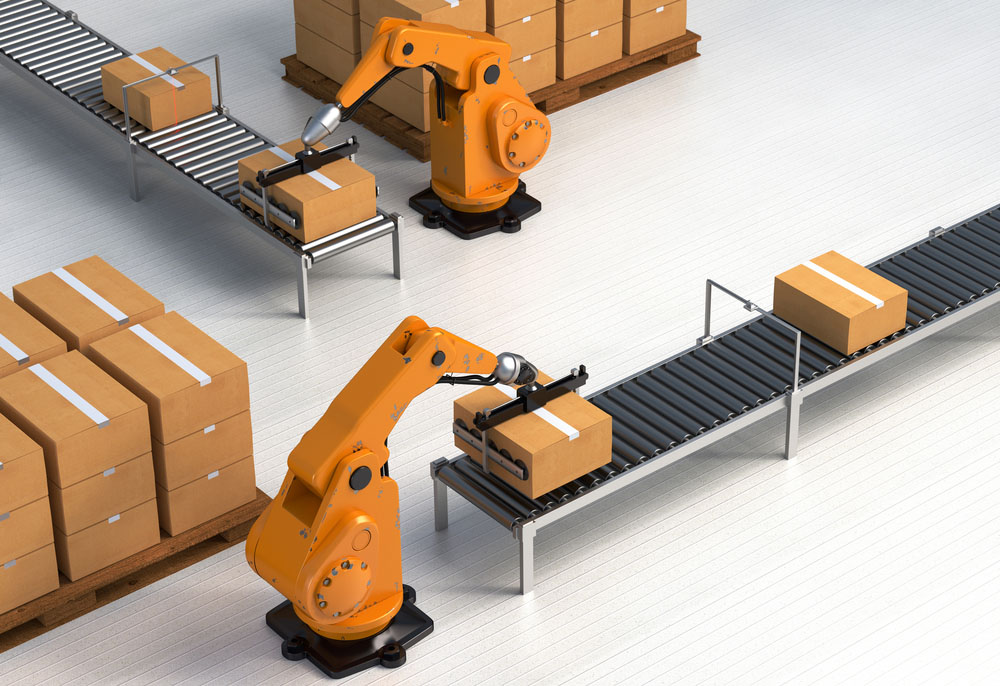 |
Palletizer
Stacks cartons, bags, or containers layer by layer onto pallets
Uses robotic arms or layer-forming conveyors for positioning
Includes pallet magazine and automatic pallet feeding system
Equipped with sensors for precise alignment and layer control
|
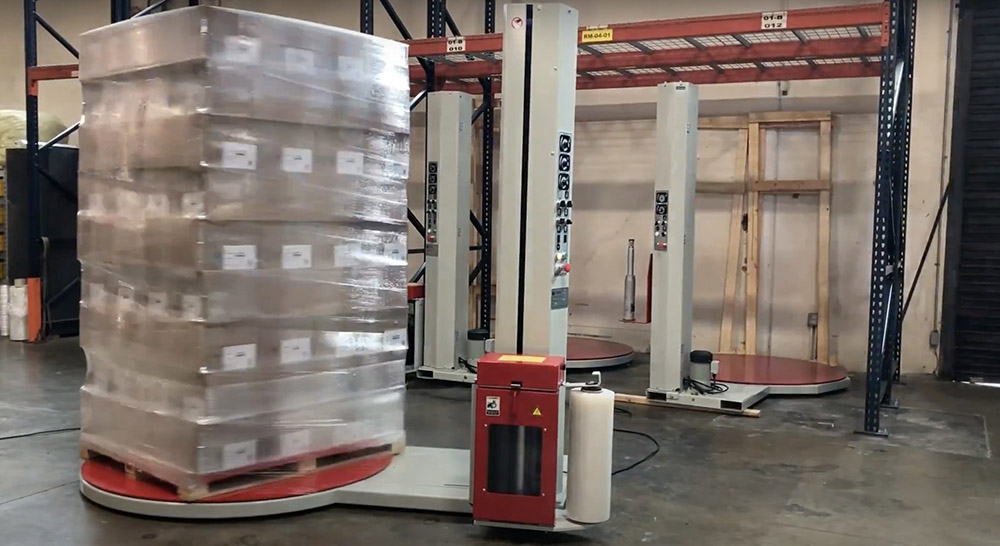 |
Pallet wrapping machine
Film carriage moves vertically to cover the entire height of the load
Includes photoelectric sensors to detect load height automatically
Offers options for top-sheet application or corner reinforcement
Suitable for stabilizing products during transport and storage
|
Custom Capacity Options
A 2000–24000BPH range covers different investment stages, from smaller regional plants to large-scale bottled-water manufacturers.
2000–6000BPH: Small Water Production Line
A 2000–6000BPH configuration can be considered by startups, small beverage factories, and regional bottled-water brands.
The focus is usually on:
Lower initial investment
Compact factory layout
Basic automation
Simple operation
Controlled labor requirements
Flexible future expansion
This type of small beverage production line can provide a practical entry point for manufacturers testing a new market.
6000–12000BPH: Medium-Capacity Line
A 6000–12000BPH line can be suitable for growing regional manufacturers and factories upgrading from semi-automatic production.
The production system can incorporate higher automation across filling, labeling, packaging, and material handling.
At this level, line balancing becomes increasingly important. Bottle blowing, filling, labeling, and packaging should be engineered around a common production target.
12000–24000BPH: Large Water Bottling Line
A 12000–24000BPH system is more suitable for established manufacturers, large beverage factories, and projects with significant regional distribution requirements.
A large-scale plant may integrate:
High-capacity water treatment
PET bottle blowing
Automatic water filling
Automatic capping
High-speed labeling
Film wrapping
Automated palletizing
Extended conveyor systems
Finished-product warehouse logistics
For customers planning a large water bottling plant, the factory should be designed around both current production and potential future expansion.
The upper end of this capacity range is demonstrated by the China project, which included two 24000BPH water bottling production lines. View the China 24000BPH Water Bottling Project
Factory Layout & Installation Service
Factory planning is a critical part of a complete bottling project.
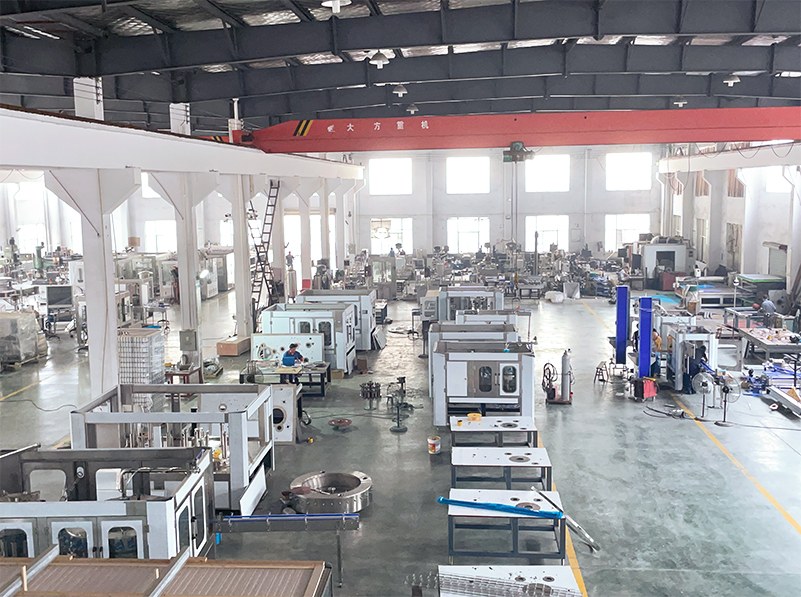
A production line should not be planned only by adding up individual machine dimensions. The complete production layout needs to account for machine clearance, conveyors, utilities, operators, maintenance, raw materials, packaging materials, finished products, and internal logistics.
Factory Layout Planning
Before final equipment confirmation, engineers should review:
Factory length and width
Building height
Machine dimensions
Equipment maintenance clearance
Conveyor direction
Operator walkways
Raw-material storage
Packaging-material storage
Finished-product warehouse
Forklift routes
Electrical capacity
Compressed-air requirements
Water supply
Drainage
The objective is to create a logical material flow from raw material to finished product while avoiding unnecessary transportation and cross-flow.
For a large project, the layout should be developed from the customer's actual factory drawing rather than relying on a generic layout.
Utility Requirements
A complete bottled-water factory also requires coordinated utility planning.
Depending on the equipment configuration, the project may involve:
Electrical power
Compressed air
Process water
Drainage
Ventilation
Lighting
Packaging-material storage
Maintenance areas
Utility requirements should be confirmed before installation so the customer can prepare the factory infrastructure in advance.
Project Installation & Commissioning
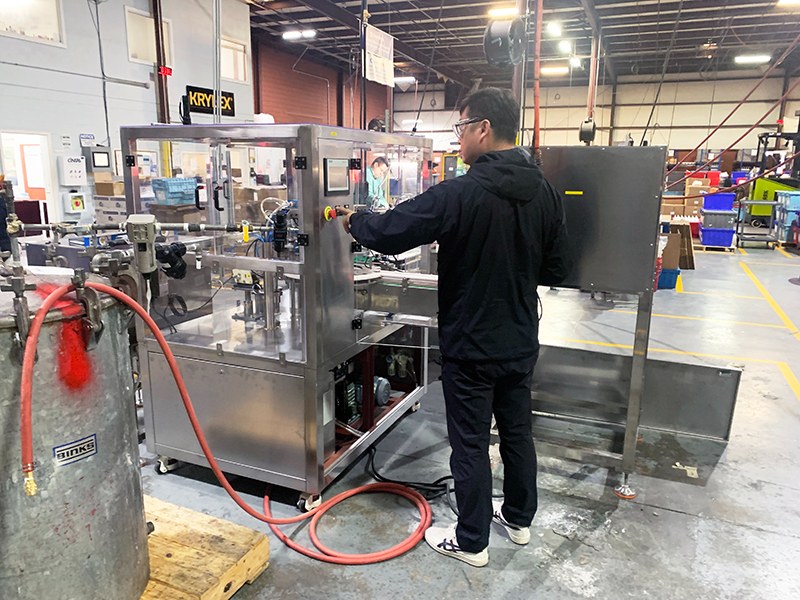
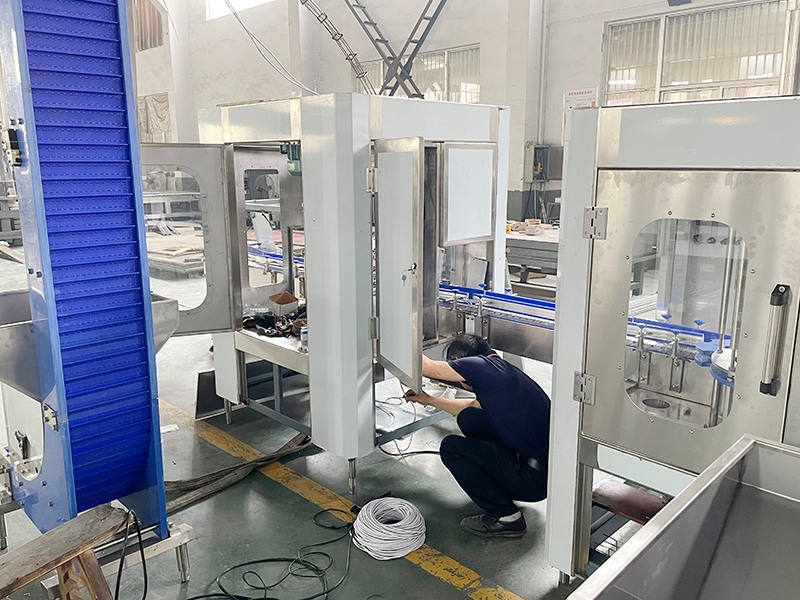
For overseas projects, project installation may involve equipment positioning, mechanical assembly, electrical connection, pneumatic connection, conveyor alignment, control-system commissioning, and integrated production testing.
A typical commissioning sequence includes:
Individual Machine Testing → Conveyor Testing → Section Testing → Complete-Line Testing → Production Trial → Operator Training
Engineers can also help operators understand daily operation, routine inspection, basic troubleshooting, cleaning, and preventive maintenance.
After-Sales Service
For international beverage manufacturers, after-sales service is an important part of equipment purchasing.
Customers in Africa, Southeast Asia, the Middle East, and other international markets may require technical support after installation. A complete project service should therefore consider installation assistance, commissioning, spare parts, troubleshooting, operator training, and remote technical support.
When comparing suppliers, customers should evaluate not only equipment specifications and purchase price but also the supplier's ability to support the complete production project throughout its operating life.
Industry Cases For This Solution
The most directly relevant reference for this solution is the China 24000BPH Complete Water Bottling Line Project Case.
The customer required two high-capacity production lines for bottled-water manufacturing using plastic bottles.
The complete configuration included:
Water Treatment System → PET Bottle Blowing Machine → Water Filling Machine → Labeling Machine → Film Wrapping Machine → Palletizer
The project demonstrates how multiple high-capacity lines can be integrated for a large-scale bottled-water factory. China 24000BPH Complete Water Bottling Line Project Case
This case can provide a practical reference for companies researching:
24000BPH water bottling line
complete water bottling plant
automatic water filling production line
water bottling line project cases
turnkey water filling plant
water filling machine supplier
factory expansion bottling line
Why Choose a Complete Turnkey Water Bottling Line?
Integrated Production Logic
The entire production process is considered as one system, from water treatment to finished-product palletizing.
Capacity Matching
Machines are selected according to the target production range rather than independently, helping reduce bottlenecks.
Customized Factory Layout
The production line can be planned around the customer's actual factory dimensions, material flow, utility conditions, and maintenance requirements.
Reduced Manual Intervention
Automatic filling, capping, labeling, wrapping, and palletizing can significantly reduce repetitive manual operations.
Easier Project Management
A coordinated project approach allows equipment integration, installation, commissioning, and training to be considered together.
Future Expansion
For new factories, future capacity expansion can be considered during the initial layout stage, helping avoid major reconstruction later.
FAQ – Common Questions About Water Bottling Lines
1.What equipment is included in a complete water bottling line?
A complete line can include a water treatment system, PET bottle blowing machine, water filling machine, capping system, labeling machine, secondary packaging equipment, palletizer, conveyors, and auxiliary systems.
2.What does 2000–24000BPH mean?
It means the solution range covers nominal production capacities from approximately 2,000 to 24,000 bottles per hour. The final configuration should be selected according to bottle specifications, production requirements, machine configuration, and actual operating conditions.
3.How do I choose the right water bottling line capacity?
Consider expected market demand, bottle size, working hours, distribution requirements, investment budget, available factory space, and future expansion plans. The required capacity should be calculated from the expected finished-product demand rather than choosing the largest machine available.
4.How much factory space is required?
There is no fixed factory size for every project. The required area depends on line capacity, number of machines, bottle blowing, water treatment, conveyor configuration, packaging, palletizing, warehouse space, and maintenance clearance.
5.Can the line produce different bottle sizes?
The equipment can be configured around specific bottle formats. Bottle volume, dimensions, neck finish, preform, labeling, and packaging specifications should be confirmed during project engineering.
6.Does Mic Machinery provide installation support?
Project installation and commissioning requirements can be discussed according to the project scope. Technical support may include equipment setup, commissioning, operator training, and troubleshooting assistance.
7.Can I expand the line later?
Future expansion can be considered during the initial factory-layout design. Space, utilities, conveyor routing, warehouse capacity, and production flow can be reserved for potential additional equipment.
Plan Your Turnkey Water Bottling Project
A turnkey water filling plant should be evaluated as a complete production project rather than simply as a filling-machine purchase. The water treatment system, PET bottle blowing, filling, capping, labeling, packaging, palletizing, factory layout, utilities, installation, and after-sales service all contribute to the final production performance.
Whether you are developing a new bottled-water factory, upgrading an existing plant, or planning a factory expansion bottling line, the appropriate solution should be based on production demand, bottle specifications, factory conditions, budget, and long-term business objectives.
The 2000–24000BPH capacity range allows the line to be configured for different investment scales, from smaller regional production facilities to high-capacity industrial plants.
Get a Customized Water Bottling Line Plan
Request a complete water bottling line quotation
Get a customized production layout
Schedule a project video meeting
Arrange a factory video tour or factory visit
Contact Mic Machinery to discuss your water bottling project and receive a production-line recommendation based on your required capacity, bottle format, factory layout, and investment plan.