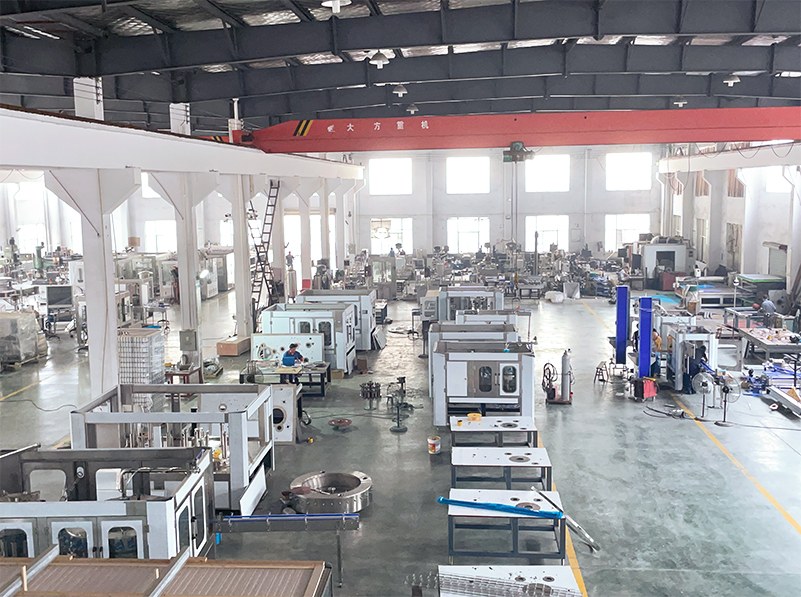
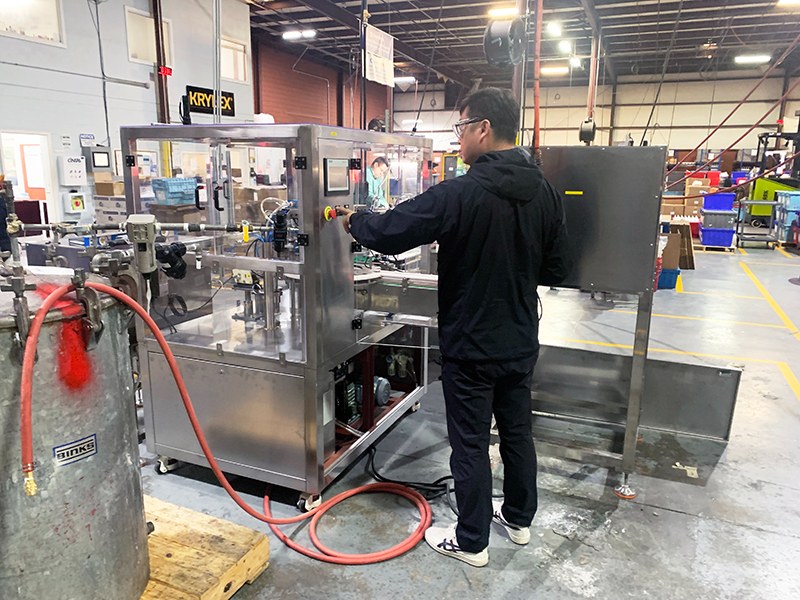
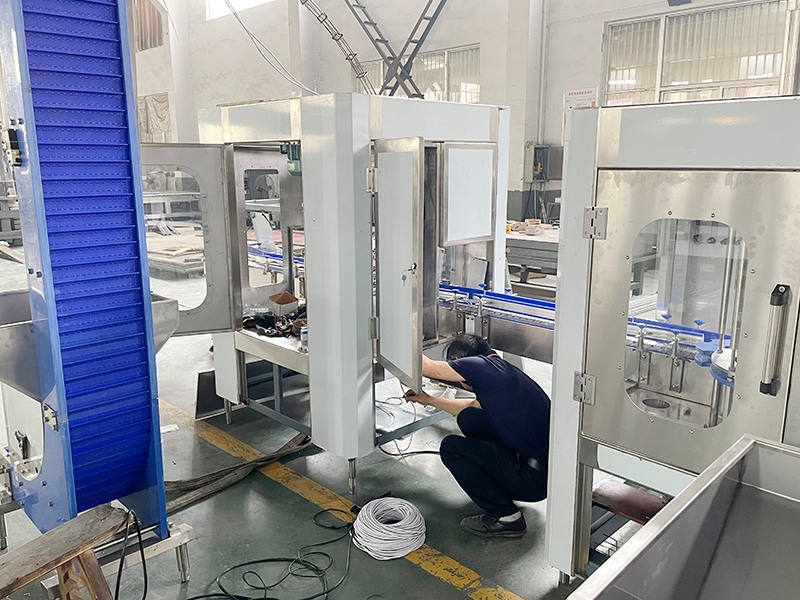
Starting a bottled water business begins with the product, source, package, and sales plan. These inputs determine the treatment process, bottle supply, filling line, factory layout, utilities, quality system, and investment scope. Freeze them before requesting equipment quotations, then test the complete line against written acceptance criteria.
For a single-use PET project, the process normally connects water treatment, optional bottle blowing, bottle rinsing, filling, capping, drying, labeling, coding, secondary packing, and pallet handling. The machines must share the same approved bottle, cap, operating rate, and production schedule.
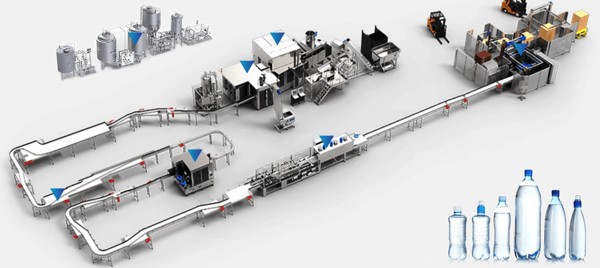
Figure 1. A PET bottled-water project connects treatment, bottle preparation, filling, labeling, packing, and material handling. Source: MIC Beverage Machine.
The project sequence
- Define the target customers, sales channels, water category, source, and regulatory path.
- Test the raw water and write the finished-water specification.
- Approve the bottle, cap, label, code, secondary pack, and pallet pattern.
- Convert the sales plan into required saleable bottles per hour.
- Define the process from water treatment through finished-pack discharge.
- Freeze the measured layout, hygiene zones, utilities, drainage, storage, and maintenance access.
- Send the same controlled brief to shortlisted suppliers and compare scope line by line.
- Agree on FAT, site acceptance, installation, training, documentation, and spare-parts responsibilities before ordering.
Each gate produces information needed by the next. Buying machinery before these inputs are stable transfers unresolved decisions into change orders, site work, and commissioning.
1. Confirm the product and regulatory route
The business model shapes the factory. A value product sold through wholesalers has different bottle sizes, case formats, warehouse volume, and production runs from a private-label service for hotels or a brand supplying supermarkets. Define the customer, order pattern, selling unit, distribution radius, seasonality, and launch volume before selecting capacity.
The legal category of the water affects the permitted source, treatment, testing, and label. Purified drinking water, spring water, and natural mineral water are not interchangeable descriptions. The European Commission states that spring water is bottled at source and that treatments for natural mineral and spring water are restricted. A treatment train designed for purified water may be unsuitable for a product marketed under a protected source category. Confirm the rules in the production country and each sales market before approving the process or label. See the European Commission guidance on natural mineral and spring water.
Bottled water is handled as food. The Codex Code of Hygienic Practice for Bottled/Packaged Drinking Waters covers source assessment, processing, packaging, storage, transport, and sale. In the United States, 21 CFR Part 129 addresses processing and bottling of bottled drinking water. Other markets have their own licensing, building, environmental, testing, and labeling requirements.
Prepare a feasibility file that answers:
- Which regulated water category will be sold?
- Which authority approves the source, facility, process, and label?
- Which package sizes and secondary packs fit the sales channel?
- What monthly volume is supported by orders or a documented forecast?
- Does contract packing provide a lower-risk route while demand is being validated?
-
2. Freeze the inputs before requesting quotations
A request such as "send price for a 5,000 BPH water plant" leaves the bottle, water treatment, downstream scope, and definition of output unresolved. Use a controlled input sheet with the following fields.
|
Project input
|
Information to prepare
|
Why it changes the project
|
|
Water source
|
Source type, seasonal analysis, available flow, and finished-water target
|
Sets treatment, monitoring, storage, recovery, and waste streams
|
|
Product category
|
Purified, spring, natural mineral, still, or carbonated water; production and sales markets
|
Affects permitted treatment, process, testing, and label wording
|
|
Bottle
|
Material, volume, dimensions, neck finish, drawing, samples, and strength
|
Affects blowing, conveying, transfer parts, filling height, labeling, and packing
|
|
Closure
|
Cap type, dimensions, tamper evidence, samples, and supplier
|
Sets cap feeding, capping head, torque control, inspection, and change parts
|
|
Label and code
|
Material, artwork area, application method, required data, and location
|
Sets drying, labeling, coding, inspection, and conveyor spacing
|
|
Secondary pack
|
Bundle, tray, carton, pack count, and pallet pattern
|
Sets packing, pallet handling, warehouse volume, and dispatch method
|
|
Output plan
|
Saleable volume, operating days, shifts, cleaning, and changeovers
|
Sets steady line rate, buffers, labor, and expansion timing
|
|
Site
|
Measured plan, doors, ceiling, floors, drains, and utility points
|
Sets arrangement, access, installation route, and local construction
|
Control revisions. A late change to the neck finish, cap, label roll, or case count can alter several machines and repeat testing.
3. Calculate capacity from saleable demand
Nameplate speed describes one operating condition. The business needs accepted bottles at the end of the line. Material replenishment, cleaning, changeover, inspection, labeling, packing, and minor stops reduce shift output.
Use this planning formula:
Required steady line rate (BPH) = Saleable bottles required per period / (scheduled production hours × planned line utilization)
Line utilization is a planning input based on the production schedule, number of formats, sanitation plan, staffing, and expected stops. It is separate from the supplier's guaranteed acceptance result.
Example: a hypothetical project requires 80,000 saleable bottles per month, runs 20 days per month for eight scheduled hours per day, and uses a 70% planning utilization:
80,000 / (20 × 8 × 0.70) = about 714 bottles per hour
This calculation sets the minimum sustained rate under the stated assumptions. The supplier still needs to confirm complete-line output with the agreed bottle, cap, label, and pack.
Ask every supplier to state:
- the product, bottle volume, dimensions, and closure used for the quoted speed;
- whether the number is nominal filler speed or accepted complete-line output;
- the test duration, planned exclusions, and allowed stops;
- the fill, closure, label, pack, and reject criteria;
- the result for every commercial format.
4. Configure the complete production line
A bottled water line is a chain of matched systems. The detailed machine list belongs in a dedicated bottling plant equipment guide.
|
Stage
|
Typical scope
|
Main selection inputs
|
|
Raw water and treatment
|
Tanks, pumps, filtration and other justified treatment stages, disinfection, treated-water storage, and distribution
|
Source analysis, category, finished specification, recovery, cleaning, and local rules
|
|
PET bottle supply
|
Purchased-bottle feeding or preform handling, blow molding, cooling, and air conveying
|
Bottle drawing, preform, mold, output, compressed air, cooling, and changeover
|
|
Rinsing, filling, capping
|
Bottle infeed, container treatment, still-water filling where appropriate, cap feeding, and capping
|
Bottle, cap, fill volume, water condition, sanitation, and line rate
|
|
Bottle finishing
|
Conveying, drying, inspection, coding, and labeling
|
Bottle stability, surface condition, label, code, rejection, and accumulation
|
|
Secondary packing
|
Collation, shrink bundling or carton packing, discharge, and checks
|
Pack count, film or carton, transport route, and pallet pattern
|
|
Pallet and warehouse handling
|
Palletizing, wrapping, forklifts or conveyors, hold area, and storage
|
Pallet standard, stacking limit, release policy, and dispatch volume
|
The current MIC water filling line page presents the same broad sequence. Use it to map modules and interfaces, then identify each as supplied, optional, buyer-supplied, or excluded in the project quotation.
Select water treatment from the analysis
Source hazards, seasonal variation, finished-water specification, product category, and operator capability determine the treatment process. A standard catalog sequence is not a design basis.
The Codex Alimentarius Code of Hygienic Practice for Bottled/Packaged Drinking Waters (CXC 48-2001) recommends establishing the source's chemical composition and microbiological safety over an appropriate period. It also explains that treatments targeting chemicals may not control microorganisms, and the reverse. The current WHO Guidelines for drinking-water quality use risk management from catchment to consumer. Together, these sources support a defined treatment and control plan built from evidence.
The treatment proposal should state design feed-water quality, finished-water targets, process stages, instrument points, storage, cleaning, waste streams, chemical use, and operator checks.
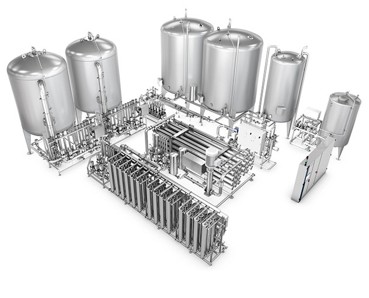
Figure 2. Water treatment is selected from source analysis, product requirements, operating conditions, and permitted processes. Source: MIC Beverage Machine.
Decide whether to buy bottles or blow on site
Buying finished PET bottles reduces the initial production scope. It also requires protected storage, more inbound volume, and a reliable bottle supplier. On-site blowing adds the blower, molds, preform handling, high-pressure air, cooling, controls, bottle testing, and technical maintenance.
|
Route
|
Advantage
|
Constraint
|
Evidence needed
|
|
Purchase finished bottles
|
Simpler plant and utility scope
|
Storage, transport, handling damage, supplier dependence
|
Delivered price, minimum order, cleanliness, storage, and supply record
|
|
Blow bottles on site
|
Direct bottle production and compact preform storage
|
More equipment, utilities, molds, process control, and maintenance
|
Approved bottle, preform, mold, air system, tests, and matched output
|
Match the blower and filler under the approved bottle conditions. Equal advertised BPH values do not prove that the interface, air conveyor, buffer, cooling, and bottle quality are suitable.
Match filling and capping to the package
For still water in single-use PET bottles, a rotary three-in-one machine can combine rinsing, gravity filling, and capping. The combined arrangement shortens the open-container transfer path, while the plant still needs hygienic zoning, cap control, cleaning, and inspection.
Codex CXC 48-2001 recommends protecting filling and sealing from dust, dirt, airborne microorganisms, and condensation. It also covers container inspection and cleaning where necessary. Translate those principles into a project sanitation plan and acceptance checks.
Confirm bottle support, filling valve, fill control, cap feeder, capping method, contact materials, cleaning access, change parts, guarding, rejection, and line-control logic for the selected model.
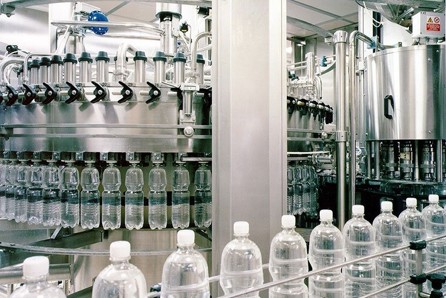
Figure 3. Evaluate the filler with the approved water, bottle, cap, sanitation method, and complete-line speed. Source: MIC Beverage Machine.
Build the saleable pack
The labeler, coder, inspection point, packer, and conveyors must match bottle shape and surface condition. Some label and code systems require a dry bottle. Define label specification, code content and verification, bundle or carton count, film or carton grade, pallet pattern, rejection, and transport tests before release.
5. Plan the factory around flow, hygiene, and access
The layout must show how raw water, treated water, preforms or bottles, caps, labels, packing materials, people, waste, samples, and finished goods move through the building.
Codex CXC 48-2001 calls for separate, identified lines for product water and water not intended for bottling, with no cross-connections. U.S. 21 CFR Part 129 provides one jurisdictional example of a separated bottling room, controlled container washing, ventilation, sanitary water supplies, and suitable cleanable equipment. Apply the rules for the installation and sales markets.
Include:
- water intake, treatment, storage, distribution, and sampling;
- protected bottle or preform storage and movement;
- filling and capping with defined hygiene controls;
- label, code, film, carton, pallet, and consumable storage;
- quality-control, retained-sample, quarantine, and release areas;
- compressors, air treatment, cooling, electrical, and other utility rooms;
- drains, cleaning stations, waste collection, and treatment reject streams;
- operator routes, maintenance clearances, lifting access, exits, and installation paths;
- finished-goods accumulation, warehouse, loading, and expansion space.
Build the space requirement from machine drawings, service access, material inventory, warehouse days, utility rooms, and local building rules.
6. Define utilities from the approved equipment list
Request connected load, normal and peak demand, pressure, flow, quality, temperature, and connection size for each applicable utility. The line may require electrical power, raw and product water, cleaning water, low-pressure air, instrument air, high-pressure air for PET blowing, cooling or chilled water, ventilation, drainage, and sanitation-related chemicals or controls.
Check local voltage, phase, frequency, earthing, ambient temperature, humidity, elevation, water variation, and drainage capacity. Include compressors, receivers, dryers, filters, chillers, pumps, tanks, distribution piping, and maintenance access in the layout and budget.
7. Compare suppliers on one controlled scope
Issue the same project brief and request the same deliverables:
- Process description and flow diagram
- Equipment list with model, quantity, function, and scope status
- Bottle, cap, label, and pack format matrix
- Complete-line output basis and assumptions
- General arrangement drawing and clearances
- Utility schedule and connection points
- Contact materials and cleaning description
- Change parts, tools, spares, and consumables
- Controls, guarding, inspection, rejection, and stop logic
- FAT, installation, commissioning, training, documentation, and site responsibilities
Mark every item as supplier scope, buyer scope, optional, or excluded. This exposes the difference between two designs before price comparison.
8. Write acceptance into the project schedule
|
Gate
|
Required output
|
Approval question
|
|
Feasibility
|
Market, category, source, permits, sales plan, and financial case
|
Is owned production commercially and legally feasible?
|
|
Process basis
|
Water analysis, product specification, treatment concept, and control plan
|
Does the process fit the product category and source?
|
|
Package freeze
|
Approved bottle, cap, label, code, pack, and pallet
|
Are all machine interfaces defined?
|
|
Design freeze
|
Equipment list, layout, utilities, controls, safety, and responsibilities
|
Can the factory support installation and operation?
|
|
FAT
|
Agreed materials, run test, quality checks, safety checks, and documents
|
Does the supplied system meet the written factory test?
|
|
Site acceptance
|
Installed utility checks, commissioning, training, performance, and punch list
|
Can the plant operate and maintain the line under site conditions?
|
The FAT must name the bottle, cap, label, packing material, water or test product, speed, duration, allowed stops, reject rules, quality checks, and required documents. Record substitutes and carry the unresolved test into site acceptance.
9. Build the project budget by responsibility
Group cost into water source and treatment, bottle supply, filling and capping, labeling and coding, packing, pallet handling, utilities, building work, laboratory, shipping, duties, installation, commissioning, training, spares, working capital, and contingency.
The detailed calculation belongs in the bottled water production cost guide.
Use current quotations with the same Incoterm, currency, tax basis, validity, and project boundary. A low equipment total can reflect exclusions rather than a lower installed cost.
Common planning failures
Buying the filler first
Treatment, bottle supply, closure handling, labeling, packing, utilities, and warehouse capacity can set the output and project cost. Freeze the system scope before selecting the filler.
Copying a standard treatment package
A generic process can miss a source-water hazard, remove characteristics required for the product category, or create an operating burden the site cannot support. Build the treatment basis from analysis and regulation.
Changing the package after design freeze
A new neck, cap, bottle diameter, label, or case count can affect several machines and repeat testing. Control package changes through a documented technical review.
Leaving utilities until installation
Power quality, compressed air, cooling, drainage, access, doors, and floors must be ready for commissioning. Release the utility and civil work from the approved layout.
Accepting a speed without a test basis
A maximum BPH figure becomes useful only when the product, bottle, run condition, downstream scope, quality criteria, and test method are defined.
Prepare the supplier brief
Start with the regulated product, source analysis, package, and saleable demand. These inputs determine the treatment process, bottle supply, filling line, factory, utilities, and budget. Send MIC Beverage Machine the water analysis, bottle and cap data, target output, secondary pack, local electrical standard, and measured layout through the MIC contact page to request a project-specific line review.
FAQ
What equipment is needed to start a bottled water business?
A PET project can include raw-water storage, treatment, treated-water storage, purchased-bottle handling or PET blow molding, rinsing, filling, capping, conveyors, drying, labeling, coding, inspection, packing, and pallet handling. Utilities, cleaning, laboratory, drainage, and warehouses are also part of the project. The final list follows the source, product category, package, output, and local rules.
Do I need a bottle blowing machine?
Buy finished bottles when the supplier, logistics, protected storage, and hygiene plan are workable. Choose on-site blowing when the added molds, high-pressure air, cooling, maintenance, and bottle-quality responsibilities are justified by the production plan and supply economics.
How do I choose bottles per hour?
Divide required saleable bottles by scheduled production hours and a documented line-utilization assumption. Then verify that treatment, bottle supply, filling, labeling, and packing can sustain the same accepted output.
How much factory space is required?
Calculate space from approved equipment footprints, service clearances, material inventory, utility rooms, hygiene zones, warehouse days, access routes, safety requirements, and expansion. A generic square-metre figure is not a reliable design input.
Can one line handle several bottle sizes?
Yes, when the supplier confirms a format matrix for the planned bottles, caps, labels, and packs. Ask for the adjustment and change-part list, changeover procedure, expected time, and acceptance test for every format.
Can natural mineral water be treated with reverse osmosis?
The answer depends on the regulated category and market. The European Union restricts treatments for natural mineral and spring water. Confirm the source classification, permitted process, product name, and label with the competent authority before finalizing treatment.
What should I send a supplier for a quotation?
Send the raw-water analysis and finished target, water category and markets, target saleable output, production schedule, bottle and cap data, label and code requirements, final pack, measured layout, utilities, sanitation needs, automation target, and project date. Request a scope matrix, layout, utilities, change parts, spares, and acceptance plan in return.