Turnkey Isobaric Beer Can Filling Line 1000–2000CPH | Mic Machinery
An isobaric beer can filling machine is designed for filling carbonated beer into cans while maintaining controlled pressure between the product tank and the can. For breweries planning a new production facility, expanding an existing plant, or replacing inefficient filling equipment, a complete beer can filling line should be considered as an integrated production system rather than a standalone machine.
Mic Machinery provides turnkey beer canning solutions with filling and capping integrated into one machine, supporting production capacities from 1000 to 2000CPH. The complete solution can be configured with can depalletizing, beverage preparation, isobaric filling and capping, pasteurization, drying, labeling, coding, secondary packaging, palletizing, and wrapping equipment according to the brewery's product, packaging format, factory conditions, and production targets.
Project Overview
A 1000–2000CPH production range is suitable for small and medium-sized breweries, newly established beer factories, regional beverage producers, and existing plants looking for a controlled investment in automation. Compared with purchasing individual machines and connecting them later, a complete turnkey beer canning plant allows the production flow, equipment interfaces, conveyors, utilities, and factory layout to be considered from the beginning.
For a new brewery, the main objective is usually to establish a reliable production process without investing in an unnecessarily large system. For an operating factory, the focus may instead be on replacing an outdated filler, increasing output, reducing manual operations, or improving packaging consistency.
The suitable configuration depends on several factors, including beer type, can volume, required output, carbonation level, filling temperature, packaging method, available floor space, and future expansion plans.
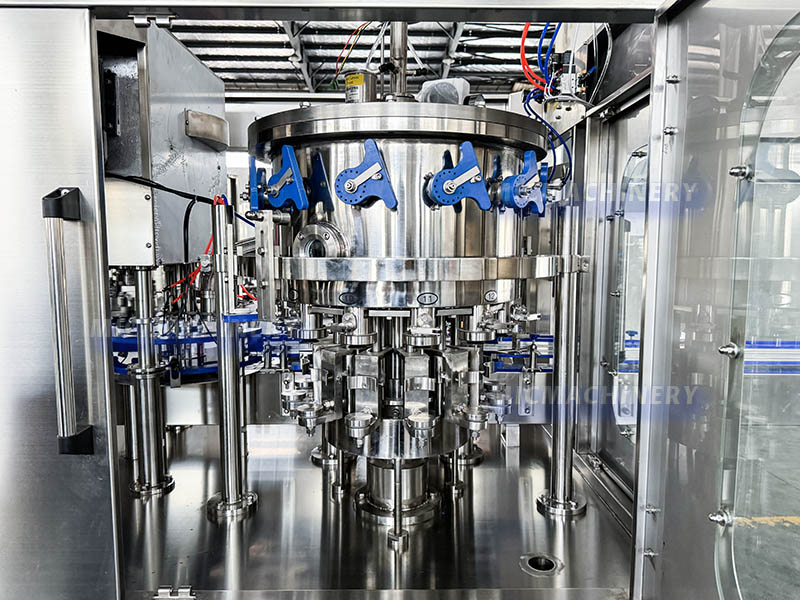
At the core of this solution is an integrated isobaric beer can filling machine with filling and capping functions. The integrated design reduces the need for separate filling and capping equipment and provides a more compact solution for breweries with limited production space.
The system can also be expanded into a complete production line when the customer requires upstream beverage preparation and downstream packaging automation.
Full Line Configuration
The complete line is designed around the actual production sequence. Equipment can be added or removed according to the customer's production process, automation requirements, and investment budget.
Carbonated Beverage Pre-Processing System
Before beer reaches the filling machine, the beverage must be prepared according to the brewery's formulation and process requirements. A carbonated beverage pre-processing section may include beverage mixing, carbonation, product storage, and related transfer equipment.
For beer and other carbonated beverages, process stability is important because excessive pressure changes, temperature variation, or uncontrolled gas release can influence filling performance.
The CO₂ Mixing Machine can be integrated when the production process requires controlled carbonation or carbonated beverage preparation.
Where thermal treatment is required, the Pasteurization Machine can be incorporated into the complete production system.
Can Depalletizing
Empty cans can be supplied in palletized form. A Can Depalletizer automatically separates and transfers cans into the production line, reducing manual handling before filling.
For small breweries, semi-automatic feeding may be considered to control the initial investment. For factories seeking continuous production, automatic can depalletizing provides better integration with conveyors and downstream equipment.
Isobaric Filling and Capping Integrated Machine
The central equipment of this solution is the Beer Can Filling Machine, configured as a filling and capping integrated machine.
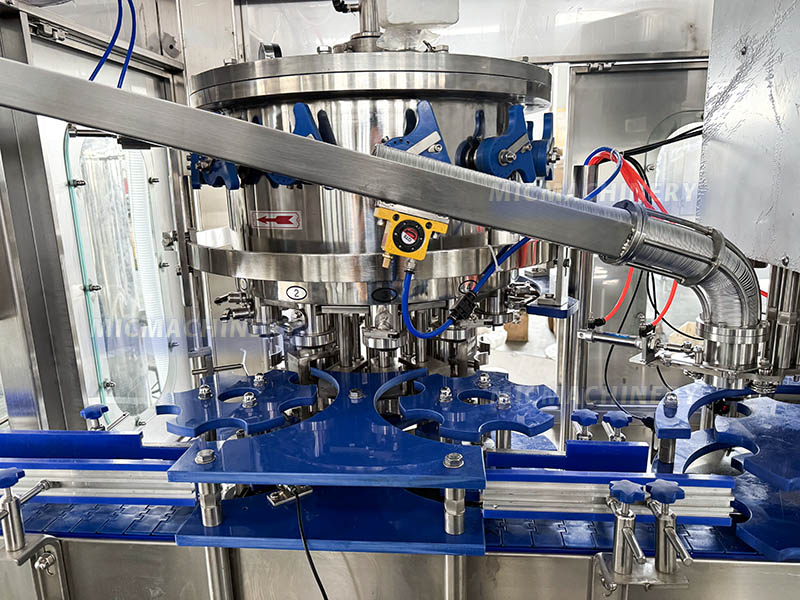
The machine uses an isobaric filling principle suitable for carbonated beer. Before filling, the can is positioned and the filling process is carried out under controlled pressure conditions. This helps reduce unnecessary CO₂ loss and supports stable filling of carbonated products.
After filling, the can moves directly to the integrated capping/seaming section. Combining filling and capping in one machine reduces equipment footprint and simplifies the transfer process between the two operations.
For breweries researching an isobaric beer can filling machine, important selection factors include target capacity, can diameter and height, beer characteristics, carbonation requirements, filling accuracy, machine automation level, and compatibility with the upstream and downstream equipment.
Pasteurization and Warm Irrigation
After filling and capping, the sealed cans can enter the thermal treatment section when the beer process requires pasteurization.
A warm irrigation or pasteurization process can provide controlled temperature treatment to the filled product. The exact process parameters should be determined according to the beer formulation, packaging requirements, microbiological requirements, and customer's production process.
The position of this equipment is important. In a typical configuration, the sequence is:
Beer Preparation → Can Depalletizing → Isobaric Filling & Capping → Pasteurization/Warm Irrigation → Air Drying → Coding → Labeling → Packaging → Palletizing → Pallet Wrapping
This sequence keeps the filling and capping operation upstream of the thermal treatment stage and allows the cans to be dried before downstream coding and labeling.
Air Knife Drying
After pasteurization or warm irrigation, residual water may remain on the outside surface of the cans. The Air Knife Dryer removes surface moisture before coding and labeling.
Effective drying is particularly important for downstream packaging because excessive moisture can affect coding quality, label adhesion, and the overall appearance of finished products.
Labeling and Coding
Depending on the can packaging strategy, the line can be equipped with a Labeling Machine or Shrink Sleeve Labeling Machine.
A Laser Batch Coding Machine can also be integrated for batch numbers, production information, date coding, or other identification requirements.
The exact coding and labeling configuration should be selected according to the can material, label type, printing requirements, and local regulatory requirements.
Secondary Packaging and Palletizing
Once cans are filled, treated, dried, coded, and labeled, they can be transferred to secondary packaging.
A Wrap Packing Machine / Carton Packing Machine can be selected according to the required retail or transport packaging format.
For higher automation levels, a Palletizer can automatically arrange packaged products onto pallets. A Pallet Wrapping Machine can then secure the completed pallet for storage and transportation.
This creates a complete production system from empty-can feeding to finished pallet handling.
How to Select a 1000–2000CPH Beer Can Filling Machine
Choosing a suitable machine requires more than comparing nominal speed.
1. Confirm Required Capacity
The first step is to determine the target output. A 1000CPH line may be appropriate for a smaller brewery or a new plant validating its market, while a 2000CPH system provides additional production capacity for regional distribution and factory expansion.
The actual output should also account for product changeovers, cleaning, maintenance, material supply, and other operating conditions.
2. Check Can Specifications
Can diameter, can height, material, and volume directly influence machine configuration. The selected beer canning filling machine should be matched to the customer's specific can format.
If multiple can sizes will be used, the changeover requirements should be considered during the initial design stage.
3. Consider Beer Characteristics
Beer carbonation, temperature, viscosity, foam behavior, and formulation can affect filling performance. Isobaric filling is generally selected for carbonated products because pressure control is an important part of the filling process.
4. Define the Automation Level
A small brewery may prioritize a compact machine with straightforward operation and lower initial investment. A growing factory may require automatic feeding, conveying, packaging, palletizing, and production monitoring.
The right solution should balance current production requirements with future expansion.
Custom Capacity Options
Mic Machinery can configure the line according to different factory scales and investment plans.
Small Brewery Production Line
For startups and small breweries, a compact 1000CPH configuration can reduce initial equipment investment while providing automated filling and capping. Optional packaging and end-of-line equipment can be added according to the customer's budget.
This approach is suitable for customers searching for a small beer canning production line with a practical production capacity.
Medium-Scale Beer Canning Line
A 1500–2000CPH configuration provides higher output while maintaining a relatively compact production footprint. It can be used by regional breweries, contract beverage producers, and factories upgrading from semi-automatic filling equipment.
Expansion-Oriented Production System
For factories expecting future growth, the initial 1000–2000CPH line can be designed with appropriate conveyor interfaces, utility connections, floor-space planning, and downstream packaging capacity.
This makes it easier to upgrade the production system without completely redesigning the factory.
Factory Layout & Installation Service
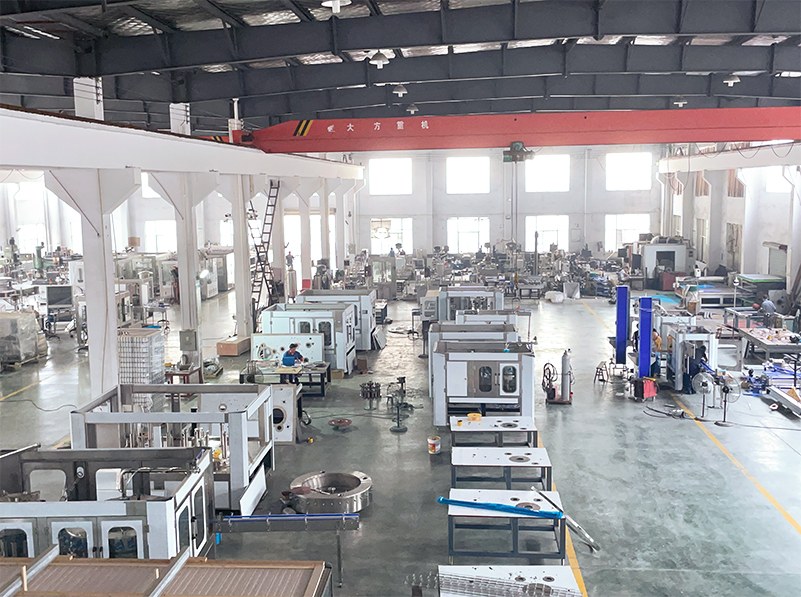
A successful turnkey beer canning plant requires more than the supply of filling equipment. Factory layout, material flow, utility requirements, equipment spacing, operator access, and maintenance space should be considered before installation.
Mic Machinery can evaluate the customer's available factory area and production requirements to develop an appropriate production layout.
The layout normally considers:
Raw material and empty-can storage
Beverage preparation area
Filling and capping area
Pasteurization section
Drying and labeling area
Secondary packaging area
Finished product storage
Operator access and maintenance space
Electrical and compressed-air requirements
Product and personnel flow
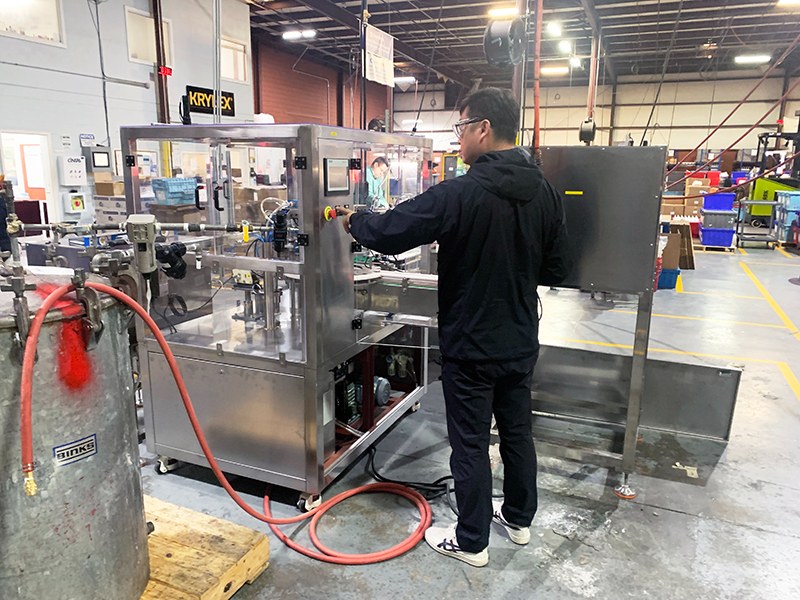
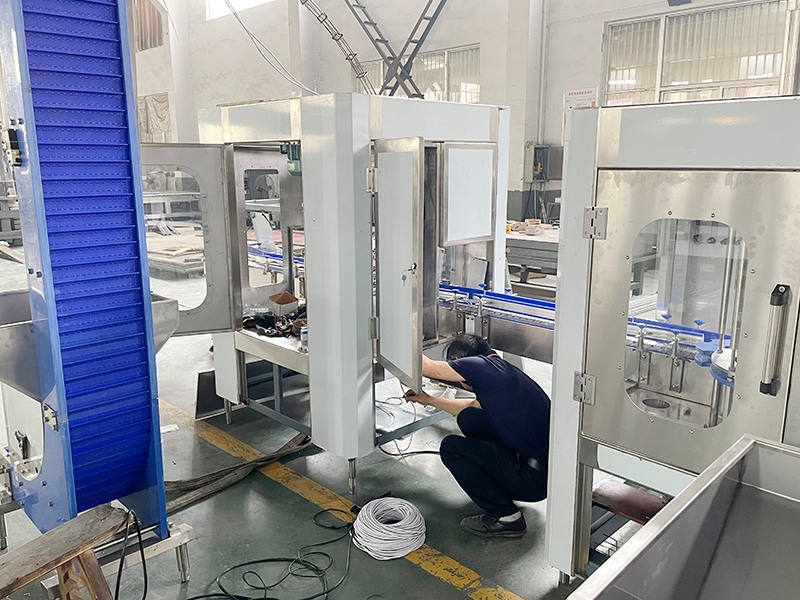
For overseas projects, installation and commissioning support can help customers connect equipment, verify operating parameters, train operators, and establish basic maintenance procedures.
After-sales support is also important for breweries purchasing equipment internationally. Recommended spare parts, operating instructions, troubleshooting guidance, and technical support can be included according to the project requirements.
Industry Case For This Solution
Real project experience provides an important reference when evaluating a beer canning line supplier.
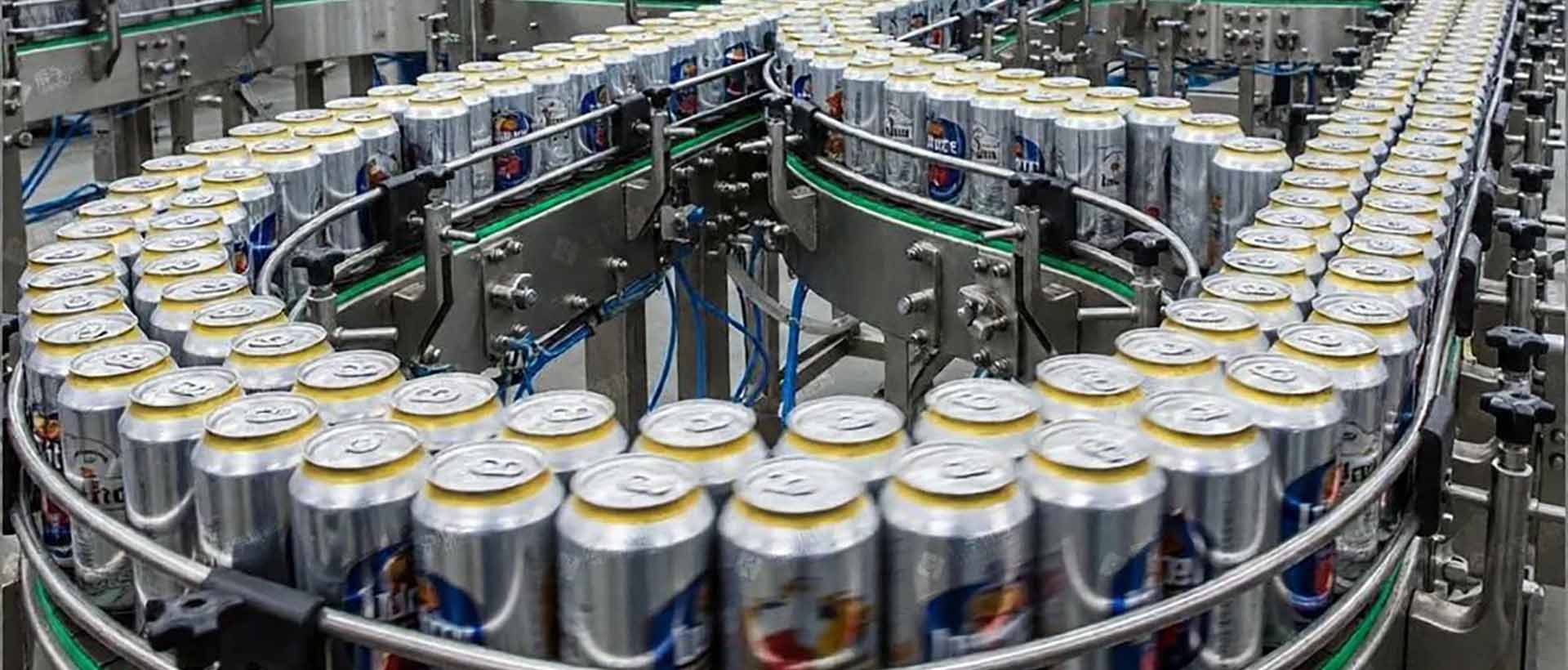
Mic Machinery has delivered beer can filling equipment for international customers, including the Russia 2000CPH Isobaric Beer Can Filling Machine Project Case. In this project, the customer selected an isobaric beer can filling and capping machine for a newly established small brewery.
The project demonstrates how a relatively compact filling solution can be selected for a new brewery with limited initial investment while leaving room for a more complete production line configuration in the future.
For customers researching supplier experience, reviewing real project information can provide additional insight into equipment selection, production capacity, packaging format, and application scenarios.
FAQ – Isobaric Beer Can Filling Machine
What is an isobaric beer can filling machine?
An isobaric beer can filling machine fills carbonated beer under controlled pressure conditions. The filling and capping/seaming functions can be integrated into one machine to reduce equipment footprint and simplify the production flow.
What capacity does this beer canning solution support?
This solution is designed for approximately 1000–2000CPH applications. The final machine configuration depends on the customer's can specifications, beer characteristics, filling requirements, and desired production capacity.
Why is isobaric filling used for beer?
Beer contains dissolved CO₂. Isobaric filling uses controlled pressure conditions to help reduce excessive foaming and unnecessary CO₂ loss during filling, supporting more stable carbonated-beverage filling.
Can the filling and capping functions be integrated?
Yes. The core equipment can combine beer filling and capping/seaming functions in one integrated machine. This configuration is particularly suitable for breweries seeking a compact and relatively simple production solution.
Can the machine be integrated into a complete beer canning line?
Yes. The filling and capping machine can be connected with can depalletizing, beverage preparation, pasteurization, drying, coding, labeling, secondary packaging, palletizing, and pallet wrapping equipment according to the project requirements.
What should be prepared before installing the beer canning line?
Customers should prepare sufficient factory space, electrical power, compressed air, water and drainage where required, product storage, packaging-material storage, and suitable access for equipment transportation and maintenance. The exact requirements should be confirmed during project engineering.
How should the machine be maintained?
Routine maintenance should include cleaning product-contact areas, checking seals and filling components, inspecting pneumatic and electrical systems, monitoring conveyor operation, and replacing wearing parts according to operating conditions. A detailed maintenance schedule should be established after the machine is commissioned.
Build Your Beer Canning Production Line
A suitable beer production project should begin with the product, capacity, packaging format, factory conditions, and future production objectives—not simply with a single machine.
For breweries planning a new plant or upgrading an existing facility, a 1000–2000CPH integrated isobaric beer can filling machine provides a practical foundation for a compact automated canning system. The line can be configured from filling and capping through pasteurization, drying, labeling, packaging, and palletizing according to the actual project scope.
Mic Machinery supports customized equipment selection, production layout planning, project installation, commissioning, operator training, and after-sales service for beverage and beer packaging projects.
Need a customized beer canning solution? Contact Mic Machinery for equipment selection advice, a complete production layout, and a project quotation based on your target capacity and can specifications.