

Experimental Type Sterilizer Unit
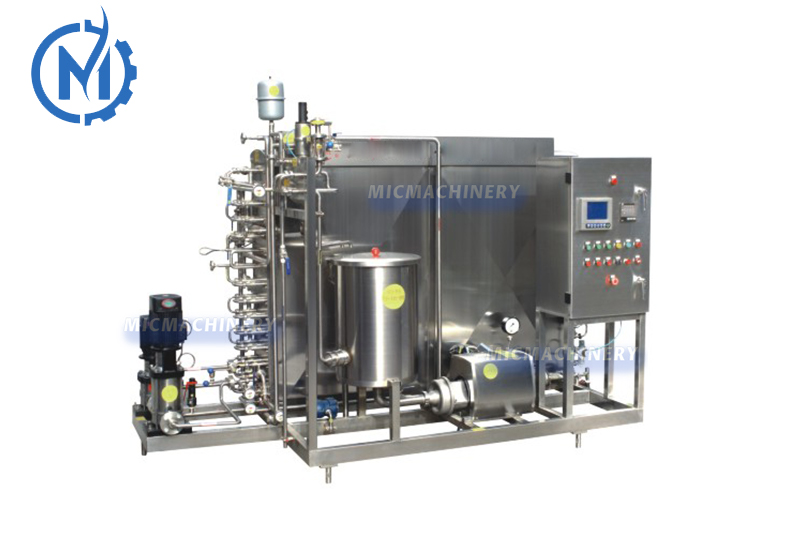
Experimental Type Sterilizer Unit | Lab UHT System
The experimental type sterilizer unit is a specialized thermal processing system designed for laboratory use. Its primary purpose is to help researchers obtain accurate test data before scaling up to full production. This unit integrates heating, sterilization, cooling, and heat recovery into one compact design, fully simulating actual production conditions. It serves as a reliable tool for product development, process optimization, and small-batch trials in the food and beverage industry.
Design and Working Principle
The experimental type sterilizer unit is built around a tubular sterilizer. This design consists of concentric tubes or multi-tube bundles, allowing the product to flow through the inner tube while a heating or cooling medium circulates through the outer annulus. This configuration ensures efficient and uniform heat transfer.
The tubular construction offers several advantages for laboratory applications. It can handle small batch sizes effectively while providing data that scales reliably to industrial production volumes. The smooth inner surface also reduces fouling and makes cleaning easier.
Key Features
Adjustable flow rate:
1. Through serial connection with the homogenizer, frequency conversion control of the homogenizer flow rate can be realized: semi-quantity or full quantity (stepless speed adjustment).
2. Without serial connection with the homogenizer, the flow rate can be controlled by adjusting the diaphragm valve.
Adjustable temperature: Input temperature requirements and the sterilizing temperature can be automatically adjusted by PLC, which is adjustable within the range of 63–140°C.
Applicable to different varieties: Through numerous designs, it can satisfy pulp, jam, and liquid materials containing granules.
Bench scale experiment: It can satisfy bench scale experiments of 3–5L, which can save experimental costs to the maximum extent (the equipment holdup volume is 1.5L).
Working environment: The equipment is provided with 8kW power without the need for an additional power supply.
Standard accessories: Homogenizer (120 L/h, 60 MPa), 3000 kW ice water chiller unit.
Optional: Yogurt fermentation tank, aseptic canning operation desk.
Provided with tubular sterilizer: A unit with a capacity of 200–500 L/h is available, which can satisfy both experimental and pilot-scale requirements.
When configured for lower-temperature applications such as fresh milk processing, the unit functions as a tubular pasteurizer. It gently heats products to eliminate pathogenic microorganisms without significantly affecting flavor or nutritional value.
For ultra-high temperature needs, the unit works as a tubular uht sterilizer. It rapidly heats products to 135–145°C for a few seconds, destroying all microorganisms and spores while preserving taste and quality. If equipped with aseptic filling (or aseptic sampling valves), the unit can achieve a completely sterile state.
Applications
The experimental type sterilizer unit is suitable for a wide range of liquid and semi-liquid products, including:
• Fruit juices and pulps containing particles up to 3mm
• Fruit purees, sauces, and pastes
• Soy milk, chocolate milk, cocoa milk, and condensed milk
• Fresh milk, cream, and lactic acid bacteria drinks
• Other similar heat-sensitive liquids
The unit also meets the needs of various thermal processes, including pasteurization, high-temperature short-time (HTST) sterilization, and ultra-high temperature (UHT) sterilization.
Production Capacity
The unit offers different capacities depending on the process:
• Pasteurization: 30–100 L/h 5°C–10°C → 65°C Homogenization → 85–95°C 15s → 5–43°C
• High temperature instant sterilization: 100 L/h 5°C–10°C → 65°C Homogenization → 120°C 15s → 5°C
• Ultra-high temperature sterilization (UHT): 30–50 L/h 5°C–10°C → 65°C Homogenization → 140°C 4s → 25°C
Standard Configuration and Options
The standard configuration includes a homogenizer (120 L/h, 60 MPa), an ice water chiller (3000 kW), and a touch screen with PLC program control. The control system dynamically reflects various parameters such as product temperature and flow rate, making operation simple and user-friendly.
Optional accessories include a yogurt fermentation tank and an aseptic filling workbench. For larger testing needs, a tubular unit with a processing capacity of 200–500 L/h is also available, meeting both experimental and pilot-scale production requirements.
Conclusion
The experimental type sterilizer unit is a versatile, reliable, and efficient solution for laboratory-scale thermal processing. With its tubular sterilizer design, it delivers consistent performance across a wide range of products—from fresh milk and juices to high-fiber pulpy drinks and viscous sauces.
Its flexible design, precise control, and ability to handle small batch sizes make it an indispensable tool for research and development. For laboratories seeking reliable test data and smooth scale-up to production, the experimental type sterilizer unit remains an excellent choice.
|
Type and Specification |
Capacity (T/h) |
Steam Consumption (kg/h) |
Power (kW) |
Dimension L x W x H (mm) |
Weight (kg) |
| CL-1 | 30-100 | 2000 | 20 | 1500 x 900 x 1600 | 250 |
| CL-2 | 200-500 | 5000 | 20 | 2300 x 1000 x 1600 | 350 |
| 0.5-UHT-0.5J | 200-500 | 5000 | 20 | 1500 x 1200 x 1600 | 460 |


