

Roller Sorting Machine
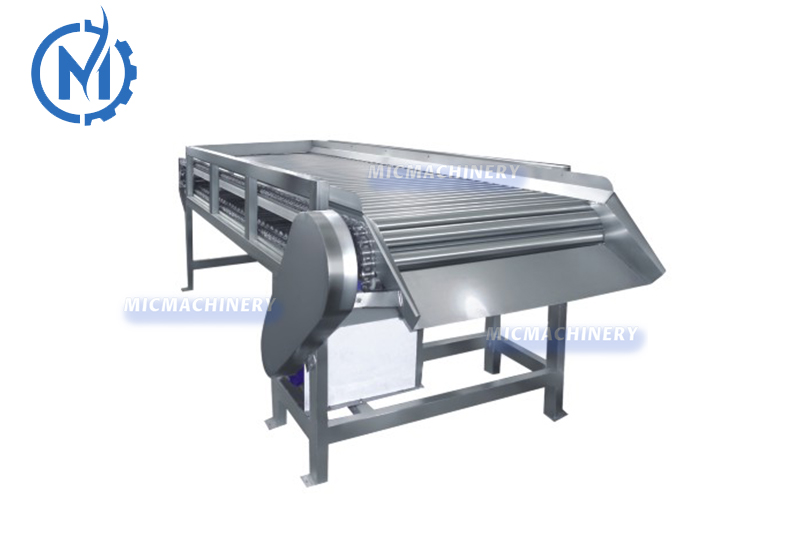
Roller Sorting Machine | Inspection Conveyor for Vegetables
The roller sorting machine is a specialized piece of equipment used in fruit and vegetable processing lines for inspection and sorting of produce. It is designed to present each piece of fruit or vegetable in a fully rotated position, allowing inspectors or vision systems to examine the entire surface for defects, discoloration, or damage. This ensures that only high-quality produce proceeds to downstream processing or packaging.
This equipment is commonly used for apples, pears, tomatoes, potatoes, citrus fruits, and other round or oval-shaped produce. Its gentle handling and efficient operation make it an essential component in modern processing facilities.
Design and Working Principle
The roller sorting machine consists of a series of parallel rollers arranged in a horizontal conveyor configuration. The rollers are driven by stainless steel chains that move them forward along the conveyor path. As the chains advance, the rollers rotate on rubber tracks due to friction, causing the produce resting on them to spin continuously.
This rotation is critical for thorough inspection, as it exposes every side of the fruit or vegetable to the inspector's view. Operators can easily identify and remove defective items. The rejected produce is carried away by waste conveyor belts, which can be positioned either above or below the main inspection line.
Key Features
The inspection roller conveyor for vegetable is known for its efficiency and reliability. Key features include:
• Continuous rotation – ensures full surface visibility for inspection
• Adjustable speed – can be matched to production line requirements
• Gentle handling – minimizes bruising and damage to produce
• Flexible configuration – can be designed with waste removal above or below
• Sanitary design – easy to clean and maintain
• Durable construction – suitable for continuous operation
The Inspection Roller Conveyor for Vegetable in Operation
The inspection roller conveyor for vegetable operates on a simple yet effective principle. Produce is fed onto the rotating rollers at the inlet end. As the rollers move forward and rotate, each piece of produce is turned continuously, allowing inspectors to examine it from all angles. Defective items are manually removed and dropped onto waste conveyors.
The inspection roller conveyor for vegetable can be equipped with optional spray washing devices at the discharge end. This addition provides a final rinse for the inspected produce, removing any surface dust or debris that may have accumulated during handling.
Roller Materials
The rollers are available in two material options: 304 stainless steel tubes and PVC tubes. Both materials are food-grade and corrosion-resistant, ensuring long service life and compliance with food safety standards.
• 304 stainless steel rollers – suitable for wet or high-moisture applications, offering superior durability and corrosion resistance
• PVC rollers – a cost-effective option for dry or low-moisture applications, providing gentle handling
The choice of roller material depends on the specific product being processed and the operating conditions of the line.
The Inspection Roller Conveyor for Waste Removal
The inspection roller conveyor includes an integrated waste removal system. Rejected fruits or vegetables are carried away by waste conveyor belts that can be positioned either above or below the inspection line.
• Upper waste conveyor – mounted above the rollers, suitable for facilities with limited floor space
• Lower waste conveyor – positioned below the rollers, allows gravity-assisted waste collection
This flexibility in waste removal configuration enables the inspection roller conveyor to adapt to various plant layouts and production requirements.
Optional Spray Washing
An optional spray washing device can be installed at the discharge end of the roller sorting machine. This feature provides a gentle rinse for the inspected produce, removing any remaining surface dust or light debris before the product moves to the next processing stage. The spray system uses clean water and can be integrated with the facility's existing water supply.
Applications
The roller sorting machine is suitable for a wide range of produce, including:
• Apples, pears, and peaches
• Tomatoes, cucumbers, and peppers
• Potatoes, carrots, and other root vegetables
• Citrus fruits such as oranges and lemons
Conclusion
The roller sorting machine is an essential tool for quality control in fruit and vegetable processing. Its continuous rotation ensures thorough inspection, while optional waste removal and spray washing features enhance its versatility. The inspection roller conveyor for vegetable and the inspection roller conveyor provide reliable and efficient solutions for producers seeking consistent product quality.
| Name | Description |
Dimension (mm) (L x W x H) |
Suggested Capacity | Suggested Power (kW) |
| The capacity and power may vary depending on different raw fruits. | ||||
| MIC-2 |
The material used is SUS304 stainless steel. Speed is adjustable, with water spraying device. |
2000 x 800 x 1200 | ≤2 T/H | 0.75 |
| MIC-5 | 3000 x 1000 x 1200 | 3~5 T/H | 0.75 | |
| MIC-10 | 4000 x 1200 x 1200 | 6~10 T/H | 1.1 | |
| MIC-15 | 5000 x 1200 x 1200 | 11~15 T/H | 1.5 | |
| MIC-20 | 6000 x 1200 x 1200 | 16~20 T/H | 2.2 | |


