

Scraped Surface Heat Exchanger
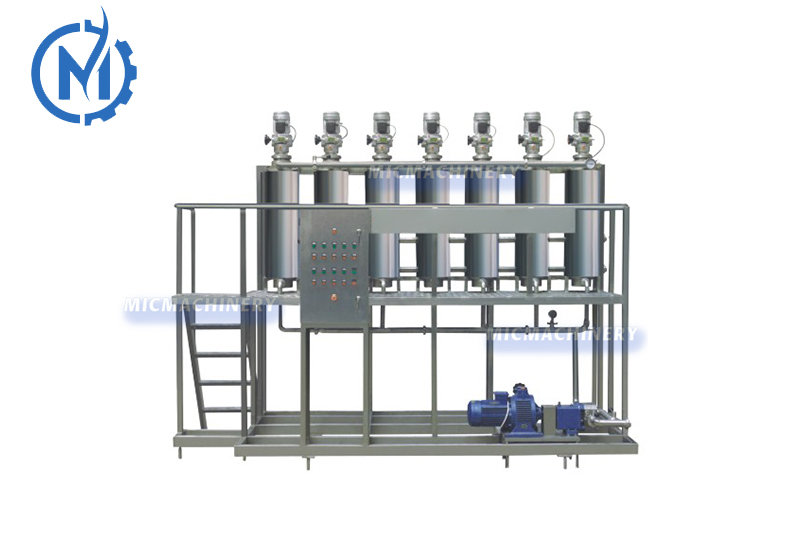
Scraped Surface Heat Exchanger | Viscous & Pulpy
The scraped surface heat exchanger is a specialized thermal processing device designed to handle challenging products that cannot be processed effectively by conventional plate or tubular heat exchangers. It is widely used for high-viscosity fluids, products containing large particles or fibers, and materials that tend to foul or burn onto heat transfer surfaces.
Application and Scope
The scraped surface heat exchanger is a critical piece of equipment in the food and beverage industry for heating or cooling high-viscosity, heat-sensitive fluids, and products containing solid particles. It is particularly widely used in the dairy, condiment, and fruit and vegetable processing industries for thermal treatment of viscous products such as butter, sauces, and fruit and vegetable pastes like tomato paste.
The equipment features a simple and compact design with a rational structure. It can be configured in series or parallel arrangements depending on flow rate and specific heat transfer requirements. For small flow rates, even a single unit can be installed independently. This makes the scraped surface heat exchanger highly flexible and convenient to use, especially suitable for small and medium-sized enterprises processing high-viscosity products.
Main Structure and Working Principle
The scraped heat exchanger mainly consists of two major components: the shell and the stirring rotor. The shell is a jacketed cylinder, similar to a shell-and-tube heat exchanger. Inside the cylinder, a stirring rotor is installed. The rotor consists of a shaft and detachable scraper blades. The blades are freely suspended on the shaft, and contact pressure is achieved through centrifugal force and fluid resistance.
The rotor speed typically ranges from 100 to 300 r/min. Users should adjust the speed according to the viscosity of the product—generally, the higher the viscosity, the lower the speed.
During operation, the product flows from bottom to top through the inner cylinder, while the heating or cooling medium flows from top to bottom through the jacket. The adhesion and friction between the product and the wall create a stationary boundary layer on the surface. This layer is continuously scraped off by the rotating blades, constantly renewing the heat transfer surface.
The scraped material mixes intensely with the nearby fluid, promoting heat exchange. As the shaft rotates, the heat transfer surface is continuously renewed and the fluid is strongly agitated, making it difficult for fouling to form. As a result, the heat transfer coefficient is greatly increased and heat transfer is significantly enhanced.
The Dynamic Scraped Surface Heat Exchanger in Operation
When configured as a dynamic scraped surface heat exchanger, the system can handle a wide range of processing tasks, including heating, cooling, crystallization, and freezing. The dynamic nature of the scraped surface ensures that even highly viscous or sticky products are processed efficiently.
The dynamic scraped surface heat exchanger is particularly effective for heating viscous products for sterilization or cooking, cooling thick sauces and purees, controlled crystallization for products like margarine, and rapid freezing of ice cream without forming large ice crystals. It can achieve uniform temperature profiles across the product stream, which is critical for maintaining consistent quality and meeting stringent food safety requirements.
Key Features
The scraped surface heat exchanger is known for its robustness and versatility. Key features include:
• Handles high viscosity products – up to several million centipoise
• Processes products with particles – up to 10–15 mm in diameter
• Prevents product burning – continuous scraping eliminates hot spots
• Uniform heat transfer – consistent temperature throughout the product
• Sanitary design – suitable for food and pharmaceutical applications
• CIP compatible – easy cleaning-in-place
• Flexible operation – variable speed control
• Simple and compact structure – easy to install and maintain
• Flexible configuration – can be used individually or in series/parallel
The Scraped Heat Exchanger in the Food Industry
The scraped heat exchanger plays a vital role in many food processing operations. Unlike plate or tubular units, which can easily clog or foul when processing sticky or fibrous products, the scraped heat exchanger maintains efficient operation through continuous mechanical cleaning.
Common food applications include fruit and vegetable purees such as tomato, apple, pear, peach, carrot, and pumpkin; sauces and pastes including pasta sauces, curry pastes, and condiments; dairy products like cream, butter, cheese sauce, and yogurt; confectionery products such as chocolate, caramel, and marshmallow; as well as baby food and pet food.
Comparison with Other Heat Exchanger Types
Compared to plate or tubular heat exchangers, the dynamic scraped surface heat exchanger offers distinct advantages. It can handle much higher viscosity products, up to several million centipoise, whereas plate and tubular units are typically limited to low to medium viscosity. It also processes products with particles up to 10–15 mm in diameter, far exceeding the 3 mm limit of plate units.
The continuous scraping action significantly reduces fouling and burn-on risk, which are common problems in plate and tubular designs. However, the scraped surface heat exchanger has higher initial cost and requires regular maintenance due to blade wear. Plate and tubular units are generally less expensive and require less frequent maintenance.
Conclusion
The scraped surface heat exchanger is an essential processing tool for challenging products that cannot be handled by conventional heat exchangers. Whether referred to as a scraped heat exchanger or a dynamic scraped surface heat exchanger, this equipment delivers reliable and uniform thermal processing for high-viscosity, particulate-containing, and fouling-prone materials.
Its robust design, continuous scraping action, simple structure, flexible configuration, and versatility make it a valuable asset in food, dairy, pharmaceutical, and chemical processing. For processors facing difficult heat transfer applications, the scraped surface heat exchanger remains the preferred solution.
| Heat exchanging area | 2.8 m² |
| Total motor power | 5.59 kW |
| Speed adjusting range of rotation shaft | 400~80 r/min |
| Combined production capacity | 2 t/h |
| Temperature of material inlet | 40°C–20°C |
| Temperature of ice water inlet and consumption | 2°C |
| Pipe size | 6 t/h |
| Outline dimensions | φ51 13.36 x 1.46 x 2.7 m |


