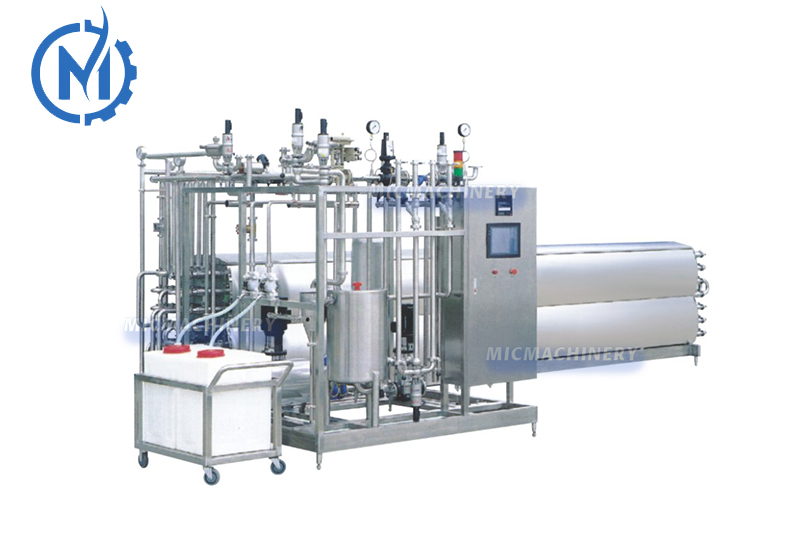
Tubular Heat Exchanger UHT | Efficient & Reliable
The tubular heat exchanger (UHT) is a critical piece of equipment in the modern food and beverage processing industry. It is designed to achieve ultra-high temperature (UHT) treatment, which ensures product safety and extends shelf life without the need for preservatives. This type of equipment is widely used for processing milk, juices, tea beverages, plant-based drinks, and many other liquid food products.
Design and Working Principle
The tubular heat exchanger (UHT) consists of a series of concentric tubes or multi-tube bundles. The product flows through the inner tube(s), while a heating or cooling medium flows through the outer annulus or shell side. This design allows for efficient and uniform heat transfer.
As a tubular type heat exchanger, it offers several advantages over plate-type heat exchangers. It can handle products containing fibrous particles, pulp, or high-viscosity components without clogging. The smooth inner surface also reduces fouling and makes cleaning easier.
Key Features
The tubular type heat exchanger is known for its robust construction and reliable performance. Key features include:
• Wide temperature range: from pasteurization (85–95°C) to UHT (135–145°C)
• Ability to handle high-viscosity and particulate-containing products
• Low maintenance due to simple tube-in-tube design
• CIP (Clean-in-Place) compatible
• Long operational life with proper maintenance
When configured as a heat exchanger tubular, the system can be arranged in multiple passes or sections, allowing for heating, holding, cooling, and regeneration within a single unit. This flexibility makes it ideal for complex thermal processes.
Applications
The heat exchanger tubular is suitable for a wide range of applications, including:
• Fresh milk and yogurt production
• Fruit juices, nectars, and concentrates
• Tea and coffee beverages
• Plant-based milk (soy, almond, oat, etc.)
• Soups, sauces, and purees
• Low-acid and neutral beverages
For high-fiber or high-pulp products such as pineapple, orange, carrot, and peach juices, the tubular type heat exchanger is often the preferred choice due to its clog-resistant design.
Advantages Over Other Heat Exchanger Types
Compared to plate heat exchangers, the tubular heat exchanger (UHT) offers superior performance for challenging products. Plate heat exchangers often suffer from gasket leaks, fouling, and blockage when processing fibrous or viscous materials. In contrast, the heat exchanger tubular has no gaskets in the product path, minimizing leakage risks and allowing for higher operating pressures and temperatures.
Additionally, the tubular type heat exchanger provides excellent heat recovery, reducing energy consumption and operational costs. It is also easier to maintain, as the tubes can be inspected and cleaned individually.
Conclusion
The tubular heat exchanger (UHT) is a versatile, durable, and efficient solution for thermal processing in the food and beverage industry. Whether configured as a tubular type heat exchanger or simply referred to as a heat exchanger tubular, this equipment delivers consistent performance across a wide range of products—from clear juices to thick purees and from low-viscosity teas to high-fiber pulpy drinks.
Its robust design, ease of cleaning, and ability to handle challenging products make it an indispensable tool for modern UHT processing lines. For producers seeking reliability, product quality, and operational efficiency, the tubular heat exchanger (UHT) remains an excellent choice.